Padmashree Hajabba’s dream PU college set to begin in Harekala
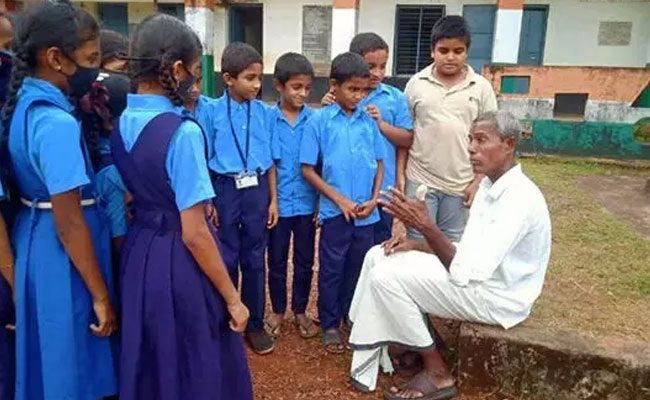
Mangaluru: Padmashree Harekala Hajabba, the illiterate legendary orange seller who used the earnings of his humble profession to establish a primary school at his remote village called Newpadpu in Harekala, is about to witness the beginning of a PU college which was his long time dream. After a high school in the village, the government has now granted permission for the Pre-University College here and the classes are set to begin this year.
Many students of the village who passed SSLC stayed out of PUC due to the far distance they had to go to reach a college. Hajabba had tried hard to get a college here to benefit these rural students. Finally, the government had ordered for the establishment of a college at Newpadpu, a year ago. 1.3 acre of land was reserved for the college in Daganepadpu which has been registered under the Department of Pre-University Education.
Arts and commerce classes are set to begin in the current academic year and Prof Abdul Razak, faculty of economics at Government PU College Nalyapadavu, has been appointed as the in-charge principal for the college. Department of PU Education Assistant Director Jayanna stated that required number of lecturers would be appointed once the admission processes were done with. Lecturers from Government PU colleges with lesser work load and guest lecturers would be appointed for the posts. Padmashree Harekala Hajabba expressed joy for the beginning of the college and said that the local students would be benefited by it.
Let the Truth be known. If you read VB and like VB, please be a VB Supporter and Help us deliver the Truth to one and all.
UAE denies Netanyahu secretly visited the country during Iran war
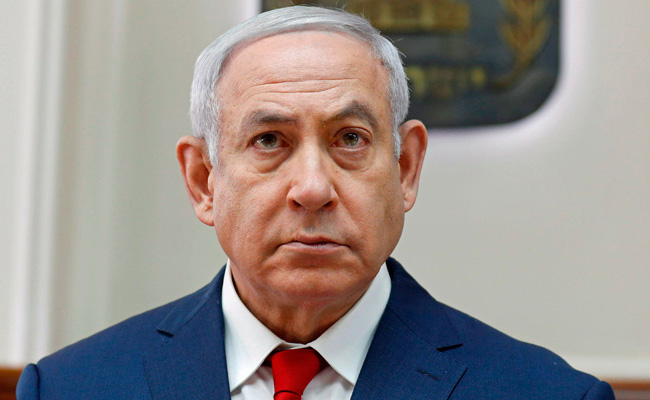
Jerusalem (AP): Israeli Prime Minister Benjamin Netanyahu secretly visited the United Arab Emirates during the Israeli-US war with Iran, further strengthening ties with a Gulf nation that normalised relations with Israel in 2020, his office said Wednesday. The UAE denied any secret visit had occurred.
Netanyahu met with UAE President Sheikh Mohammed bin Zayed Al Nahyan in a gathering that “resulted in a historic breakthrough in relations between Israel and the United Arab Emirates", according to the Israeli statement.
THE UAE's official WAM news agency posted an article denying the report about a Netanyahu visit.
According to WAM, the country's relations with Israel “are public and conducted within the framework of the well-known and officially declared Abraham Accords, and are not based on non-transparent or unofficial arrangements”.
The report also denied any Israeli military delegation was received in the UAE.
Israel's announcement came a day after US Ambassador to Israel Mike Huckabee revealed that Israel had sent Iron Dome air-defence weapons and personnel to operate them to the UAE.
The UAE has faced Iranian missile and drone fire even after the ceasefire was reached last month. It has been trying to signal to nervous investors that it remains open for business and safe.
Last week, WAM reported that Netanyahu was among the leaders who called the Emirati president to condemn Iranian attacks and express their solidarity with the Gulf federation.
It was rare public acknowledgment of direct talks between the countries that normalized relations in the 2020 Abraham Accords and have strengthened their ties during the Iran war.
Iran has criticised that agreement and has repeatedly suggested over the years that Israel maintained a military and intelligence presence in the Emirates.
Israeli leaders have made occasional visits to the UAE in recent years after normalising relations.
Iran demands Kuwait release detainees
===================
Iran's foreign minister accused Kuwait of attempting to “sow discord” by detaining four Iranians that the Gulf Arab country accuses of being Revolutionary Guard operatives.
In a post Wednesday on X, Foreign Minister Abbas Araghchi demanded the Iranians' immediate release and said Iran reserved the right to respond.
“This illegal act took place near an island used by the US to attack Iran,” Araghchi wrote.
A day earlier, Kuwait said four men were detained and two escaped while trying to infiltrate Bubiyan Island in the northwest corner of the Persian Gulf on May 1.
Bubiyan Island is home to Mubarak Al Kabeer Port, which is under construction as part of a Chinese plan to build infrastructure across the world. It also came under Iranian attack during the war.
Iranian human rights lawyer released
======================
Prominent Iranian human rights lawyer Nasrin Sotoudeh has been released from prison more than a month after being detained, a rights group and her daughter said Wednesday.
Sotoudeh, who is known for defending activists, opposition politicians and women prosecuted for removing their headscarves, was detained by Iranian intelligence agents at her house in Tehran in April.
Her release comes as US President Donald Trump arrived in China for a long-anticipated visit that is expected to touch on the war in Iran.
The US-based Human Rights Activists News Agency, which closely tracks developments in Iran, said that Sotoudeh was released on bail from Tehran's Evin Prison.
Her daughter, Mehraveh Khandan, posted on social media that Sotoudeh was released on temporary custody. Iran's semiofficial ISNA news agency also reported Sotoudeh release.
Sotoudeh has been imprisoned multiple times. Her activist husband, Reza Khandan, has been imprisoned in the same prison as his wife.
Nobel Peace laureate needs long-term care
==========================
Doctors who examined Nobel Peace laureate and activist Narges Mohammadi more than a week after she collapsed at a prison in Iran said she needs months of treatment, according to her foundation.
Mohammadi, 53, was urgently transferred from prison to a hospital in northwestern Iran on May 1 after she fell unconscious. She was released on bail nearly 10 days later and transferred to a hospital in Tehran where her specialists examined her.
The doctors said her vascular disease has worsened since she was last checked in 2024 and recommended eight months of treatment.
She was awarded the Nobel in 2023 while in prison and has been jailed repeatedly throughout her career. Her latest imprisonment began in December when she was arrested in the northeastern Iranian city of Mashhad.