Pro-Palestine mime re-staged in Kerala school amid protests

Kasaragod (PTI): Students of Kumbala Government Higher Secondary School (GHSS) on Monday re-staged a pro-Palestine mime show that was disrupted by teachers last week in this district.
The mime, performed by six students dressed in black, was part of the school’s art festival and drew a large audience.
This time, students adhered to the guidelines and did not raise any placards or the Palestine flag.
While the performers refrained from chanting slogans, some members of the audience were heard shouting pro-Palestine slogans.
"We are very happy to get the opportunity to stage the mime again. We thank everyone who supported us. Our intention is to showcase the sufferings of people in Palestine, and it was not against anyone," a student involved in the performance told reporters.
Meanwhile, BJP activists staged a protest march against the mime at the school. Police blocked the protestors before they could reach the school gate.
"It is illegal to shout slogans supporting another country at a school event. A case should be registered and an investigation conducted," the protestors demanded.
Education Minister VSivankutty wrote on his Facebook page, hailing the re-staging of the pro-Palestine mime, saying the government stands firmly with the democratic and secular rights of students and their freedom of expression.
In a statement, the minister said the promise given to students on re-staging the mime has been fulfilled.
"The students’ creative protest expressing solidarity with the people of Palestine has successfully reached the stage. This government once again declares strongly that it stands with the democratic and secular rights of children, as well as their freedom of expression," Sivankutty said.
It is our duty to give our children the courage and encouragement to raise their voices against injustice anywhere in the world, the minister added.
He also congratulated the organisers, teachers, and students.
Last Friday, the mime was disrupted midway by two teachers who forced the organisers to close the stage curtains, drawing sharp criticism. The Parent-Teacher Association (PTA) subsequently held a meeting on Saturday and decided to suspend the arts festival.
Student organisations, MSF and SFI, later protested against the teachers, demanding action.
Minister Sivankutty intervened, stating that Kerala supports Palestine and the mime would be staged again.
The Education Department is conducting an inquiry into the incident, including the involvement of the two teachers who stopped the mime show.
Let the Truth be known. If you read VB and like VB, please be a VB Supporter and Help us deliver the Truth to one and all.
Karnataka approves AI Centre of Excellence in Bengaluru's Electronics City
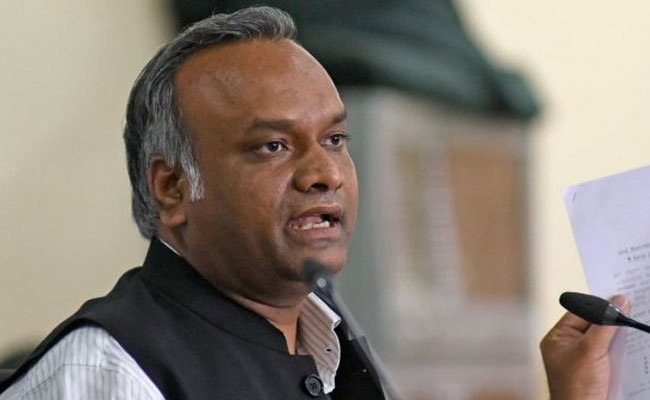
Bengaluru (PTI): The Karnataka government has approved the establishment of a CoE for AI in Biotechnology at IBAB in Electronics City (Phase 1), here.
The decision, taken by the state Cabinet on Thursday night, marks a significant step towards strengthening Karnataka’s leadership in emerging technologies, IT and biotechnology, Karnataka Minister Priyank Kharge said on Friday.
The centre will be established over four years with a total outlay of Rs 20 crore, in partnership with the Institute of Bioinformatics and Applied Biotechnology and the Centre for Cellular and Molecular Platforms (C-CAMP), according to a statement from the minister’s office.
"Karnataka has consistently been at the forefront of technological innovation. As we enter the decade of deep tech, our focus is on building future-ready capabilities at the intersection of artificial intelligence and biotechnology," Minister for IT and Biotechnology said.
"This Centre of Excellence will strengthen our research ecosystem, accelerate innovation and enable Karnataka to lead in high-impact next-generation technologies," he added.
Priyank added that the state government, through the Departments of Electronics, IT, Biotechnology, and Science & Technology, is actively investing in emerging technologies and taking steps to strengthen Karnataka’s AI and deep-tech ecosystem.
The minister said the Cabinet has also approved the transfer of a 51 per cent stake in the Karnataka Technology & Innovation Museum Foundation (KTIMF) to the Unboxing BLR Foundation.
KTIMF was established by the Government of Karnataka as a not-for-profit organisation to promote innovation, technological awareness, startup culture and public engagement in science and technology, aligned with the state’s vision of building a robust innovation ecosystem, he said.
The Technology & Innovation Museum will be developed at the NGEF campus in Baiyappanahalli, Bengaluru, under a Public-Private Partnership (PPP) model, with a total project cost of Rs 100 crore. Of this, Rs 49 crore will be contributed by the state government and Rs 51 crore by the private partner, he said.