QR Code based house to house garbage collection begins at Mangaluru Smart City
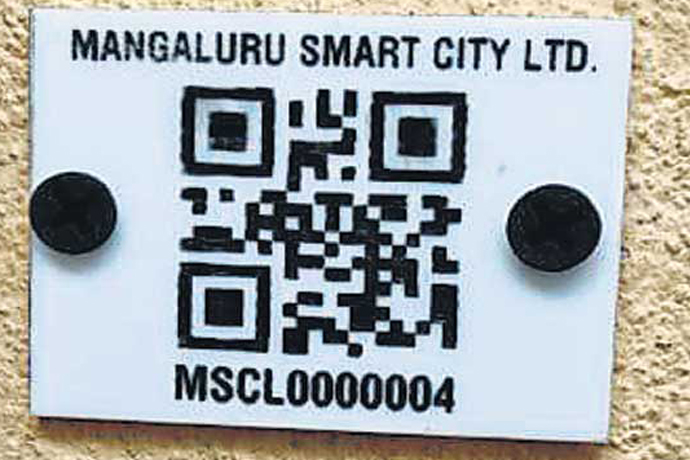
Mangaluru: The Mangaluru Smart City Limited (MSCL) has recently begun the implementation of its QR code-based Solid Waste Management System (SWMS), which is set to cover all the 60 wards of Mangaluru, in a phased manner. The first-of-its-kind system will increase the efficiency of solid waste management in the city's multi-fold, a press release stated.
The first phase of SWMS will cover 88,000 houses - so far 5,000 houses have been installed with the QR codes. The commissioning of QR codes for the rest of the houses is expected to be completed by the end of November.
The smart garbage collection system will help the City Corporation track the movement of the garbage vehicles, monitor the status of the garbage collection, provide provisions for the public to record complaints about garbage collection. The door-to-door primary garbage vehicles will scan the QR codes displayed at the gates of the houses while collecting the garbage. The vehicles will then transfer the garbage to the secondary garbage vehicles and from there the garbage will be sent to the dumping yard.
The QR code installed at houses can also be extended for other public services such as payment of electricity bills, property tax, and phone bills, among others.
Mangaluru Smart City will be one of the first smart cities in Karnataka to go live. Many major IoT and technology-enabled solutions like monitoring city bus transport with Intelligent Transport Management System, disaster management & emergency response, air quality of the city using environmental sensors, city surveillance, variable message system; public address system, geographical information system, and One-Touch Mangaluru portal are already deployed and are functioning 24x7. The Integrated Command and Control Centers (ICCC) of Mangaluru Smart City, a major component of the smart city project, is already being used as a war room for the administrators to combat the COVID-19 pandemic.
Let the Truth be known. If you read VB and like VB, please be a VB Supporter and Help us deliver the Truth to one and all.
NEET student hangs self in Rajasthan's Sikar

Jaipur (PTI): A student preparing for the NEET examination allegedly committed suicide by hanging himself in a rented room in Rajasthan's Sikar on Friday, police said.
According to the police, the student allegedly hanged himself from a ceiling fan using his sister's scarf while one sister was attending coaching classes and the other was in the bathroom.
He had appeared in the NEET UG exam 2026, which was cancelled due to paper leak, they said.
Udyog Nagar SHO Rajesh Kumar said that the deceased, identified as Pradeep Meghwal, was a resident of Kanika ki Dhani village in Jhunjhunu's Gudha Gaudji area.
He had been living in a rented room in Sikar's Jaldhari Nagar area with his two sisters while preparing for NEET over the last three years.
His elder sister later found him hanging and informed the landlord and police after bringing him down, officials said.
The SHO said the body was kept at SK Hospital mortuary, and a postmortem had not been conducted.
The student's father, Rajesh Kumar Meghwal, told police that Pradeep's NEET examination had gone well and the family was expecting him to score around 650 marks.
Former Rajasthan deputy chief minister Sachin Pilot expressed grief over the incident and linked it to anxiety among students after reports of irregularities and paper leaks in NEET 2026.
Pilot said repeated paper leak incidents and cancellation of examinations were affecting students' mental health and demanded a time-bound investigation and strict action against those responsible.