Rickshaw driver assaulted with deadly weapon in Mangaluru

Mangaluru: A rickshaw driver fell victim to a violent assault on Panambur Beach Road, yesterday. Identified as Arafat (30), a resident of Bunder was attacked while he parked near Panambur beach awaiting passengers.
Reports indicate that Arafat, a rickshaw driver from Mangalore city, had arrived at the beach area. However, tensions escalated when he encountered resistance from four rickshaw drivers already stationed there, allegedly upset over Mangaluru city drivers encroaching on their territory. The confrontation turned violent, with Arafat sustaining injuries to his hand.
Following the incident, Panambur police registered a case and initiated further investigation.
The incident has sparked outrage among rickshaw drivers in Mangaluru, who staged a protest outside Wenlock Hospital. They termed the attack as yet another instance of hooliganism at the Panambur rickshaw park, calling for the immediate arrest of the perpetrators. Rickshaw drivers demanded an end to such acts of violence, and demanded for urban permit rickshaws to have the freedom to operate within the city limits without fear of reprisal.
Arafat stated that while parked near the beach, he was attacked by a fellow rickshaw driver. Amidst the confrontation, another individual appeared, striking him on the head with a spanner before wielding a sharp weapon.
Let the Truth be known. If you read VB and like VB, please be a VB Supporter and Help us deliver the Truth to one and all.
Congress using hijab issue to pacify minority anger, alleges Karnataka LoP R Ashoka
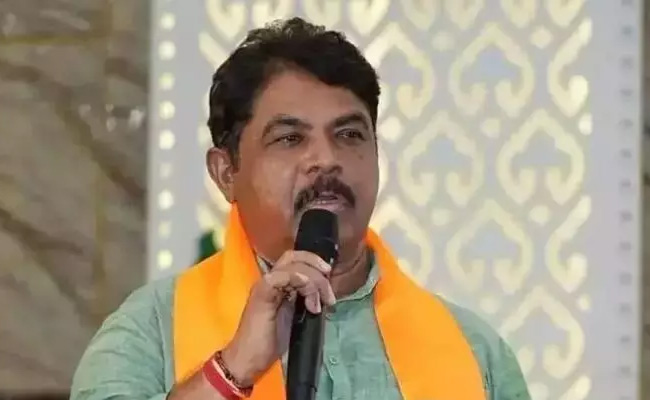
Bengaluru: Leader of Opposition in the Assembly R. Ashoka has accused the Congress government of using the hijab issue to placate what he described as discontent among minority voters after the Davanagere by-election.
In a post on X on Wednesday, Ashoka alleged that the state government, instead of addressing issues such as price rise, corruption, farmers’ distress and law and order, was attempting to retain its minority vote base by reviving the hijab issue.
Referring to the 2022 dress code introduced by the BJP government, which prohibited hijab in schools and colleges, Ashoka said the Karnataka High Court had upheld the policy and emphasised the importance of discipline in educational institutions.
He questioned the Congress government’s move to revisit the issue and asked whether setting aside the court-backed policy to benefit one community could be described as secularism.
Ashoka further alleged that while the government was willing to permit hijab, it continued to prohibit saffron shawls.
He accused the government of dividing students on religious lines rather than treating schools and colleges as spaces of equality.
Drawing a comparison with Mamata Banerjee’s government in West Bengal, Ashoka claimed that excessive appeasement politics had harmed the state and warned that the Congress in Karnataka could face a similar political response.
He said voters in Karnataka would teach the Congress a lesson for what he termed “vote-bank politics” and for compromising constitutional and judicial principles.