Santosh Kumar submits papers from Mangaluru
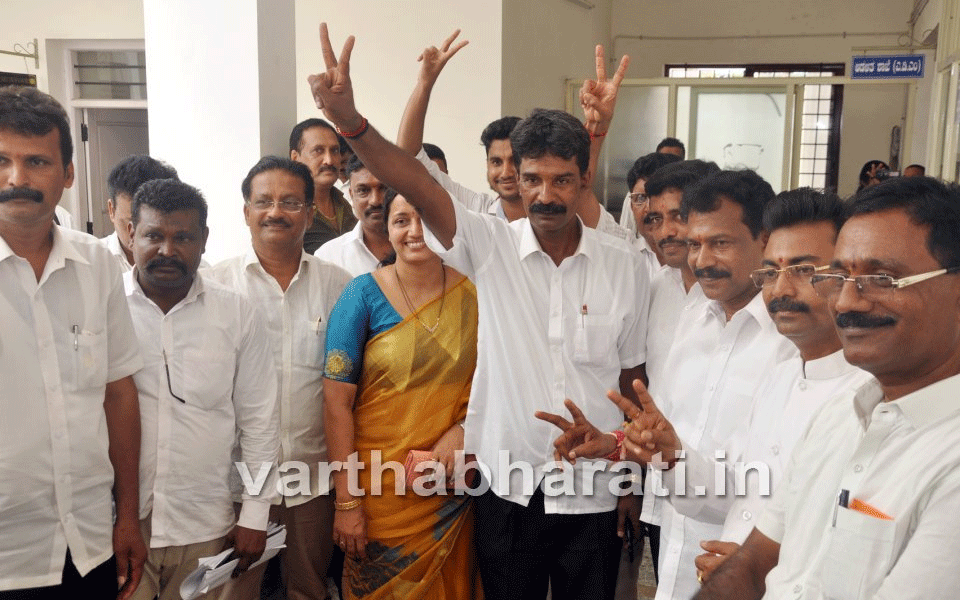
Mangaluru: BJP candidate from Mangaluru Assembly constituency Santosh Kumar Rai Boliyar filed his nomination papers on Monday.
Mangaluru (Ullal) Assembly constituency’s BJP candidate Boliyar, along with his supporters proceeded from Kumpala to Mini-Vidhanasaudha in a procession and filed the papers.
Let the Truth be known. If you read VB and like VB, please be a VB Supporter and Help us deliver the Truth to one and all.
Karnataka approves AI Centre of Excellence in Bengaluru's Electronics City
Bengaluru (PTI): The Karnataka government has approved the establishment of a CoE for AI in Biotechnology at IBAB in Electronics City (Phase 1), here.
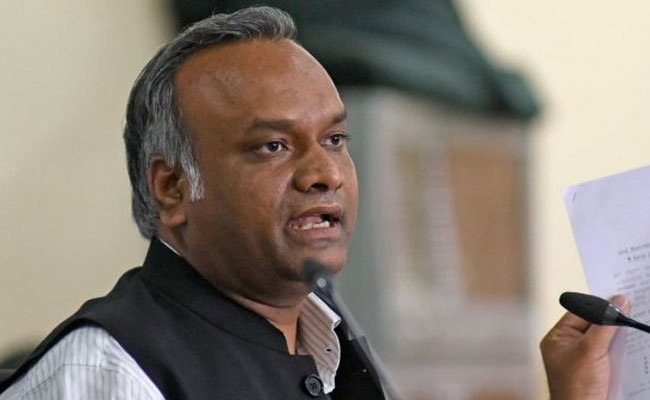
The decision, taken by the state Cabinet on Thursday night, marks a significant step towards strengthening Karnataka’s leadership in emerging technologies, IT and biotechnology, Karnataka Minister Priyank Kharge said on Friday.
The centre will be established over four years with a total outlay of Rs 20 crore, in partnership with the Institute of Bioinformatics and Applied Biotechnology and the Centre for Cellular and Molecular Platforms (C-CAMP), according to a statement from the minister’s office.
"Karnataka has consistently been at the forefront of technological innovation. As we enter the decade of deep tech, our focus is on building future-ready capabilities at the intersection of artificial intelligence and biotechnology," Minister for IT and Biotechnology said.
"This Centre of Excellence will strengthen our research ecosystem, accelerate innovation and enable Karnataka to lead in high-impact next-generation technologies," he added.
Priyank added that the state government, through the Departments of Electronics, IT, Biotechnology, and Science & Technology, is actively investing in emerging technologies and taking steps to strengthen Karnataka’s AI and deep-tech ecosystem.
The minister said the Cabinet has also approved the transfer of a 51 per cent stake in the Karnataka Technology & Innovation Museum Foundation (KTIMF) to the Unboxing BLR Foundation.
KTIMF was established by the Government of Karnataka as a not-for-profit organisation to promote innovation, technological awareness, startup culture and public engagement in science and technology, aligned with the state’s vision of building a robust innovation ecosystem, he said.
The Technology & Innovation Museum will be developed at the NGEF campus in Baiyappanahalli, Bengaluru, under a Public-Private Partnership (PPP) model, with a total project cost of Rs 100 crore. Of this, Rs 49 crore will be contributed by the state government and Rs 51 crore by the private partner, he said.