SBI Mangaluru to organise Home Loan and Car Loan Utsav on January 24

Mangaluru (Press Release): SBI Mangaluru Centre is organizing a Home Loan and Car Loan Utsav at St. Sebastian Platinum Jubilee Hall, Bendoorwell, Mangaluru on 24th January 2021.
SBI, India’s largest bank is the only Indian Bank among FORTUNE – 500 list. SBI’s Home loan portfolio is the largest in the country with a Market Share of 31% as of 31.03.2020 amongst All Scheduled Commercial Banks. SBI Offers Home Loans linked to the Repo Rate to ensure transparency in monetary transmissions to Home Loan customers.
To celebrate New Year after the COVID impact, the State Bank of India is offering a 100% waiver in processing fees for all Housing Loans and in respect of Car loans on applying through YONO Digital Platform by the customers.
SBI is providing Home Loans at the lowest rate in the market starting at 6.80% p.a. SBIs car loan is also at the lowest in the market starting at 7.50% p.a. which is fixed throughout the tenure of the loan.
Bank will be providing an in-principle letter of sanctions at the Utsav venue for Home loans and Car loans.
By organizing the Utsav, SBI is facilitating reputed Builders and Car Dealers to showcase their properties and display various Car models and offer special discounts to customers.
SBI welcomes one and all with their family and friends to SBI Home and Car Loan Utsav 2021 to fulfill their dream of owning their Sweet Home and dream car.
Let the Truth be known. If you read VB and like VB, please be a VB Supporter and Help us deliver the Truth to one and all.
Delhi HC Judge Justice Sharma to pass order on recusal plea by Kejriwal at 4.30 pm
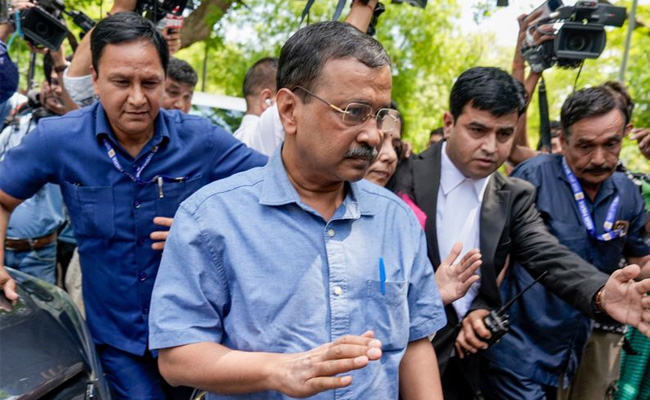
New Delhi (PTI): Delhi High Court Judge Justice Swarana Kanta Sharma on Monday said that she would pronounce her verdict at 4.30 pm on pleas by Arvind Kejriwal and others seeking her recusal in the liquor policy case, as she took on record additional pleadings by the AAP chief on his plea.
Justice Sharma said although the pronouncement was scheduled for 2:30 pm, she was "going out of her way" in accepting Kejriwal's rejoinder as a written submission in the matter.
The former chief minister virtually appeared before the judge through video conferencing and urged her to take on record his rejoinder to the written submissions filed by the CBI.
Even as Kejriwal asserted that the registry's refusal to take his rejoinder on record was "miscarriage of justice", Justice Sharma remarked that since he was not being represented by a lawyer, the court went "out of its way" for him when it permitted him to file his additional affidavit last week even after the order on the recusal issue was reserved.
The judge said that as per the registry's rule, a party in-person must take permission from the court to file anything and since the present case was not "extraordinary", the same practice was being followed.
She added that in law, there is no concept of filing a "rejoinder" to the opposite party's written submissions, and she would permit Kejriwal to tender his pleadings as written submissions instead, so that he does not feel that he was not heard.
"You say you have respect for me. I have respect for every litigant. The rule of court will not be changed for anyone so I will treat it as written submissions. I am taking it on record. I am giving the indulgence to Mr Kejriwal," the court stated.
Solicitor general Tushar Mehta appeared for the CBI and opposed Kejriwal's request to file rejoinder. Mehta said nowhere in the country were pleadings taken on record after order was reserved a court.
He also said there is no concept of filing rejoinder to a written submission, and the court should do what it would do for any ordinary litigant.
Kejriwal had raised several objections against the judge hearing the CBI's plea against his discharge in the liquor policy case, including that she had earlier denied him relief on his petition challenging his arrest and refused to grant relief on the bail pleas of other accused, including Manish Sisodia and K Kavitha.
He also claimed that Justice Sharma had made "strong and conclusive" findings.
The former Delhi chief minister further alleged a "direct conflict of interest", claiming that the judge's children are empanelled central government lawyers who receive work through the solicitor general, who is appearing in the matter for the CBI.
Besides Kejriwal, the applications for recusal of the judge were also filed by AAP leaders Manish Sisodia and Durgesh Pathak.
Other respondents, including Vijay Nair and Arun Ramchandra Pillai, have also sought her recusal.
Solicitor General urged Justice Sharma to initiate contempt action against Kejriwal and others for seeking her recusal.
Terming concerns by Kejriwal and others as "apprehensions of an immature mind," Mehta told the court it was a matter of "institutional respect" and Justice Sharma should not succumb to pressure as her recusal on "unfounded allegations" would set a bad precedent.
On February 27, the trial court discharged Kejriwal, Sisodia and others in the Delhi liquor policy case, saying that the CBI's case was wholly unable to survive judicial scrutiny and stood discredited in its entirety.