Slain youngster Faazil's father appeals police for action against media that misreported case facts
Questions Karnataka MLAs, Ministers if arrested accused should be encountered
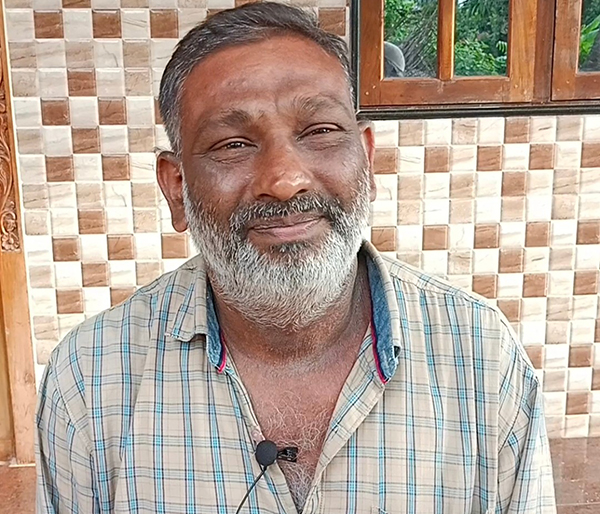
Mangaluru: Umar Farooq, the father of slain youngster Mohammed Faazil who was brutally assaulted and killed on Thursday, has requested the police department to take action against media houses that misreported the murder case and presented false angles to the case.
Speaking to Vartha Bharati after the cops on Tuesday arrested six accused in connection with the case, Umar Farooq said that while the cops are taking action against people spreading rumors and false information on social media regarding the case, they should also file cases against the media houses that misreported the incident.
He also added that ADGP Alok Kumar and Mangaluru Police Commissioner N Shashikumar delivered on their promises and arrested the accused. “My family is indebted to them.” He said.
“Police are initiating action against people spreading rumors and fake news in this regard on social media. But some of the media houses misreported the case and linked it to a love affair, a Sunni-Shia issue, and reported false information about Faazil while we were grieving the loss of my son. Those media houses should also be booked and action should be taken against them.” He added.
“The investigations have proved all those false angles wrong. Everything is clear now. Now the police should take action against these media houses.” He further added.
“A few days back some of the MLAs and Ministers said people involved in such crimes should be encountered. Now I want to ask them whether the people arrested in connection with the murder of my son should also be encountered?” he questioned.
Let the Truth be known. If you read VB and like VB, please be a VB Supporter and Help us deliver the Truth to one and all.
Trump says he called off dispatching envoys to Iran talks
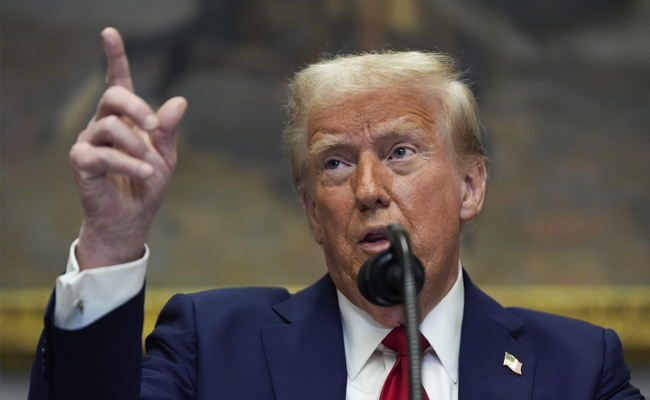
Dubai (PTI): US President Donald Trump said he told his top envoys Steve Witkoff and Jared Kushner not to travel to Pakistan to negotiate with Iran, stating on Fox News that "they can call us any time they want”.
Iran's President Masoud Pezeshkian said his country won't negotiate while the United States imposes a blockade on its ports. Pezeshkian told Pakistani Prime Minister Shehbaz Sharif during a phone call Saturday night that the US “should first remove operational obstacles, including the blockade,” to allow a new round of negotiations, according to the ISNA and Tasnim news agencies in Iran.
Iranian Foreign Minister Abbas Araghchi left Pakistan on Saturday evening, two Pakistani officials told The Associated Press. Iran's state-run IRNA news agency said Araghchi is expected back in Pakistan's capital Islamabad on Sunday.
Trump said Thursday that Israel and Lebanon agreed to extend a ceasefire between Israel and Hezbollah by three weeks after talks at the White House. The meeting was the second high-level negotiation between the two countries this month. The initial 10-day ceasefire had been due to expire Monday.
The Trump administration is placing economic sanctions on a major China-based oil refinery and roughly 40 shipping companies and tankers involved in transporting Iranian oil.
The move announced Friday is part of the administration's threat to impose secondary sanctions on entities doing business with Iran in an effort to cut off Iran's oil exports, which are a key source of its revenue.
Airlines worldwide have begun cancelling flights as the war in the Middle East strains jet fuel supplies and pushes up prices. Experts have offered information to travelers about what to do if a flight is cancelled.
Iran President Masoud Pezeshkian said his country won't negotiate while the United States imposes a blockade on its ports, according to Iranian media.
Pezeshkian told Pakistani Prime Minister Shehbaz Sharif during a phone call Saturday night that the US “should first remove operational obstacles, including the blockade”, to allow a new round of negotiations, the ISNA and Tasnim news agencies reported.
The Pakistani premier described the call as a “warm and constructive discussion”.
Iranian Foreign Minister Abbas Araghchi concluded a one-day trip to Pakistan's capital Islamabad on Saturday after meeting with Pakistani military and government officials.
The trip did not produce a breakthrough in efforts to relaunch negotiations after US President Donald Trump canceled a planned trip by his envoys to Islamabad.
Iran's state-run IRNA news agency said Foreign Minister Abbas Araghchi will return to Pakistan after his current visit to Oman on his way to visiting Russia.
The report said he was expected to be back in Pakistan's capital Islamabad on Sunday and would join other members of his delegation who had gone to Tehran for consultations and “instructions on the topics related to the end of the war.”