Southern Railway GM orders additional tracks at Mangaluru Central for smoother operations
_vb_08.jpeg)
Mangaluru: Southern Railway General Manager R.N. Singh has directed officials to make provisions for additional railway tracks at Mangaluru Central station to handle future growth in train traffic and ensure smoother operations.
During an inspection on Thursday, Singh reviewed the progress of several station redevelopment and infrastructure projects under the Palakkad division. According to a report by The Hindu, both Kozhikode and Mangaluru Central are being upgraded as world-class stations, while Kannur, Kasaragod, Mangaluru Junction, and Shoranur Junction are being developed under the Amrit Bharat Station Scheme to improve passenger amenities and infrastructure.
The inspection began at Kozhikode, where redevelopment work worth Rs 472.96 crore is progressing rapidly. Singh instructed officials to complete the project within the scheduled timeline. He then conducted a sectional inspection from Kozhikode to Mangaluru Junction, assessing track conditions, bridges, signalling systems, and passenger facilities along the route.
At Vadakara, Singh directed officials to examine the feasibility of setting up a new parking facility near the second entrance to enhance passenger convenience. At Kannur station, where redevelopment work is underway at a cost of Rs 35.63 crore, he recommended design modifications in the circulation area to improve passenger movement and station layout.
Officials informed Singh that 75% of the Rs 32.69 crore redevelopment work at Kasaragod station has been completed, while 97% of the Rs 19.62 crore project at Mangaluru Junction is nearing completion, added the report.
The GM was accompanied by Palakkad Divisional Railway Manager Madhukar Roat, Additional DRM S. Jayakrishnan, and other senior railway officials during the inspection.
Let the Truth be known. If you read VB and like VB, please be a VB Supporter and Help us deliver the Truth to one and all.
Bihar: Over 150 children fall ill after consuming 'mid-day meal' in Saharsa
Saharsa (PTI): More than 150 children were taken ill after allegedly consuming food that was part of the mid-day meal in a school in Bihar’s Saharsa district, a senior official said on Thursday.
The incident occurred at a middle school in Baluaha village of the district.
The official said that 115 children were undergoing treatment at the Sadar Hospital, while around 50 students were admitted to Mahishi Public Health Centre.
“We received information that several children fell ill after consuming the mid-day meal in Baluaha. The children were initially treated at the primary health centre, but later, many were referred to the Sadar Hospital,” Saharsa District Magistrate Deepesh Kumar told reporters.
“According to doctors, the health condition of the children has improved, but they will be kept under observation for some time. There is no need to panic. Some kids are having mild fever. They are being treated accordingly,” Kumar said.
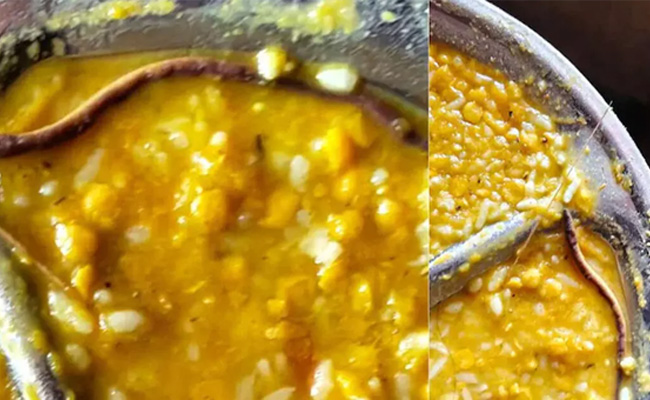
Meanwhile, family members of some children claimed that a snake was found in the container in which cooked pulses was stored at the school.
Of the 545 students present in the school, 200 had already eaten their meals by the time the snake was spotted, and later complained of stomach ache and vomiting, they said.
Regarding the claims, the DM said food samples have been collected from the school.
“We will be able to comment on this only after the results of the tested samples arrive,” he said.