St. Aloysius B.Ed College welcomes 17th batch of students
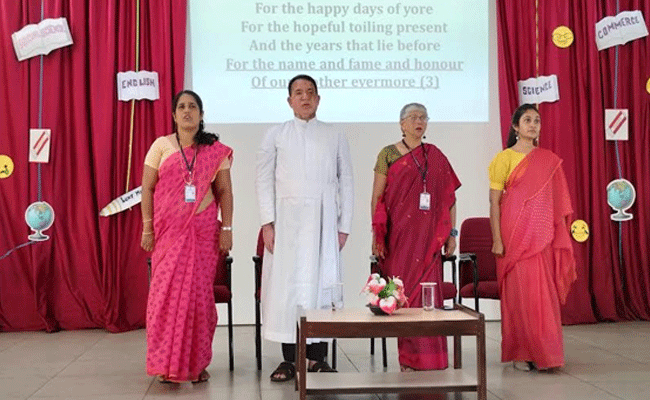
Mangaluru: St. Aloysius B.Ed College, a leading institute for teacher education in the city, welcomed its 17th batch of students recently.
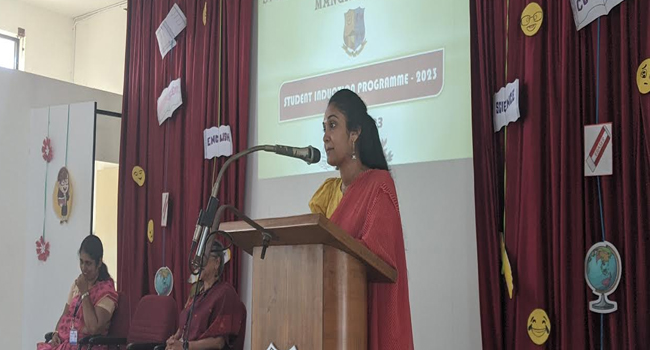
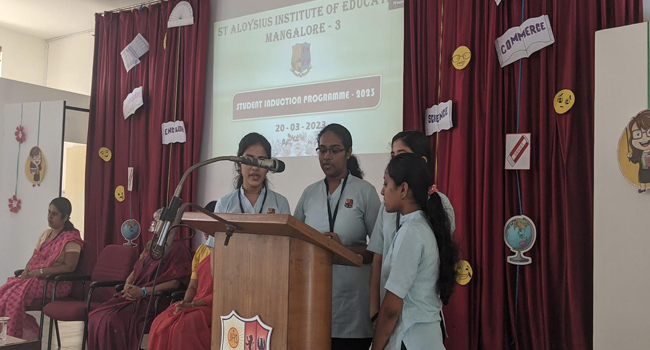
The programme commenced with introductory remarks by Preethi Pais, vice-president of the Students’ Council, followed by the College choir offering a prayer song.
Principal Dr. Farita Viegas, in her welcome speech, said, “The first day of new students in the College is one of the important days that initiate the transition of students. A teacher education programme is not just to earn a degree to get a job, but a course that is designed to prepare teacher candidates competent to face the challenges of the developments and trends of a dynamic society. The crux of the entire process of teacher education lies in its curriculum, which is sensitive to develop in pre-service teachers an understanding about the philosophy of education, child psychology, educational management, teaching skills, creating learning environments and a capacity to observe and analyze.”
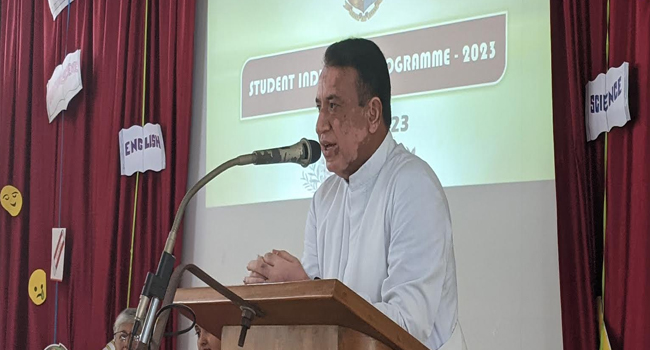
Speaking on the occasion, Rev. Fr. Dr. Praveen Martis SJ, director of the College, narrated the evolution of Jesuit Education in India and, later, in Mangaluru. He highlighted the importance of the core values of Jesuit Education, namely, competence, compassion, commitment, conscience, creativity, character and collaboration. He also spoke on the significance of these values in the lives of teachers and students in forming a harmonious society.
Elizabeth Sebastian, who belonged to the 2019-21 batch, motivated the new students by sharing her experience, speaking on how the programme helped her improve her teaching skills and refine her talents.
“Teaching has always been the most sought-after and respected profession. Teachers shoulder a huge responsibility of enlightening the lives of students and opening the minds to a world of possibilities. B.Ed is an excellent course that helps trainees and teachers gain an in-depth understanding of the world of education. Teacher proficiency would enable the teachers to meet the requirements of the profession and face the challenges in the future,” she added.
The programme ended with the singing of the College anthem.
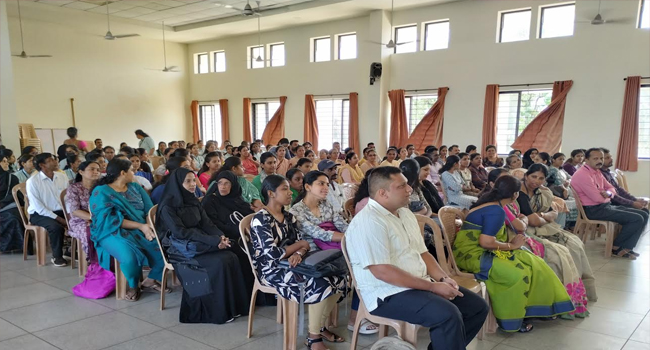
College staff members and family members of the new students attended the event.
Sandhya, staff in-charge, compered the programme.
Let the Truth be known. If you read VB and like VB, please be a VB Supporter and Help us deliver the Truth to one and all.
UP: Petrol pump manager booked for denying fuel to ambulance; causing man's death

Ballia (UP) (PTI): Police on Saturday registered a case against a petrol pump manager in connection with the death of a 50-year-old man who allegedly could not be taken to hospital in time after a private ambulance was denied fuel.
The case has been filed against Ashok Kumar Bharti, manager of M/s Bhushan Service Station in Tengrahi village, under sections of the Essential Commodities Act, officials said.
According to police, the FIR was lodged following a complaint by Supply Inspector Indresh Kumar Tiwari. During the inquiry, the manager admitted that an ambulance had arrived at the petrol pump around 9.20 pm on April 22 seeking fuel, stating that it had run out of petrol. However, fuel was not provided, citing non-availability, officials said.
The ambulance allegedly remained stationed at the pump for about 15 minutes. However, records showed that the petrol pump had sufficient stock on that day, including 4,595 litres of motor spirit, 4,784 litres of high-speed diesel and 3,475 litres of premium petrol, indicating that fuel was available but not supplied, the FIR said.
District Magistrate Mangla Prasad Singh said an inquiry was conducted under the supervision of the Additional District Magistrate by a team comprising the Sub-Divisional Magistrate of Bairia and the District Supply Officer. Based on the findings, directions were issued to register a case.
Circle Officer (Bairia) Mohammad Fahim Qureshi said police have launched a probe and are searching for the accused manager.
Earlier, District Supply Officer Devmani Mishra had said that Chhatthu Sharma (50), a resident of Pandeypur village in Bairia tehsil, fell critically ill on the night of April 22. His family was taking him to the district hospital in a private ambulance when it ran out of fuel on the way.
The family approached a petrol pump near Tengrahi village for fuel, but the operator allegedly refused, citing a shortage. The family claimed that Sharma died on the way as he could not be taken to the hospital in time due to a lack of petrol.
The district magistrate said that CCTV footage confirmed that the ambulance had reached the petrol pump and sought fuel, which was not provided. He added that the pump operator cited low stock, but inspection revealed sufficient stock of petrol and diesel at the outlet.
Officials said that representatives of Indian Oil have also visited the site, and further action against the petrol pump will be recommended based on the findings.