St. Gerosa school incident: Suspended teacher did not hurt Hindu religious feelings: Says school
Adds management was forced by MLA Vedavyas Kamath to suspend her
Mangalore: St. Gerosa Convent School in Mangalore has issued a press statement addressing the recent incident involving Sister Prabha, who was suspended amid allegations of making derogatory remarks about the Hindu religion and the Prime Minister during a lesson on Rabindranath Tagore's poem 'Work is Worship.'
The school management provided a detailed account of the events, emphasizing that the controversy stemmed from an anonymous complaint received on February 10. The complainants accused Sister Prabha of making offensive statements, prompting the headmistress to initiate an immediate inquiry.
Sister Prabha firmly denied the allegations, and the management explained that the poem, 'Work is Worship,' was taught with specific emphasis on respecting all religions. The interpretation included the following key points:
1. Clarification that temples, churches, and mosques are physical structures, and God resides in human hearts, discouraging harm to individuals in the name of religion.
2. Encouraging respect for work and recognizing the divine in fellow human beings.
3. Highlighting that God exists within people, and everyone is a temple of God.
The school management stated unequivocally that Sister Prabha did not make derogatory remarks against any religion, including Hinduism, or the Prime Minister. A complaint was filed with the district administration against an anonymous woman whose audio message had gone viral, allegedly containing false accusations.
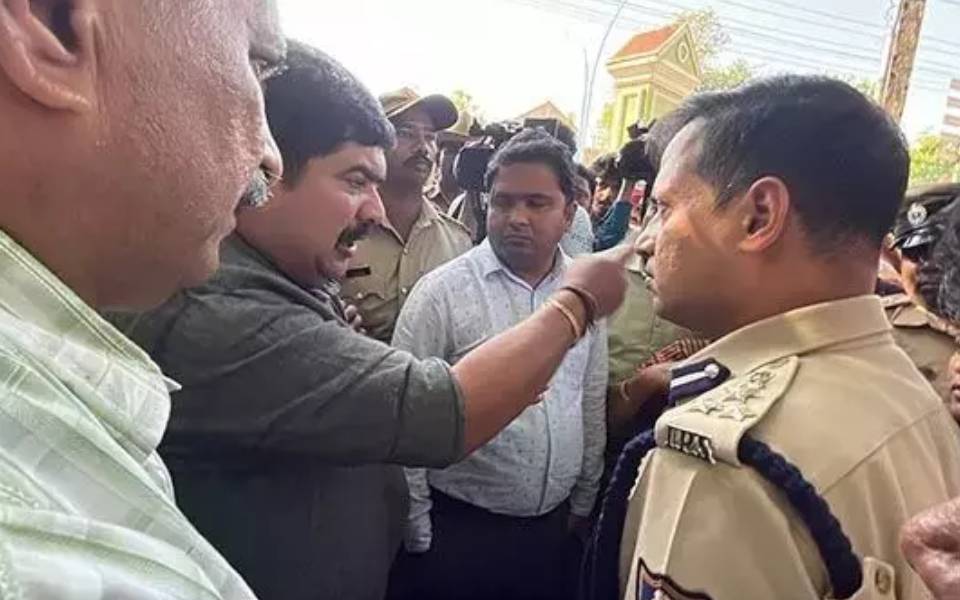
Officials from the education department visited the school on February 12 to inquire into the matter. Subsequently, the situation escalated with the arrival of local MLA Vedavyas Kamath and Hindutva activists, who protested outside the school premises. Despite an invitation, MLA Kamath refused to enter the school, choosing instead to incite students against their institution, the press statement issued by Sr. Anitha, the headmistress of the school asserted.
“On 12th February from the Department of Education, a Subject Inspector from BEO Office, a Co-ordinator from DDPI office, BEO, ECO and CRP visited the school for whom the truth was explained on their request.
This was followed by the arrival of local MLA Vedavyas Kamath with a group of Hindutwa activists who shouted slogans against the school. The management recognized his presence, owed him due respect and invited him inside the school, but he refused to come in but protested against the school and management. It was hurting to see that MLA who should have been a person for all, gathered the children around him and instigated them to shout slogans, against their own school. The students who were not in the class while teaching the poem, but of other classes were also made to shout slogans,” the statement added.
Under mounting pressure from the protesting crowd, MLA Kamath demanded Sister Prabha's immediate dismissal without due inquiry. To maintain law and order and disperse the gathering mob, the headmistress, Sr. Anitha, reluctantly issued a statement suspending Sister Prabha from her position. It is crucial to note that Sister Prabha has 16 years of teaching experience, with an unblemished record, including five years at Gerosa School, it added.
The school management is raising questions about the authenticity and motives of the woman in the viral audio, calling for a thorough investigation. They assert that the incident appears staged to tarnish the school's image and underscore their commitment to a secular outlook by annually celebrating Diwali, Christmas, and Eid without any form of discrimination.
“Critical point of the whole episode which needs to be looked into is - Whether the lady who spoke about the school in viral audio is actually a parent of Gerosa student. If not, what is her agenda behind making such bald allegations. If she was a parent why she did not give a written complaint to the school management about the issue.
“It appears that the incident/ protest was stage managed to tarnish the image of school, which has been imparting quality education with minimum fees. We being secular in our outlook always respect all students and do not discriminate anyone on the basis of caste, creed and religion. Every year we celebrate Deepavali, Christmas and Eid.” It added.
The press statement concludes by acknowledging that media personnel were not allowed inside the Gerosa premises during the incident.
Let the Truth be known. If you read VB and like VB, please be a VB Supporter and Help us deliver the Truth to one and all.
Ex-minister Shrawon Kumar appointed JD(U) legislative party leader in Bihar
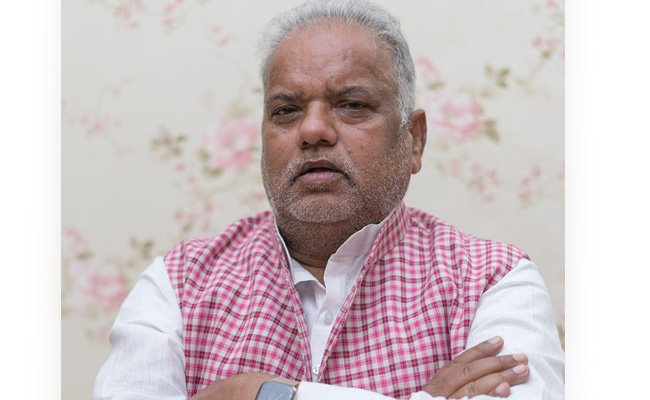
Patna (PTI): Former Bihar minister Shrawon Kumar has been made the JD(U)'s legislative party leader, a notification issued by the state assembly secretariat said on Tuesday.
The development comes a day after the party's legislators had "authorised" national president Nitish Kumar to take a decision in the matter.
The JD(U) supremo had chaired a meeting of party MLAs and MLCs at 1, Anney Marg, the official residence of the Chief Minister of Bihar, which he is likely to vacate soon in view of having relinquished the top post.
Shrawon Kumar, a confidant of the JD(U) chief, is a seventh-term MLA from Nalanda constituency, which falls in the eponymous district to which the former CM also belongs.
The 68-year-old leader, who is a Kurmi, a powerful OBC group to which Nitish Kumar also belongs, has held portfolios like rural development, social welfare and transport in governments headed by his mentor, who has now moved to the Rajya Sabha.
Meanwhile, the JD(U) president's son Nishant congratulated Shrawon Kumar upon being appointed as the legislative party leader.
"This is great. I extend him my best wishes," he told reporters.
BJP leader Samrat Choudhary was sworn in as the 24th chief minister of Bihar on April 15, marking the first instance of a member of the saffron party assuming the top post in the state.