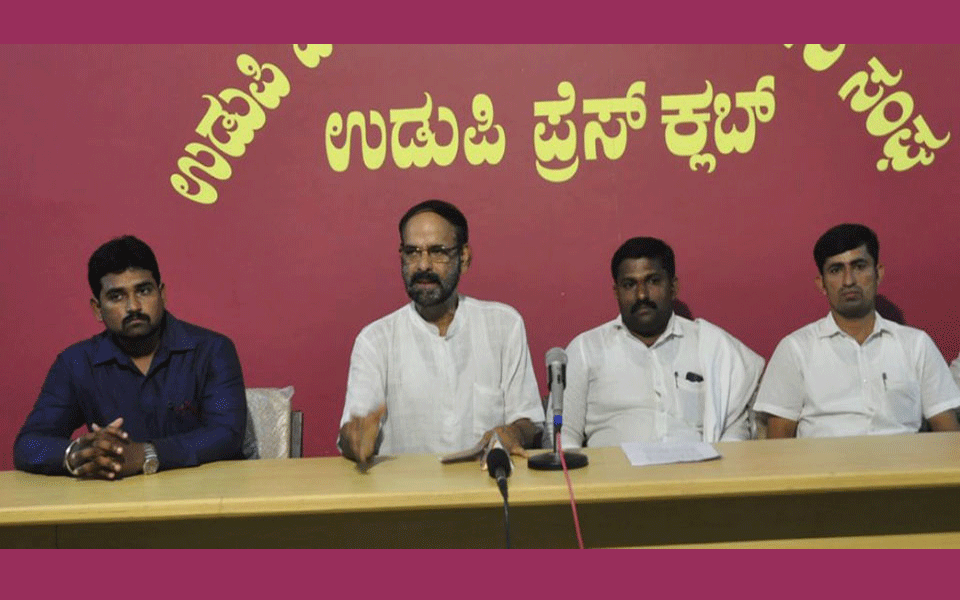
Udupi: The newly formed Sasantra Tulunad Paksha has planned to field its candidates in all five Assembly constituencies in Udupi district and all eight Assembly constituencies in Dakshina Kannada district.
Addressing reporters here on Wednesday, Aikalbawa Chittaranjandas Shetty, president of the Udupi district unit of Sasantra Tulunad Paksha, said that the aim of the party was to protect and promote Tulu language, the culture and environment of Tulunadu. The party had already selected three candidates — Sudarshan Poojary for Udupi Assembly Constituency, Sumanth K. Poojary for Karkala Assembly Constituency, and Vidyashri Shetty for Puttur Assembly Constituency in Dakshina Kannada.
None of the national parties were interested in matters concerned with Tulunadu. The first blow to Tulunadu was struck when Kasaragod, which was part of Tulunadu, was given away to Kerala during the Re-organization of States.
Such was the pathetic state of affairs in Tulunadu, the youth of Udupi and Dakshina Kannada districts had to go to places, including Mumbai and Bengaluru, in search of jobs.
Shailesh R.J., president of Sasantra Tulunadu Paksha, Prashanth, Mushtaq, party leaders, were present.
Let the Truth be known. If you read VB and like VB, please be a VB Supporter and Help us deliver the Truth to one and all.
New Delh (PTI) The Congress on Saturday said it is perhaps not very surprising that India is not part of a US-led strategic initiative to build a secure silicon supply chain, given the "sharp downturn" in the Trump-Modi ties, and asserted that it would have been to "our advantage if we had been part of this group".
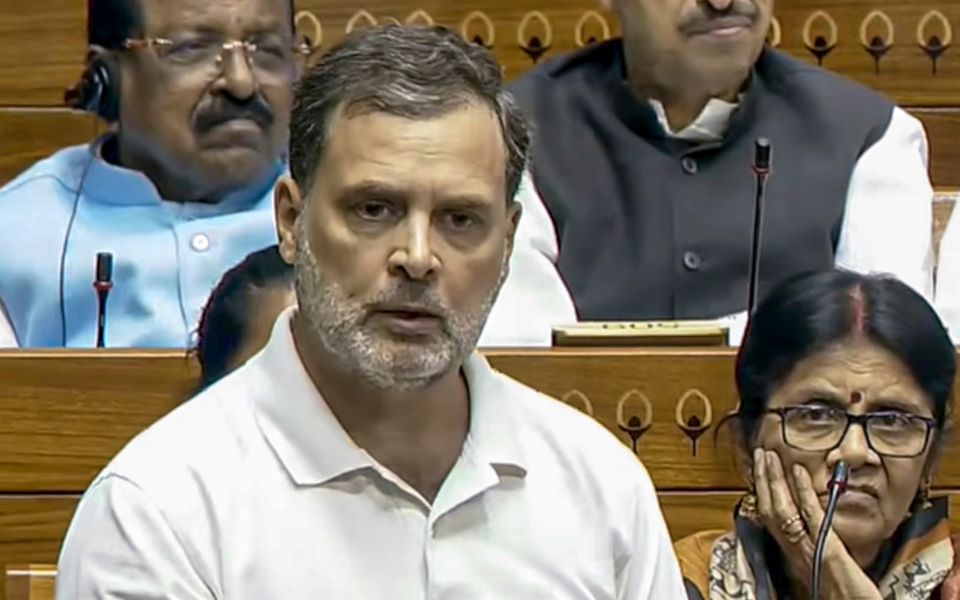
Congress general secretary in charge of communications Jairam Ramesh took a swipe at Prime Minister Narendra Modi, saying the news of India not being part of the group comes after the PM had enthusiastically posted on social media about a telephone call with his "once-upon-a-time good friend and a recipient of many hugs in Ahmedabad, Houston, and Washington DC".
In a lengthy post on X, Ramesh said, "According to some news reports, the US has excluded India from a nine-nation initiative it has launched to reduce Chinese control on high-tech supply chains. The agreement is called Pax Silica, clearly as a counter to Pax Sinica. The nations included (for the moment at least) are the US, Japan, the Republic of Korea, Singapore, the Netherlands, the United Kingdom, Israel, the United Arab Emirates, and Australia."
"Given the sharp downturn in the Trump-Modi ties since May 10th, 2025, it is perhaps not very surprising that India has not been included. Undoubtedly, it would have been to our advantage if we had been part of this group."
"This news comes a day after the PM had enthusiastically posted on his telephone call with his once-upon-a-time good friend and a recipient of many hugs in Ahmedabad, Houston, and Washington DC," the Congress leader asserted.
The new US-led strategic initiative, rooted in deep cooperation with trusted allies, has been launched to build a secure and innovation-driven silicon supply chain.
According to the US State Department, the initiative called 'Pax Silica' aims to reduce coercive dependencies, protect the materials and capabilities foundational to artificial intelligence (AI), and ensure aligned nations can develop and deploy transformative technologies at scale.
The initiative includes Japan, South Korea, Singapore, the Netherlands, the United Kingdom, Israel, the United Arab Emirates, and Australia. With the exception of India, all other QUAD countries -- Japan, Australia and the US -- are part of the new initiative.
New Delhi will host the India-AI Impact Summit 2026 on February 19-20, focusing on the principles of 'People, Planet, and Progress'. The summit, announced by Prime Minister Narendra Modi at the France AI Action Summit, will be the first-ever global AI summit hosted in the Global South.
Prime Minister Modi and US President Trump on Thursday discussed ways to sustain momentum in the bilateral economic partnership in a phone conversation amid signs of the two sides inching closer to firming up a much-awaited trade deal.
The phone call between the two leaders came on a day Indian and American negotiators concluded two-day talks on the proposed bilateral trade agreement that is expected to provide relief to India from the Trump administration's whopping 50 per cent tariffs on Indian goods.
In a social media post, Modi had described the conversation as "warm and engaging".
"We reviewed the progress in our bilateral relations and discussed regional and international developments. India and the US will continue to work together for global peace, stability and prosperity," Modi had said without making any reference to trade ties.