Udupi: Banking services hit as employees go on strike
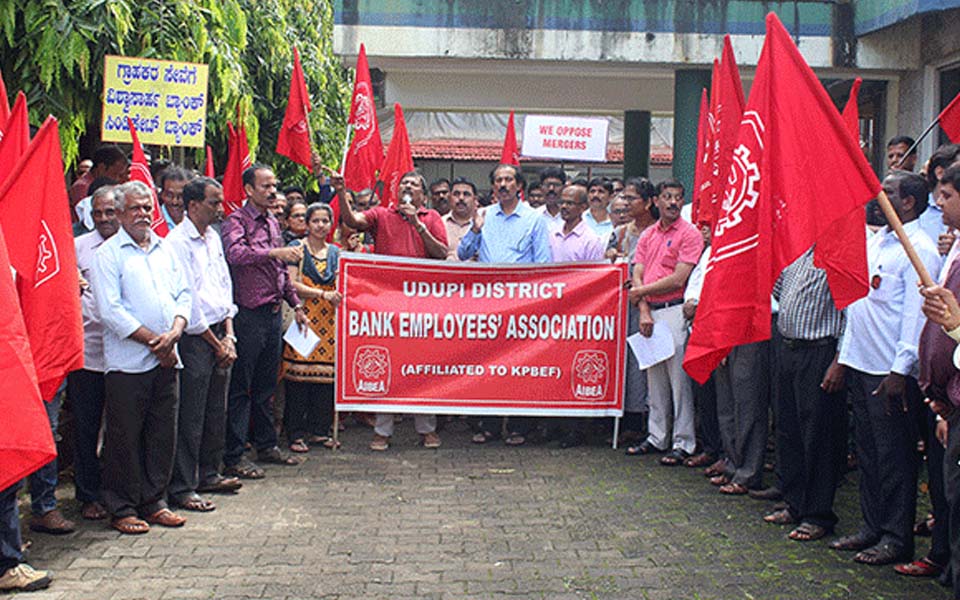
Mangaluru/Udupi, Oct 22: Banking services in Dakshina Kannada district were hit as a majority of employees went on strike on Tuesday as part of the nationwide stir called by various employees unions to protest mergers of banks.
Most of the employees in banks abstained from work causing difficulty to customers who were caught unaware by the one-day strike by employees.
A protest was held by All India Bank Employees Association (AIBEA) and Bank Employees Federation of India (BEFI) in neighbouring Udupi district against the Union governments move at Corporation Bank zonal office in Udupi.
Addressing protesters, Syndicate Bank employees union state joint secretary Premanath Poojary claimed around 50,000 employees have lost jobs since the merger of SBI with its satellite banks and 6,950 SBI banks were closed.
The Centre should rethink on their decision and take steps to recover corporate loans to tide over economic crisis, he said.
The protests against bank mergers began on September 26 in Udupi and later in Mangaluru on October 18, where employees, central trade unions and members of the public had taken part.


Let the Truth be known. If you read VB and like VB, please be a VB Supporter and Help us deliver the Truth to one and all.
4 workers die after being buried under coal slurry in Jharkhand's Dhanbad
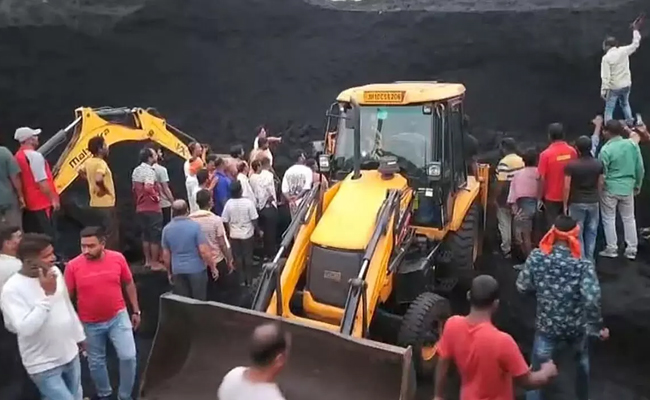
Dhanbad (Jharkhand) (PTI): At least four workers died after being buried under coal slurry in Jharkhand's Dhanbad district on Saturday, a police official said.
The incident took place at Moonidih coal washery in the command area of Bharat Coking Coal Limited (BCCL).
"Bodies of all four workers were dug out of debris during a rescue operation," Putki police station in-charge Waqar Hussain told PTI.
The incident took place when coal slurry was being loaded into trucks by workers, during which a large chunk of slurry fell and trapped several workers underneath, officials said.
The deceased have been identified as Manik Bauri, Dinesh Bauri, Deepak Bauri, and Hemlal Gope.
Meanwhile, the family members of the deceased and local villagers placed the bodies in front of the washery gate and began a protest.
They demanded compensation, jobs for dependents and action against those responsible for the incident.
Police and administration officials are trying to pacify the protesters, an official said.