Udupi DC seen attending wedding event without mask, people demand suspension as photo goes viral

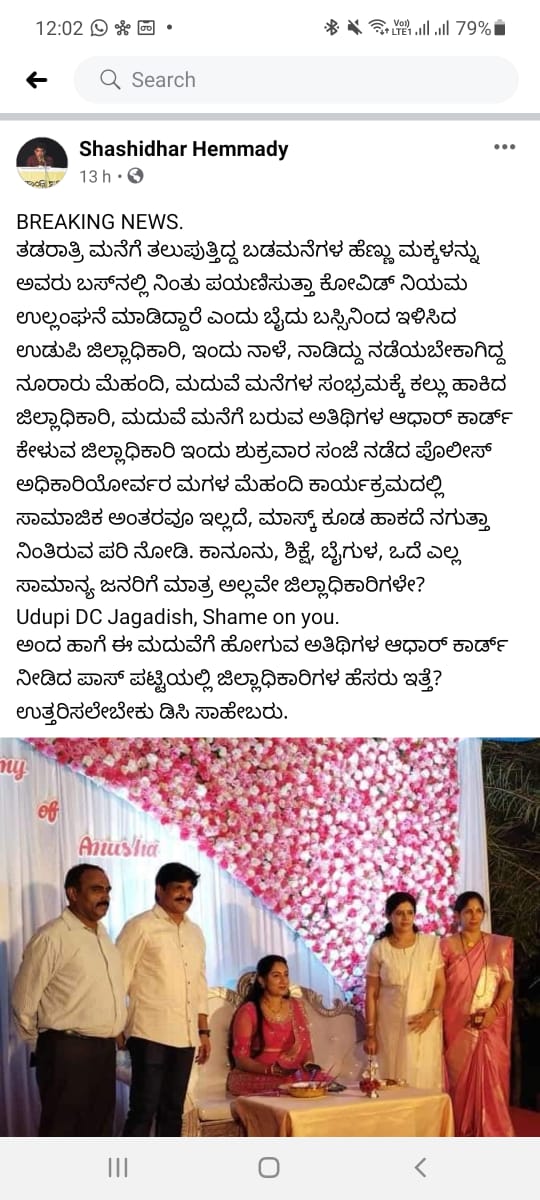
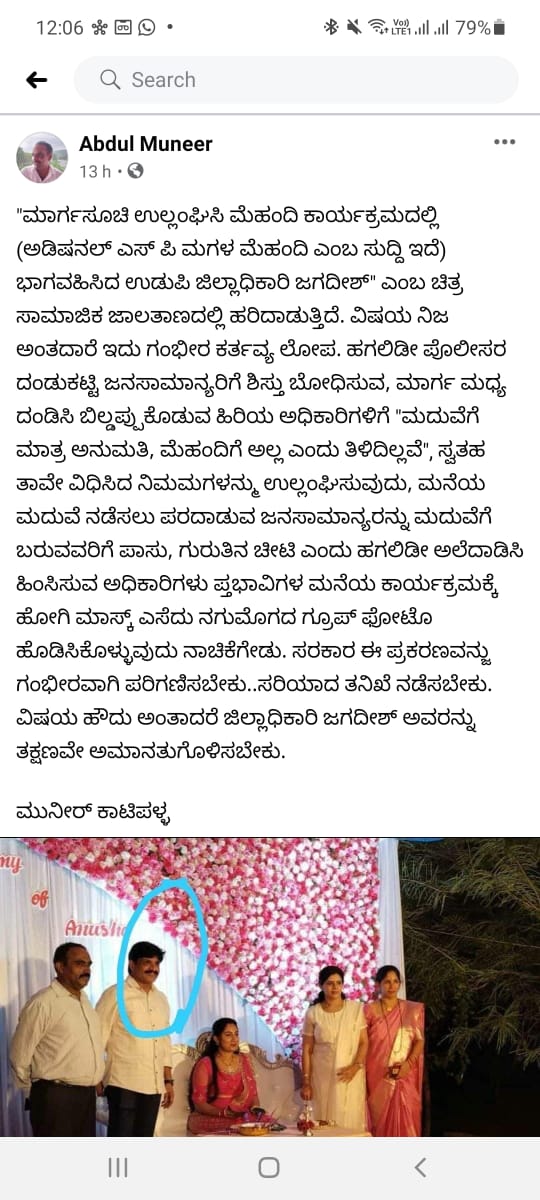
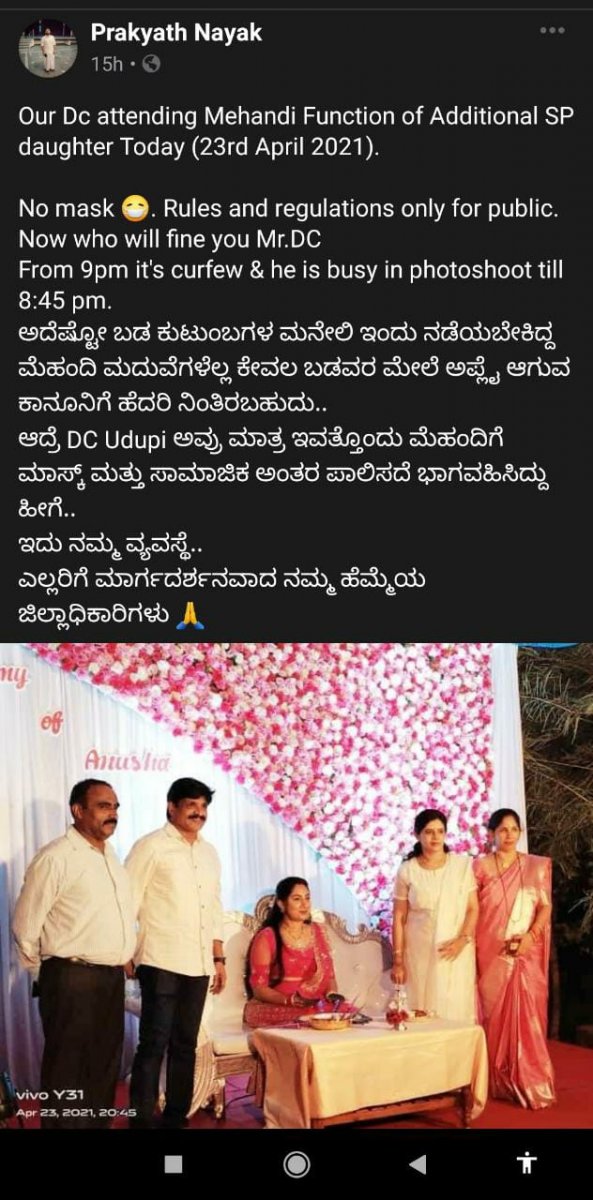
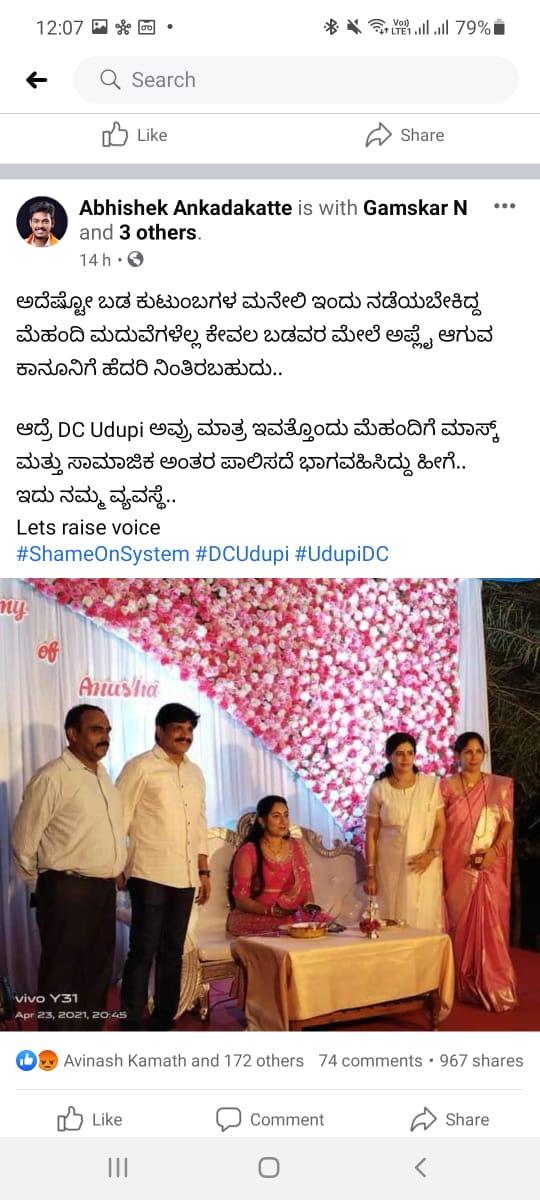
Udupi: A photo showing Udupi Deputy Commissioner N Jagadish, attending a Mehendi event of Udupi’s Additional SP’s daughter without wearing a mask has gone viral across social media platforms with people outraging over the negligence of the officer and for violating the COVID-19 guidelines.
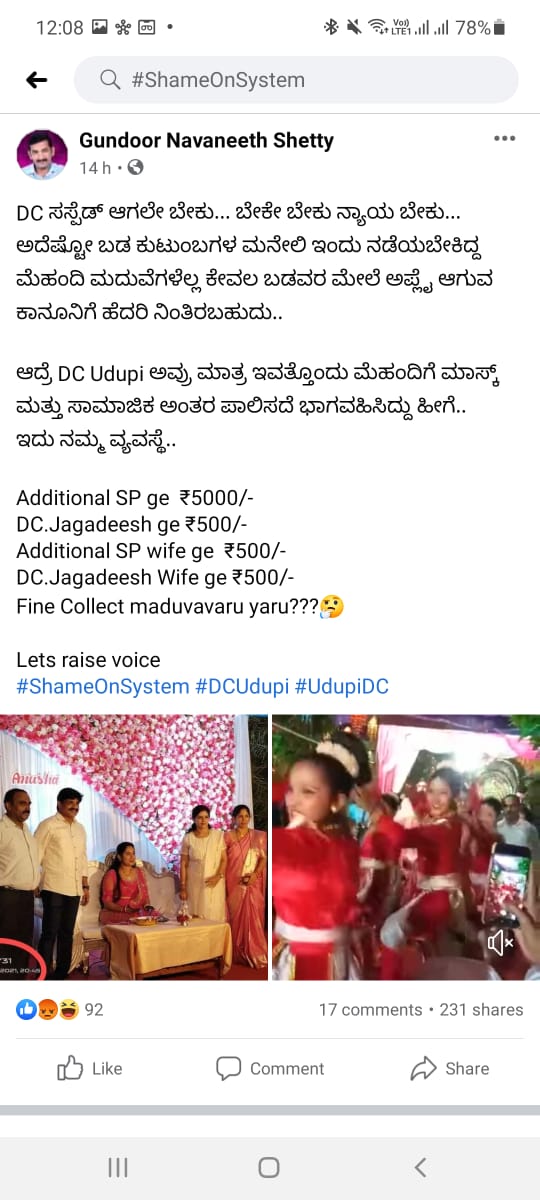
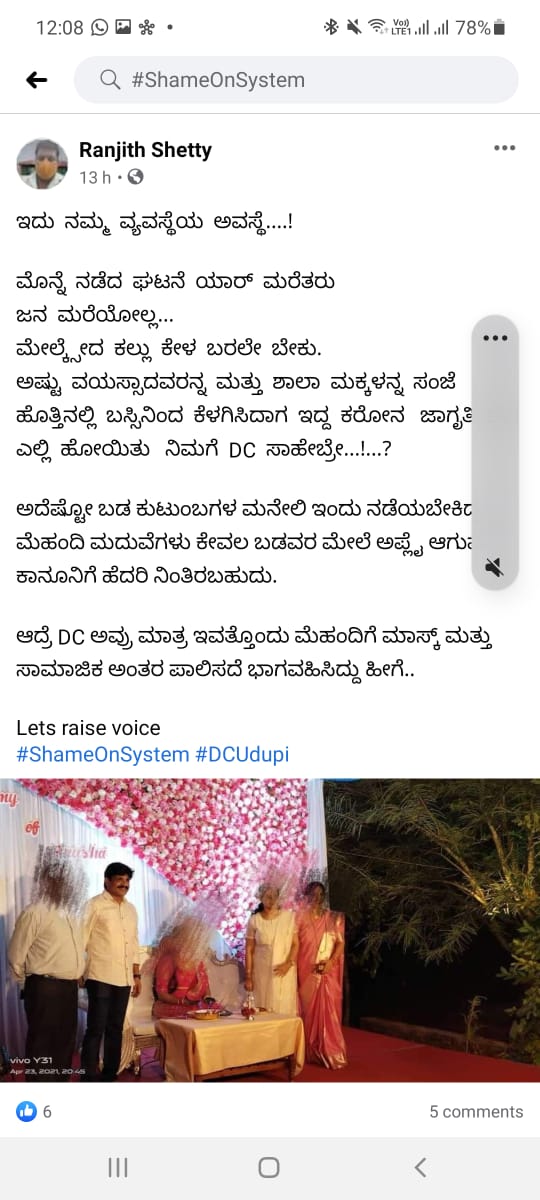
According to the reports the wedding ceremony was scheduled to be held on April 25 while the Mehendi event was organized on April 23 evening. The District Commissioner had reportedly attended the event along with his family. The DC and the District’s Additional SP were seen in a photo standing next to the would-be bride on the stage, without maintaining appropriate social distance and without a mask.
People on social networking slammed the DC for attending the event and not following COVID protocols. They also added that there was no reference to the ‘Mehendi ceremony’ in the guidelines issued by the state government while for the wedding event only 50 people were allowed to attend and the Mehendi event as such was not permitted to be held. Despite that, instead of stopping the Mehendi event that is not cited in the guideline, the DC has erred by participating in the event, people opined.
Apart from that a video of the event has surfaced on social media and has gone viral showing hundreds of people participating in the event, while a team of dancers was seen escorting the bride in a procession.
In a recent incident, the DC had earned the ire of the netizens for forcing female students who were standing and traveling back home in a bus at Santhekatte, and now he has embraced another controversy.
There is a growing call to suspend the DC on various social media sites in this regard. Hashtag Campaigns against the DC have been reportedly organized on Twitter.
Demands to Suspend DC
“Without maintaining any social distancing or even wearing any mask, look at him standing with a smile at the Mehendi event of police official’s daughter. Law, punishment, reproach, beating is all only for the common people, isn’t it Mr. District Commissioner? Usurp DC Jagadish, shame on you. By the way, in the pass list of wedding guests who provided Aadhar card, was the District Commissioner’s name present? DC Saheb must definitely provide an answer”, progressive thinker Shashidhar Hemmadi posted on Facebook.
“The District Commissioner has committed severe omission of duty by violating guidelines and participating in the Mehendi function. He, violating the rules that were devised by him is disgraceful. The government must review this seriously. A proper inquiry must be conducted. If the issue proves to be true, District Commissioner Jagadish must be immediately suspended”, demanded DYFI Leader Muneer Kaatipalla demanded in a Facebook post.
DC issues clarification:
Jagadish later clarified that the event was a private and family event organized at the house of Additional SP and not at a public place. He clarified that people are bound to wear masks only in public places and not in private spaces. He added that the Mehendi event was a private event and only people of four families had attended the event.
He also added that he attended the event for less than 10 minutes and at the request of the bride he took off the mask for photography on the stage. He clarified that he checked in into the event at 8:40 on Friday and checked out before the weekend curfew was imposed.
Let the Truth be known. If you read VB and like VB, please be a VB Supporter and Help us deliver the Truth to one and all.
Lebanon appoints new representative for talks with Israel, rejects linkage to Iran
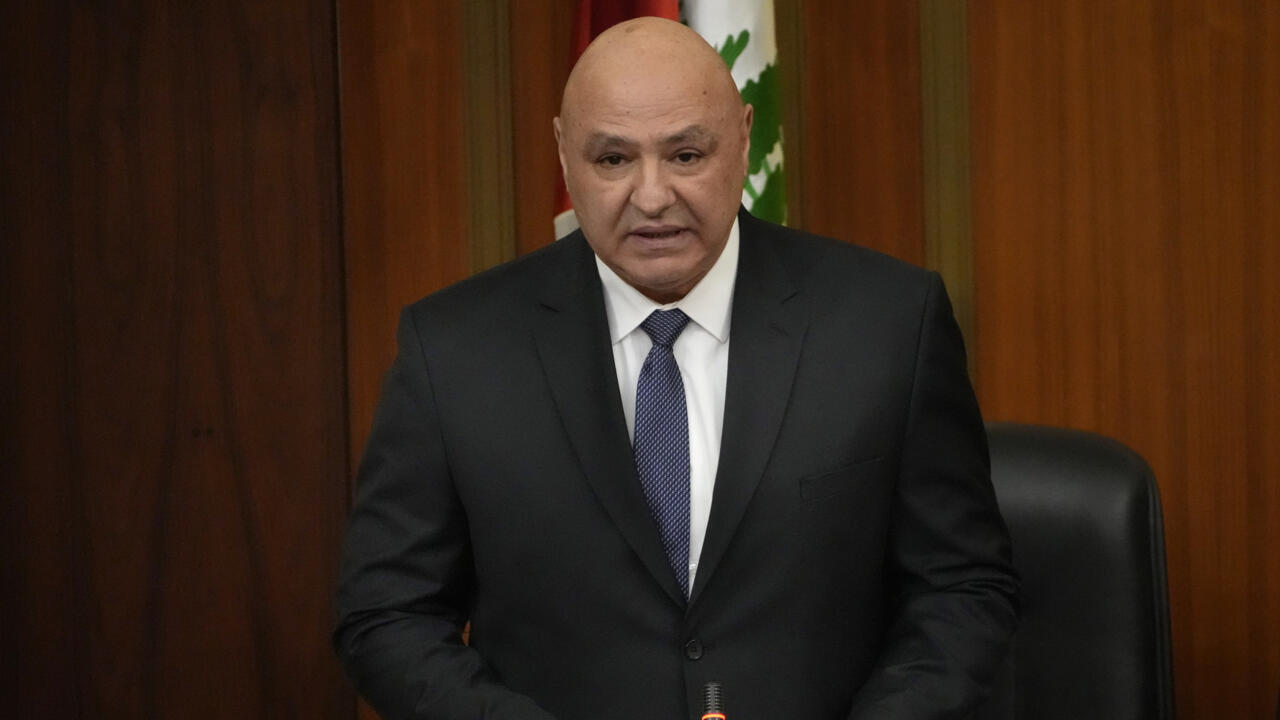
Beirut: Lebanon’s has moved to underline its independent position in ongoing regional developments, amid attempts to link the country to the broader conflict involving Iran, the United States and Israel.
President Joseph Aoun, while announcing the appointment of former US ambassador Simon Karam as Lebanon’s representative in talks with Israel, made it clear that Karam would be the sole representative for Lebanon and that there would be no substitute.
The move comes in response to what the Lebanese officials see as efforts by Iran to tie Lebanon’s situation to the wider regional conflict. Iran had indicated that there would be no ceasefire involving the US, Israel and Iran unless it also included a ceasefire in Lebanon.
Some groups, including Hezbollah and its supporters, had expressed support for linking the situations, citing concerns that the Lebanese government has limited leverage in negotiations with Israel. Lebanon is not formally a party to the conflict, and its army is considered weak.
However, others, including Prime Minister Nawaf Salam, have opposed this approach. They view Iran’s stance as an attempt to influence Lebanon’s internal affairs and see it as undermining the country’s sovereignty.
Officials backing the government’s position say the move is aimed at reaffirming Lebanon’s sovereignty and ensuring that decisions about peace and ceasefire within the country are not dictated externally.
They also see it as a safeguard, so that any breakdown in talks between the US, Israel and Iran does not automatically lead to renewed conflict in Lebanon.