Udupi girl who had secured second state rank in SSLC 2018, now tops state in PUC Science stream
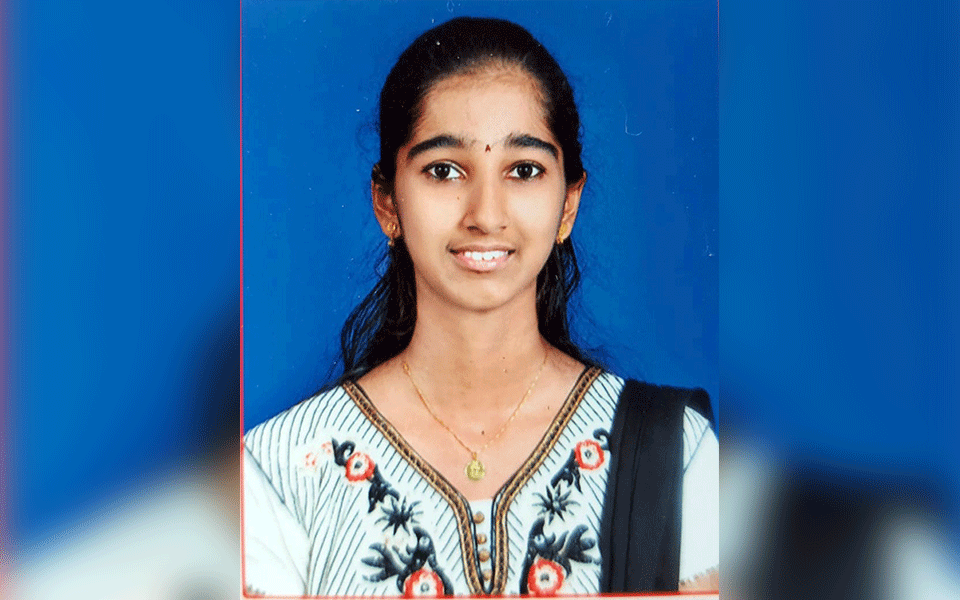
Udupi: Karnataka PU Education Board on Tuesday declared the results of the PUC Examinations 2020-2021 wherein Udupi District emerged as the best performing District. In what has brought more laurels to the district, a student from Udupi District has topped the state in individual results in the Science stream.
The student, Abhijna Rao is a student of Vidhyodaya PU College in Udupi and is the daughter of Asha Rao and Vittal Rao. She topped the Science stream in the state by scoring 596 aggregate marks and securing 99.33% in the stream.

Abhijna scored full marks in five subjects (Physics, Maths, Chemistry, Sanskrit, and Computer Science) and scored 96 marks in English, securing 596 aggregate marks in the examination. Interestingly, Abhijna had secured the second rank in the state in her SSLC examination, two years ago.
After topping the state, Abhijna said she had worked hard to achieve this and she had set it as her goal to improve her SSLC ranking in the PUC examination. She expressed her satisfaction over the results and added that the Coronavirus Lockdown helped her prepare well for the English exam.

Let the Truth be known. If you read VB and like VB, please be a VB Supporter and Help us deliver the Truth to one and all.
Body of man in Kalaburagi found hanging in his field; cause of death unknown

Kalaburagi: A man was found dead, with his body seen hanging, in his own field in Hulasaguda village of Kalagi taluk on Saturday morning. The cause for death is unknown as yet.
The deceased, identified as Revanasiddhappa Shettappa (26), is learned to have been a resident of Hulasaguda village.
Ratkal Police Sub-inspector Sheela Devi reportedly visited the spot where the man’s body was found and inspected it.
Police have registered a case in this regard and are probing the death of the Shettappa.