Udupi: Police arrest another accused in Yogish Poojary murder case; bike seized
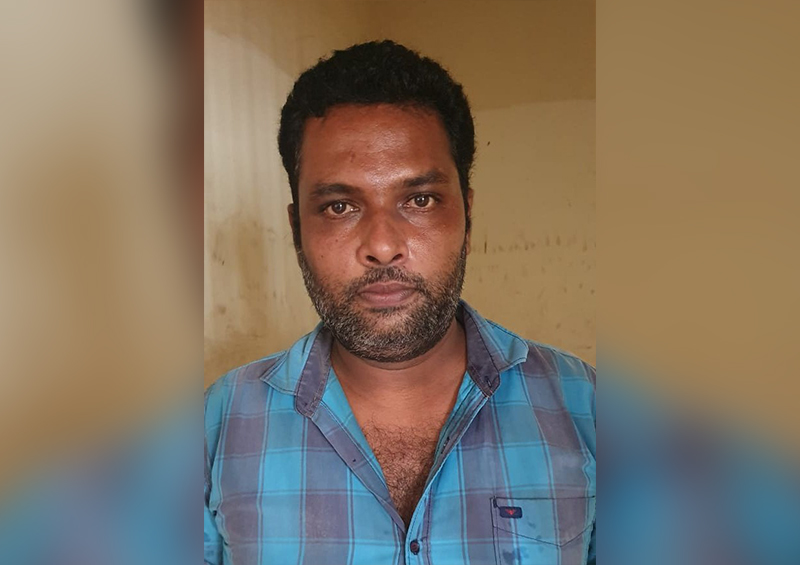
Malpe: Udupi Police investigating Yogish Poojary murder case has arrested one more accused in the case and has seized his bike which he had reportedly used while committing the crime.
The arrested accused has been identified as Anup Kundar, 38, who works as an electrician, said sources. After the murder of Poojary, 26, a resident of Laxmi Nagar in Tenkanidiyur village, Kundar was staying underground in Bagalkote. The police, after getting information on Kundar, arrested him in Bagalkote and brought him to Udupi.
Among the suspects in the murder case, Sujith Pinto, Vinay Devadiga, Rohit Pinto, and Pradeep Poojary alias Annu have been arrested and all of them have been remanded in judicial custody. Police teams are now looking for another suspect Girish, who is still absconding.
A case has been registered at the Malpe Police Station.
Let the Truth be known. If you read VB and like VB, please be a VB Supporter and Help us deliver the Truth to one and all.
Two people killed as poultry vehicle rams into parked truck in Belagavi
Belagavi (Karnataka) (PTI): Two people were killed, and another was severely injured after a goods vehicle transporting poultry birds allegedly rammed into a stationary truck on a national highway in Belagavi in the early hours of Tuesday, police said.
The deceased have been identified as Wasim (28) and Mubarak (22), both natives of Shivamogga district, they said.
The driver of the vehicle, Basavaraj Eerappa Hanchinamani (37), suffered critical injuries and has been admitted to a hospital, police said.
According to police, the accident occurred when the driver reportedly lost control of the vehicle, allegedly due to drowsiness, and crashed into a truck parked along the highway.
The goods vehicle was en route from Kolhapur to Sorab in Shivamogga district, carrying poultry. Several chickens were also killed in the impact, a senior police officer said.
Police personnel from the Hirebagewadi Police Station visited the spot and conducted an inspection.
Injured people and the bodies of the deceased were shifted to a hospital, police added.