Uppinangady: Diesel-filled Tanker overturns; People scramble to fill diesel

Uppinangady: In an incident that occurred on Saturday, a diesel-filled Tanker overturned on the Mangaluru-Bengaluru National Highway at Nekkilady Bollaru.
Reportedly, the driver of the Tanker was injured in the accident.
The Tanker which was going from Mangaluru reportedly fell over sideways on the road at Bollaru. Due to this the movement of vehicles was hindered causing a traffic jam at the location of the accident.
People Rush to Fill Diesel
After the Tanker overturned on the roads, the diesel from the vehicle was reportedly leaking onto the roads which attracted locals and travellers in the location to rush to the site in a bid to fill diesel in whatever containers they had in hand, it is learned.
The rush to obtain diesel reportedly created a chaotic situation causing people to shove each other. It is learned that later, Uppinangady police arrived at the scene and began dispersing the busy crowd filling the diesel by resorting to lathi-charge.


Let the Truth be known. If you read VB and like VB, please be a VB Supporter and Help us deliver the Truth to one and all.
French prosecutors summon Elon Musk over allegations of child abuse images and deepfakes on X
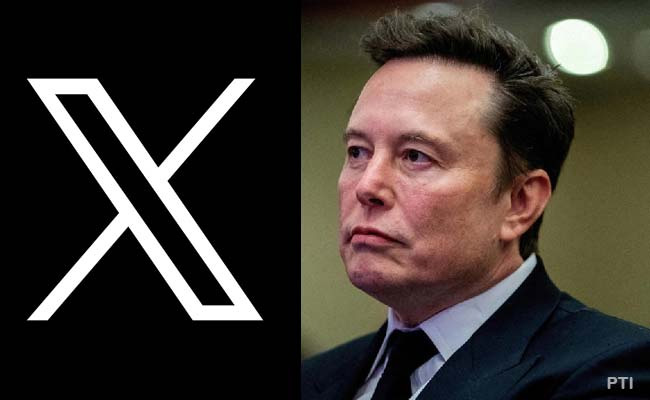
Paris (AP): Elon Musk has been summoned to Paris on Monday, where investigators are looking into allegations of misconduct related to the social media platform X, including the spread of child sexual abuse material and deepfake content.
The world's richest man and Linda Yaccarino — the former CEO of X — have been summoned for “voluntary interviews," while other employees of the platform are scheduled to be heard as witnesses throughout this week, the Paris prosecutor's office said.
It remains unclear whether Musk and Yaccarino will travel to Paris. A spokesperson for X did not respond to questions from The Associated Press and Yaccarino's current company, eMed, did not answer a request sent to the press email.
French prosecutors also suspect that controversy around the platform's AI system Grok's deepfakes was concocted to boost the value of Musk-owned companies ahead of a key market listing, and alerted US authorities. Musk welcomed a report that US justice officials refused to help French investigators, posting on X, “This needs to stop.”
The reason for summoning Musk
----------------------------------
Musk was summoned after a search took place in February at the French premises of X as part of an investigation opened in January 2025 by the cybercrime unit of the Paris prosecutor's office. Musk and Yaccarino have been invited in their capacities as managers of X at the time of the events investigated. Yaccarino was CEO from May 2023 until July 2025.
“These voluntary interviews with the executives are intended to allow them to present their position regarding the facts and, where appropriate, the compliance measures they plan to implement,” prosecutors said. “At this stage, the conduct of this investigation is part of a constructive approach, with the ultimate objective of ensuring that platform X complies with French law, insofar as it operates within the national territory.”
The Paris prosecutor's office said Musk and Yaccarino's potential no-show on Monday “is not an obstacle for investigations to continue.”
What is being investigated
---------------------------
French authorities opened their investigation after reports from a French lawmaker alleging that biased algorithms on X likely distorted the functioning of an automated data processing system. It expanded after the AI system, Grok, generated posts that allegedly denied the Holocaust, a crime in France, and spread sexually explicit deepfakes.
It's looking into alleged “complicity” in possessing and spreading pornographic images of minors, sexually explicit deepfakes, denial of crimes against humanity and manipulation of an automated data processing system as part of an organized group, among other charges.
Grok, which was built by xAI and is available through X, sparked global outrage this year after it pumped out a torrent of sexualized nonconsensual deepfake images in response to requests from X users.
Grok also wrote in a widely shared post in French that gas chambers at the Auschwitz-Birkenau death camp were designed for “disinfection with Zyklon B against typhus” rather than for mass murder — language long associated with Holocaust denial.
In later posts on X, the chatbot reversed itself and acknowledged that its earlier reply was wrong, saying it had been deleted, and pointed to historical evidence that Zyklon B was used to kill more than 1 million people in Auschwitz gas chambers.
French prosecutors alert US authorities
-----------------------------------------
In March, the Paris prosecutor's office alerted the US Department of Justice and the Securities and Exchange Commission (SEC) — the US federal agency responsible for regulating and overseeing financial markets — suggesting "that the controversy surrounding sexually explicit deepfakes generated by Grok may have been deliberately orchestrated to artificially boost the value of the companies X and xAI — potentially constituting criminal offenses," prosecutors said.
The Paris prosecutor's office said this could have been done "ahead of the planned June 2026 stock market listing of the new entity formed by the merger of Space X and xAI, at a time when company X was clearly losing momentum.”
Justice Department brushes off French call
---------------------------------------------
According to the Wall Street Journal, the Justice Department told French law enforcement authorities it wouldn't facilitate their efforts to investigate Musk's X. The newspaper reported that the Justice Department's Office of International Affairs, in a two-page letter last week, accused the French of inappropriately using its justice system to interfere with an American business.
The letter also said France's requests for US assistance “constitute an effort to entangle the United States in a politically charged criminal proceeding aimed at wrongfully regulating through prosecution the business activities of a social media platform.”
French judicial authorities didn't respond to requests for comments.
Investigations launched into several internet platforms
---------------------------------------------------------
The cybercrime unit of the Paris prosecutor's office has launched in recent years a series of investigations focusing on internet platforms' suspected illegal activities.
French-language website Coco, which was cited in the landmark trial that turned Gisèle Pelicot into a global icon against sexual violence, closed in 2024 as its manager is accused of complicity in spreading child pornography and trafficking of children for sexual purposes, among other things.
Pavel Durov, the founder of the Telegram messaging app, was handed preliminary charges and placed under judicial supervision for allegedly allowing criminal activity on the platform, including child sexual abuse material and drug trafficking.
The Paris prosecutor's office opened last year an investigation into TikTok over allegations that the platform allows content promoting suicide and that its algorithms may encourage vulnerable young people to take their own lives.
Meanwhile, Reporters Without Borders (RSF) said it has lodged a new complaint against X with the cybercrime unit of the Paris prosecutor's office targeting "the platform's policies that allow disinformation to flourish.''
_vb_10.jpeg)