Uppinangady: Complainant turns accused in lorry robbery case

Uppinangady: Uppinangady police succeeded in cracking the lorry robbery case which had occurredwas reported from Shiradi Gudde on March 25 at Mangalore-Bengaluru National Highway. Much to the surprise of the investigators, the complainant himself has turned out to be the accused of the case.
The police arrested the complainant lorry driver for allegedly creating a story of the robbery. The arrested has been identified as Ambareesh.
The lorry driver had filed a complaint at local police station that three unidentified people, who came in a car, waylaid his truck when he reached Shiradi Gudde on March 25. The trio gagged and tied him up after which they assaulted him and robbed Rs. 5,200, mobile phone worth Rs. 2000 and the goods which was being transported in the truck.
However, during the course of investigation, the Uppinangady police began to suspect the complainant. When they intensified the investigation, the police reached to the conclusion that the complainant himself bluffed the story and later reported the case to the police.
Ambareesh, a resident of Sitapur in Pandvapur Taluk, was debt ridden and to pay his loans he bluffed the crime and reported it to the police. According to the reports Uppinangady police recovered Rs 51,500 from him, which he had collected after selling the products from the truck.
The truck was transporting products of Hindustan Unilever including soaps, shampoo, tea powder and coffee powder
Let the Truth be known. If you read VB and like VB, please be a VB Supporter and Help us deliver the Truth to one and all.
Opposition plans to move fresh notice seeking removal of CEC Gyanesh Kumar
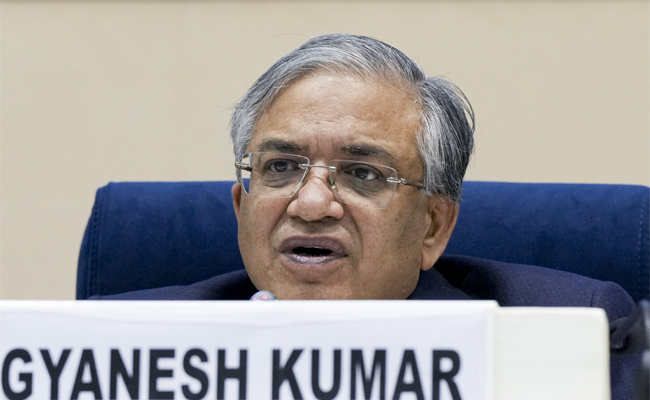
New Delhi (PTI): Undeterred by the rejection of their earlier notices, opposition parties are planning a fresh move to seek the removal of Chief Election Commissioner Gyanesh Kumar, sources said on Saturday.
According to highly placed sources, leaders from several opposition parties are in talks, and at least five senior MPs from different parties -- including the Congress, the Trinamool Congress, the Samajwadi Party and the DMK -- are working on drafting a new notice to initiate removal proceedings.
It has, however, not yet been decided which House the notice would be moved in, or whether it would be introduced in both Houses as was done last time, the source added.
Buoyed by the defeat of The Constitution (131st Amendment) Bill, 2026 in Lok Sabha on Friday, opposition leaders are aiming to secure more MPs' signatures on the notice and are looking at garnering at least 200, the source said.
"We want to make a statement. We first need to prove that the number last time was underestimated," the source added.
In its earlier notices, the opposition had accused CEC Kumar of a "failure to maintain independence and constitutional fidelity" and of acting under the "thumb of the executive".
The notices levelled sweeping charges against the CEC, alleging “proved misbehaviour” on grounds including a compromised and executive-influenced appointment, partisan functioning -- such as the alleged “graded response” doctrine targeting opposition leaders -- obstruction of electoral fraud investigations, and erosion of transparency through refusal to share data and materials.
They further accused him of enabling large-scale disenfranchisement via Special Intensive Revision (SIR) exercises in Bihar and elsewhere, defying or delaying compliance with Supreme Court directions, and acting in alignment with the political executive, thereby undermining the independence of the Election Commission.
However, in almost similar responses, Lok Sabha Speaker Om Birla and Rajya Sabha Chairman C P Radhakrishnan rejected the notices, holding that even if the allegations were assumed to be true, they did not meet the high constitutional threshold of “misbehaviour” required for removal.
They reasoned that appointment-related issues or prior government service do not constitute misconduct; differences in public statements or administrative decisions lack evidence of wilful abuse of authority; and actions like data-sharing or electoral roll revisions fall within the commission’s constitutional mandate and are subject to judicial review.
The responses also stressed that many issues cited were either speculative, politically interpretative, or sub judice, and that removal proceedings cannot be based on disagreement or perceived political consequences but require clear, specific, and provable misconduct, which, they concluded, was absent in this case.