UT Khader slams Bommai's budget, terms it "reverse gear budget"
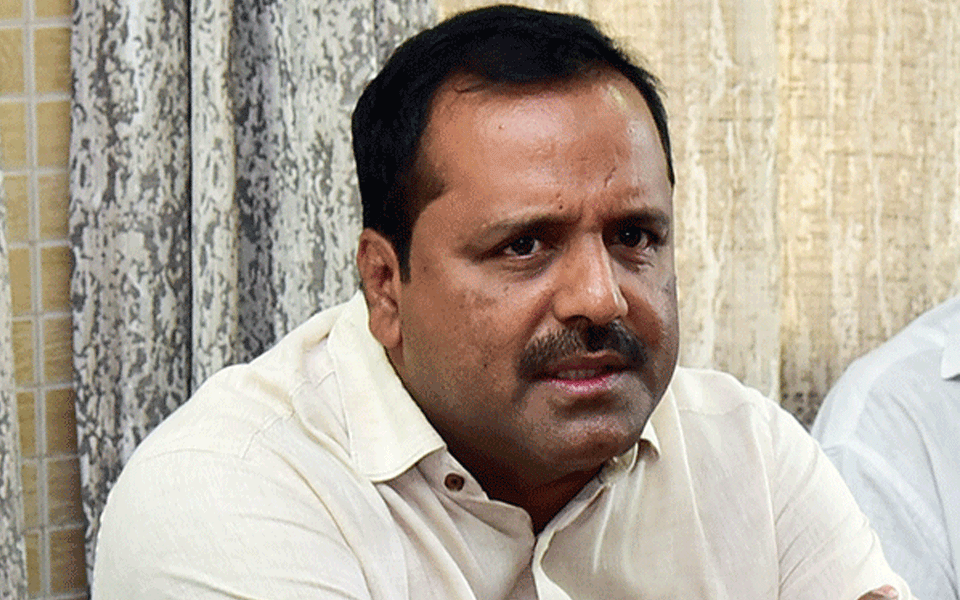
Mangaluru: Deputy Leader of Opposition in Karnataka Assembly and Mangaluru MLA UT Khader on Saturday termed the CM Bommai’s annual budget as “Reverse gear budget” adding that it will take the economy of the state backward.
Speaking at the press meet today, U T Khader slammed Bommai for his "hit and run" budget and said that the government's sole revenue comes from its debts and liquor industry.
"With the enormous debt of Rs. 72 thousand crores, an approximation of Rs 29 thousand crores of revenue is collected from excise duty. As much as 1.01 lakh crore of revenue is generated from debt and liquor", he pointed out.
"No investor is likely to come up when the government itself functions on revenue deficits", he added.
Acknowledging CM's expertise in the field of irrigation, he highlighted the Karnataka Irrigation Department's debt of Rs17 thousand crore, wherein an amount of Rs 26 thousand crores is issued in the budget and argued whether a mere sum of Rs 9 lakh crore is enough to actualize the department's initiatives.
He appreciated the government's move in allocating Rs 5lakh crore for the Krishna Meldande Project and said that the amount of Rs 1 thousand crore, set aside for Mekedaatu and Mahadayi projects are the fruits of the labors of several activists and protestors.
Pointing out the government's indifference with regard to uplifting those who are severely affected by Covid-19, he said "the current budget has disregarded the needs of the working class and the destitute", and added that "the government has failed to keep up its promise regarding the construction of 5 lakh homes for the labor class. Until now, not a single house has been built. When the Congress government was in power, as much as 1 lakh houses were built in the course of 1 year".
He criticized the government's decision to build Narayana Guru Residential Schools while noting its recent rejection of Narayana Guru Tableau.
He underscored CM's negligence regarding the needs of the people of Coastal Karnataka and said that no focus has been given to the fishermen, areca nut growers, and others.
"What is the use of allotting money for 100 container ships, while the government has failed to give money to build homes for our fishermen?" he questioned.
"The government is politically, economically disabled", he said.
Further, he advised the government to first work on social and communal harmony, before venturing into economic reforms.
Congress leaders Ibrahim Kodijal, Mamata Gatty, Shahul Hameed, J A Bava, Sadashiva Ullal, Yusuf Sharif, Ishwara Ullal, Alwyn, Mustafa, and others were present during the press meet.
Let the Truth be known. If you read VB and like VB, please be a VB Supporter and Help us deliver the Truth to one and all.
NEET student hangs self in Rajasthan's Sikar
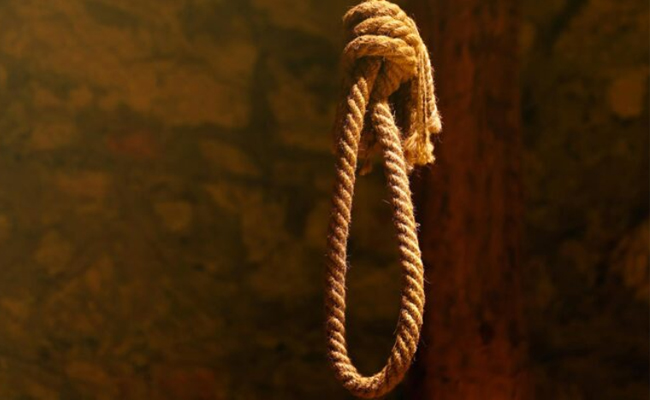
Jaipur (PTI): A student preparing for the NEET examination allegedly committed suicide by hanging himself in a rented room in Rajasthan's Sikar on Friday, police said.
According to the police, the student allegedly hanged himself from a ceiling fan using his sister's scarf while one sister was attending coaching classes and the other was in the bathroom.
He had appeared in the NEET UG exam 2026, which was cancelled due to paper leak, they said.
Udyog Nagar SHO Rajesh Kumar said that the deceased, identified as Pradeep Meghwal, was a resident of Kanika ki Dhani village in Jhunjhunu's Gudha Gaudji area.
He had been living in a rented room in Sikar's Jaldhari Nagar area with his two sisters while preparing for NEET over the last three years.
His elder sister later found him hanging and informed the landlord and police after bringing him down, officials said.
The SHO said the body was kept at SK Hospital mortuary, and a postmortem had not been conducted.
The student's father, Rajesh Kumar Meghwal, told police that Pradeep's NEET examination had gone well and the family was expecting him to score around 650 marks.
Former Rajasthan deputy chief minister Sachin Pilot expressed grief over the incident and linked it to anxiety among students after reports of irregularities and paper leaks in NEET 2026.
Pilot said repeated paper leak incidents and cancellation of examinations were affecting students' mental health and demanded a time-bound investigation and strict action against those responsible.