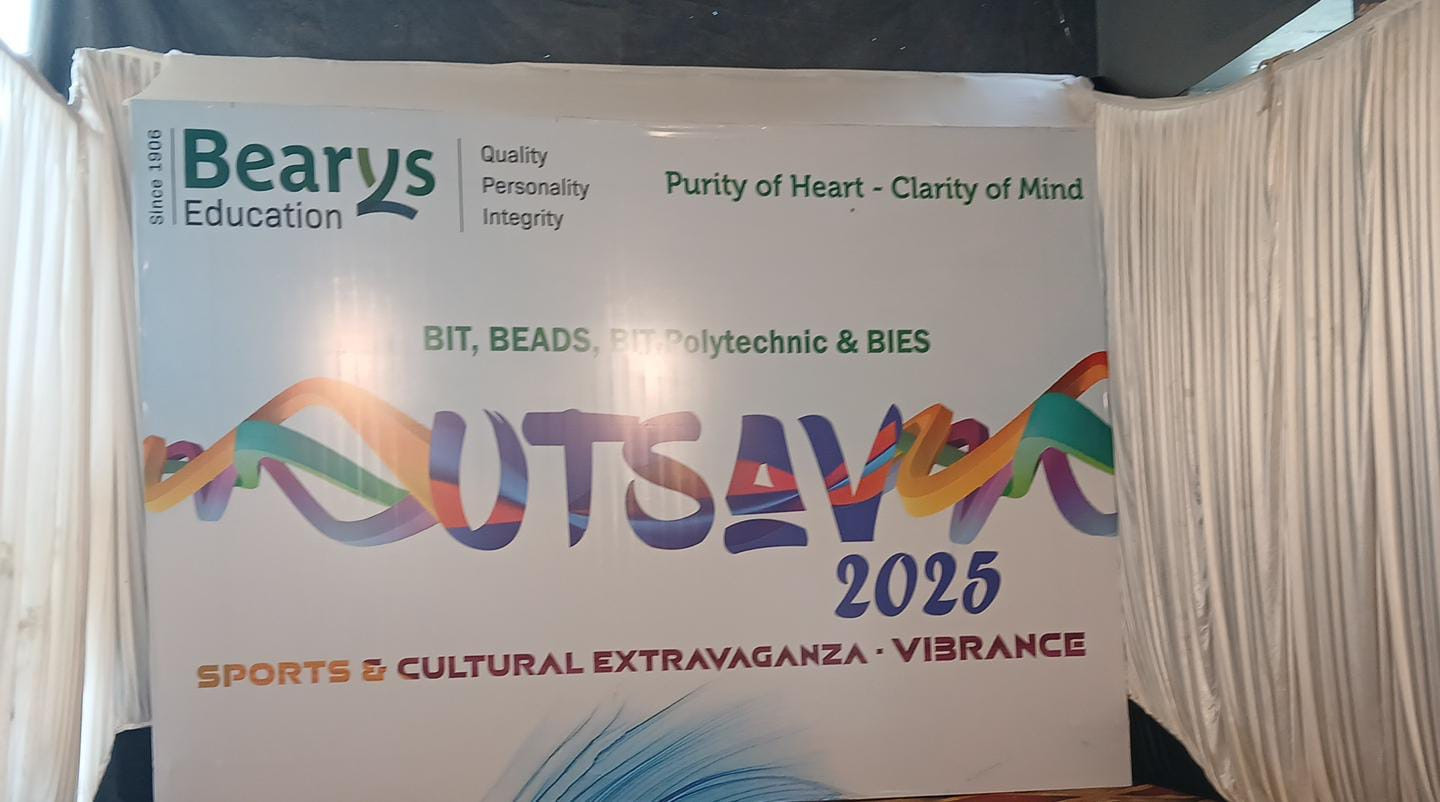
Utsav 2025 Lights Up Bearys Knowledge Campus with Vibrant Celebrations
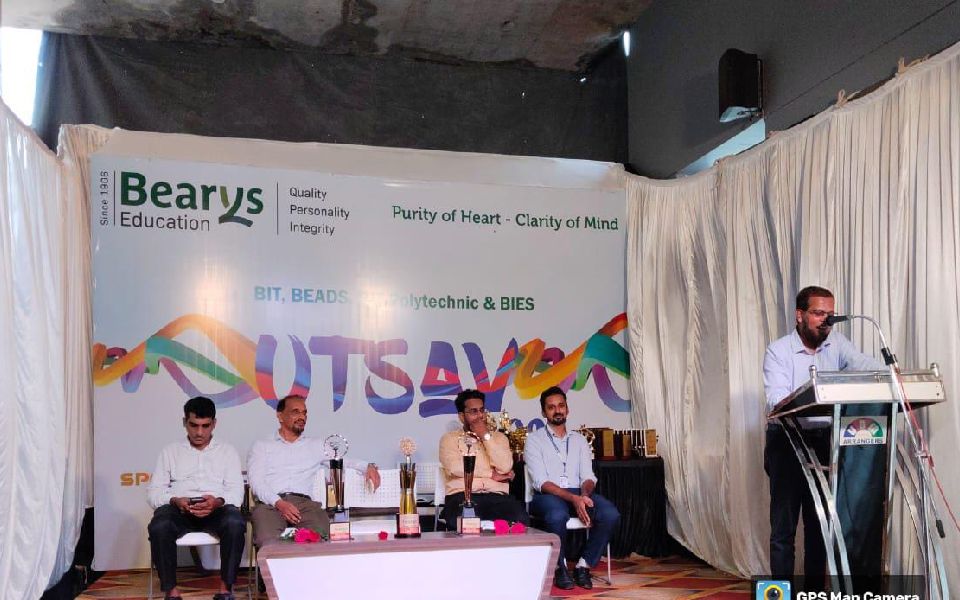
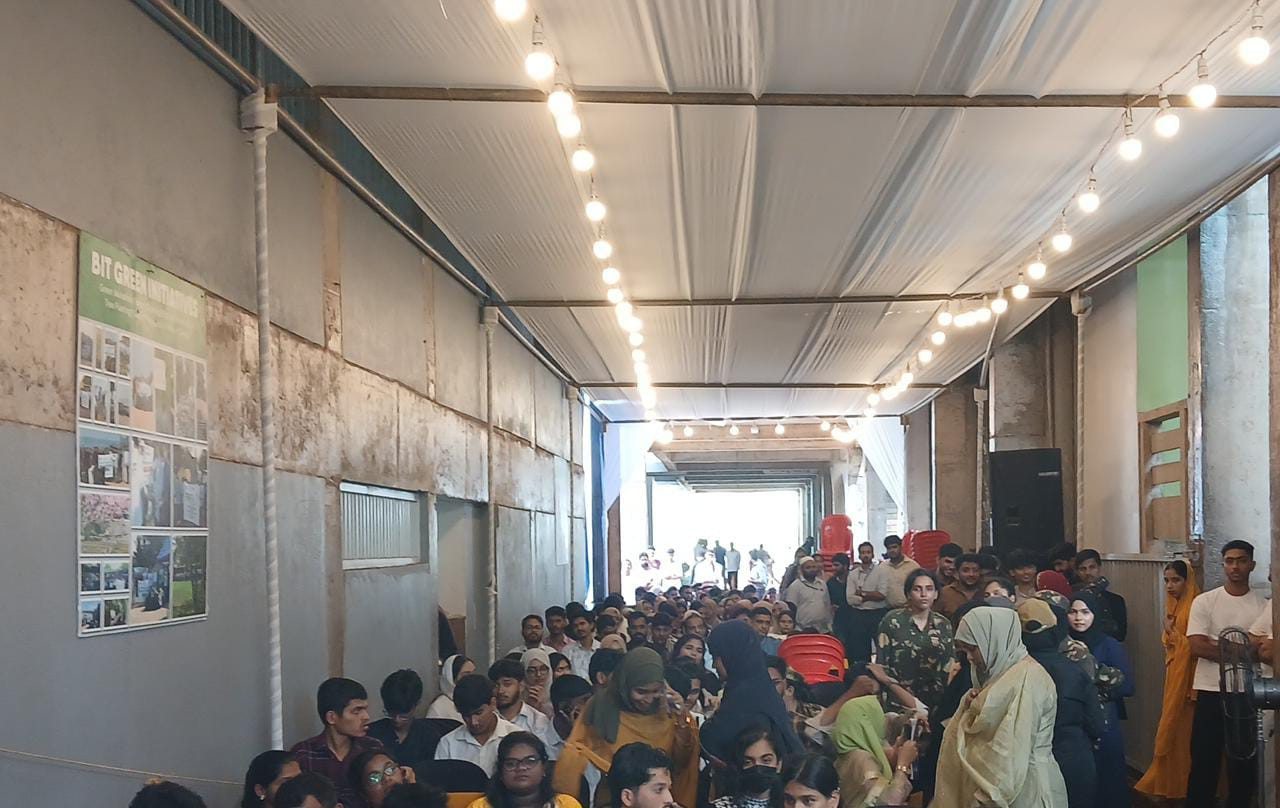
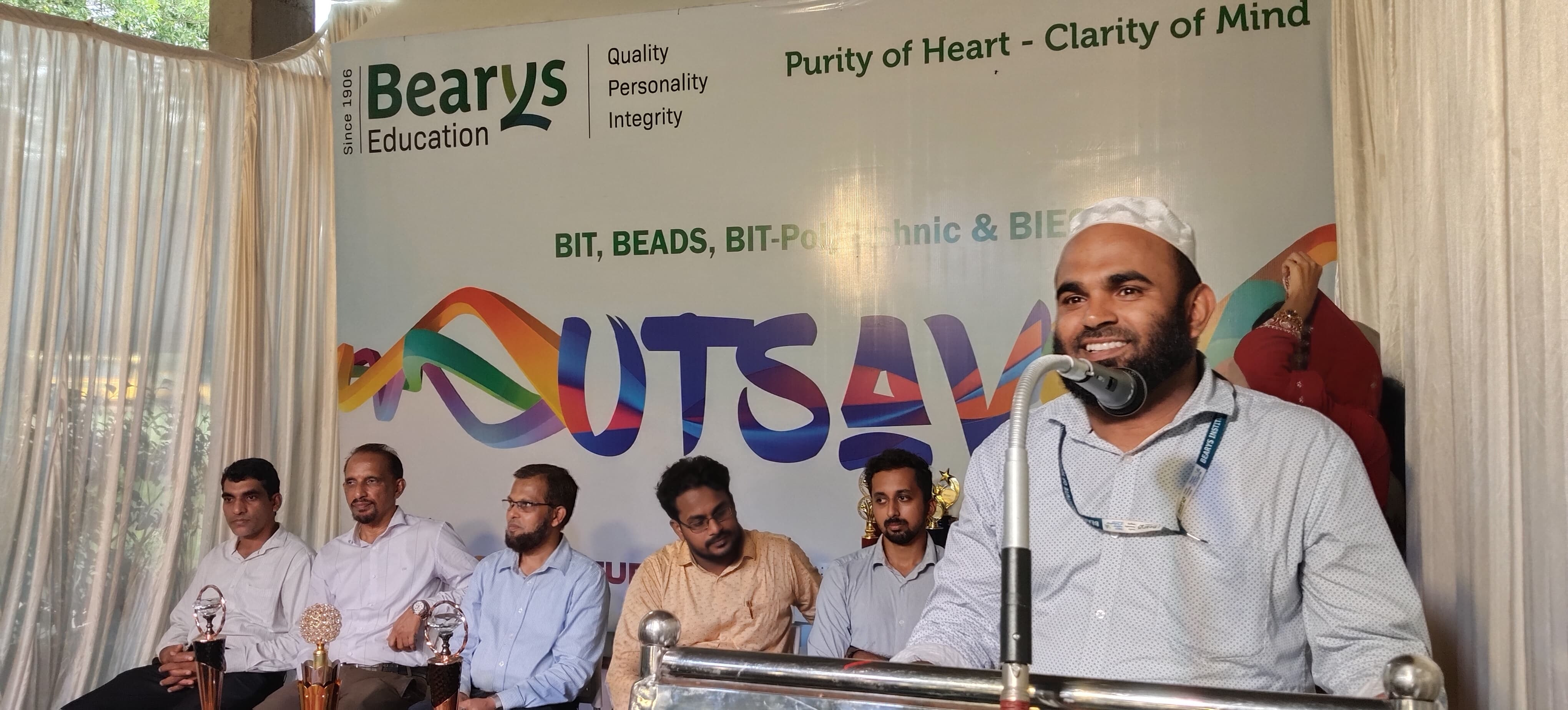
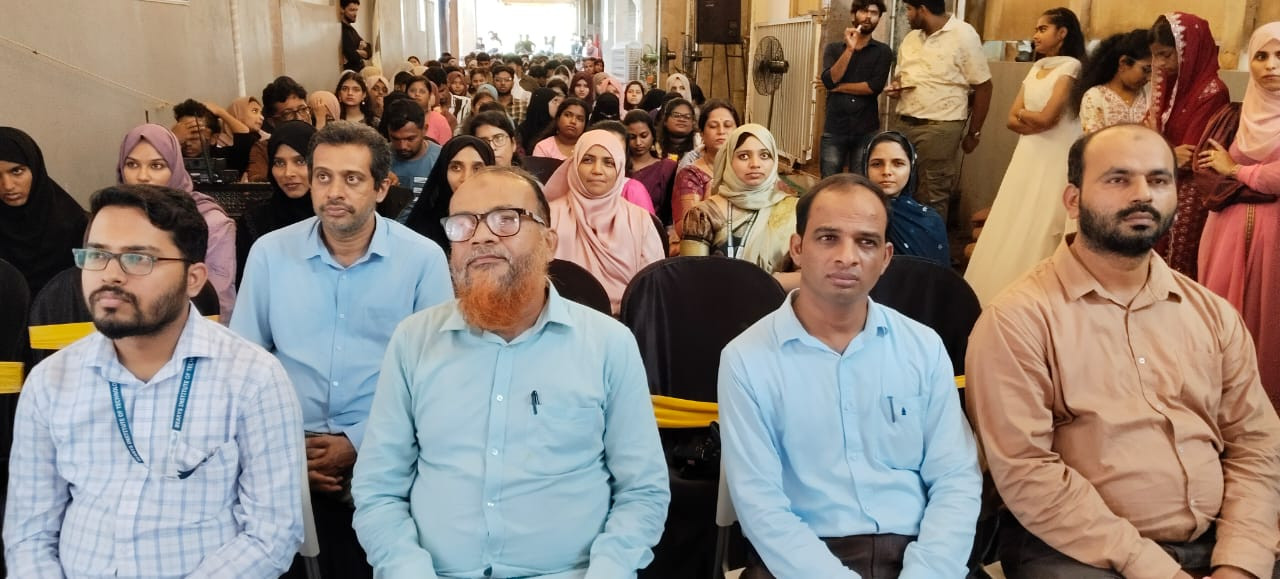
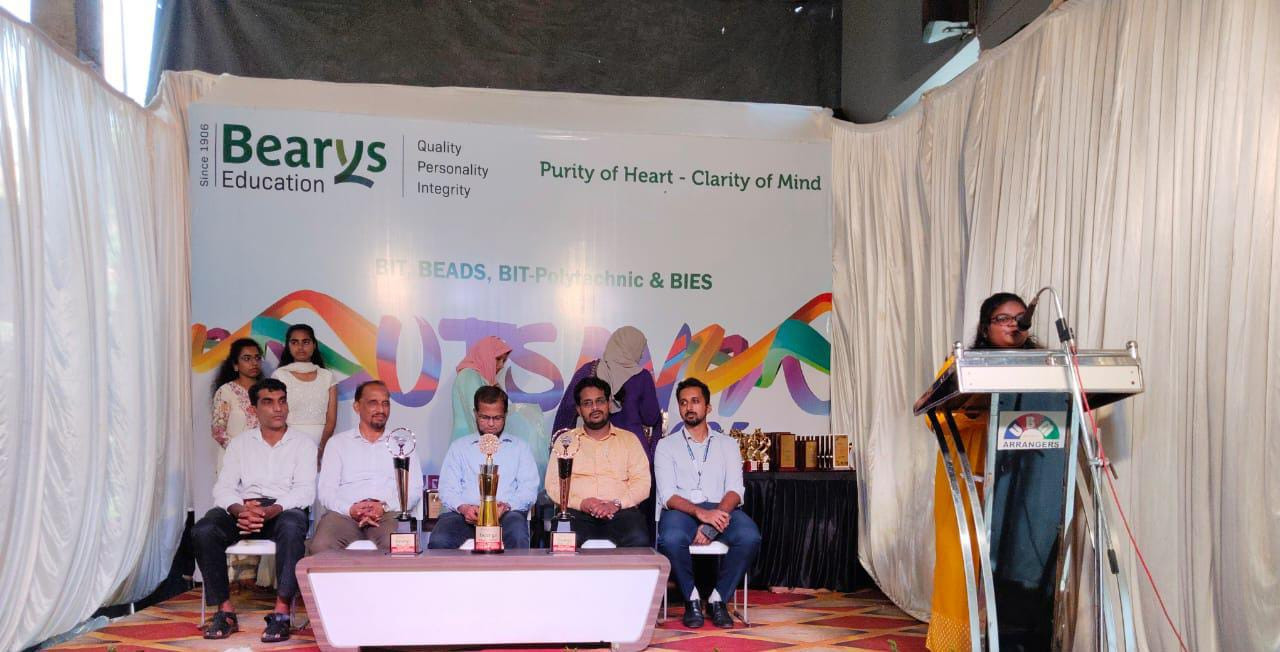
Bearys Knowledge Campus, May 31, 2025: The much-anticipated Utsav 2025, a cultural and sports extravaganza, unfolded today with great enthusiasm and vibrant participation from students across all departments. The campus buzzed with excitement as students showcased their talent, creativity, and team spirit throughout the day.
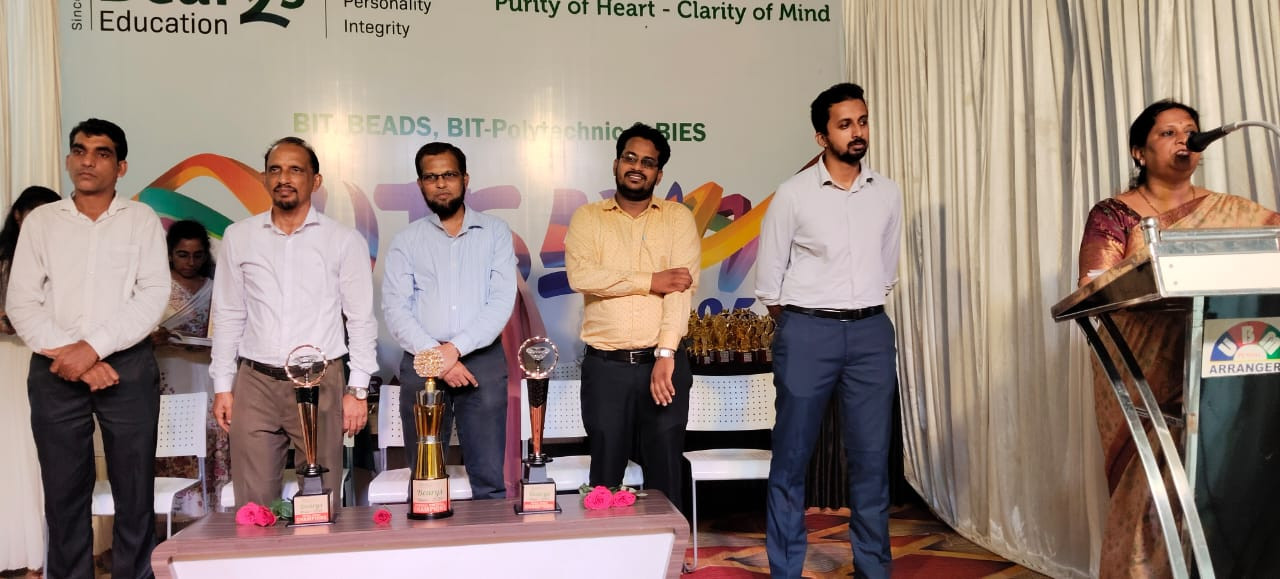
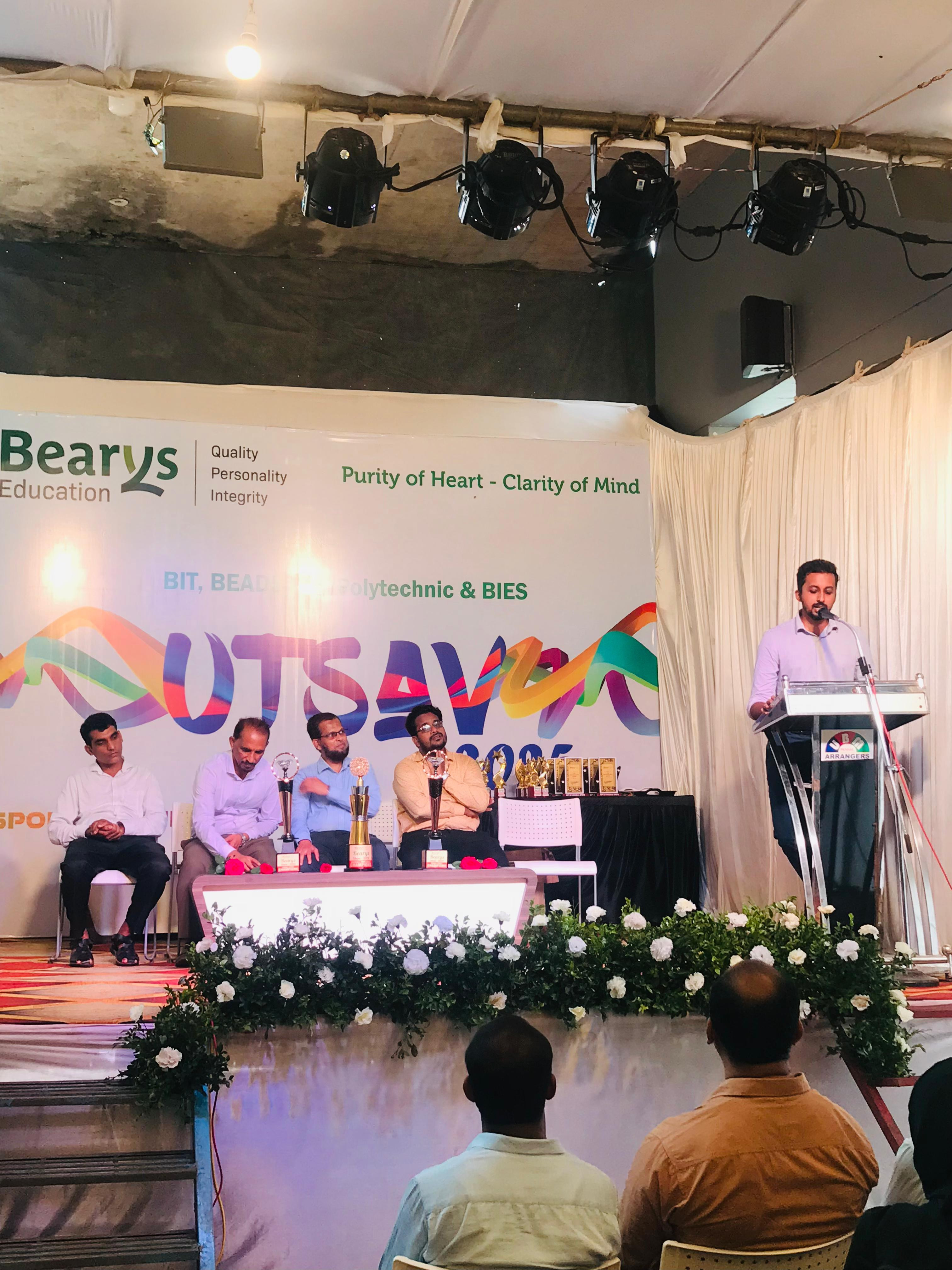
The event commenced with a warm welcome speech by Tejaswini Gowda, 6th semester CSE, followed by an engaging line-up of activities hosted by the energetic MCs Fariya Sheikh and Farya Naz, both from 6th semester AI&DS.
A diverse range of events added color and energy to the celebration, including Face Painting, Mehendi, JAM Solo, Flower Arrangement, Rangoli, Paper Dressing, Dumb Charades, Debate, Cooking Without Fire, Reels Making, Treasure Hunt, Solo and Group Singing, Skit, Mime, Solo Dance, and Western Group Dance. Each event drew enthusiastic participation and vibrant displays of talent.
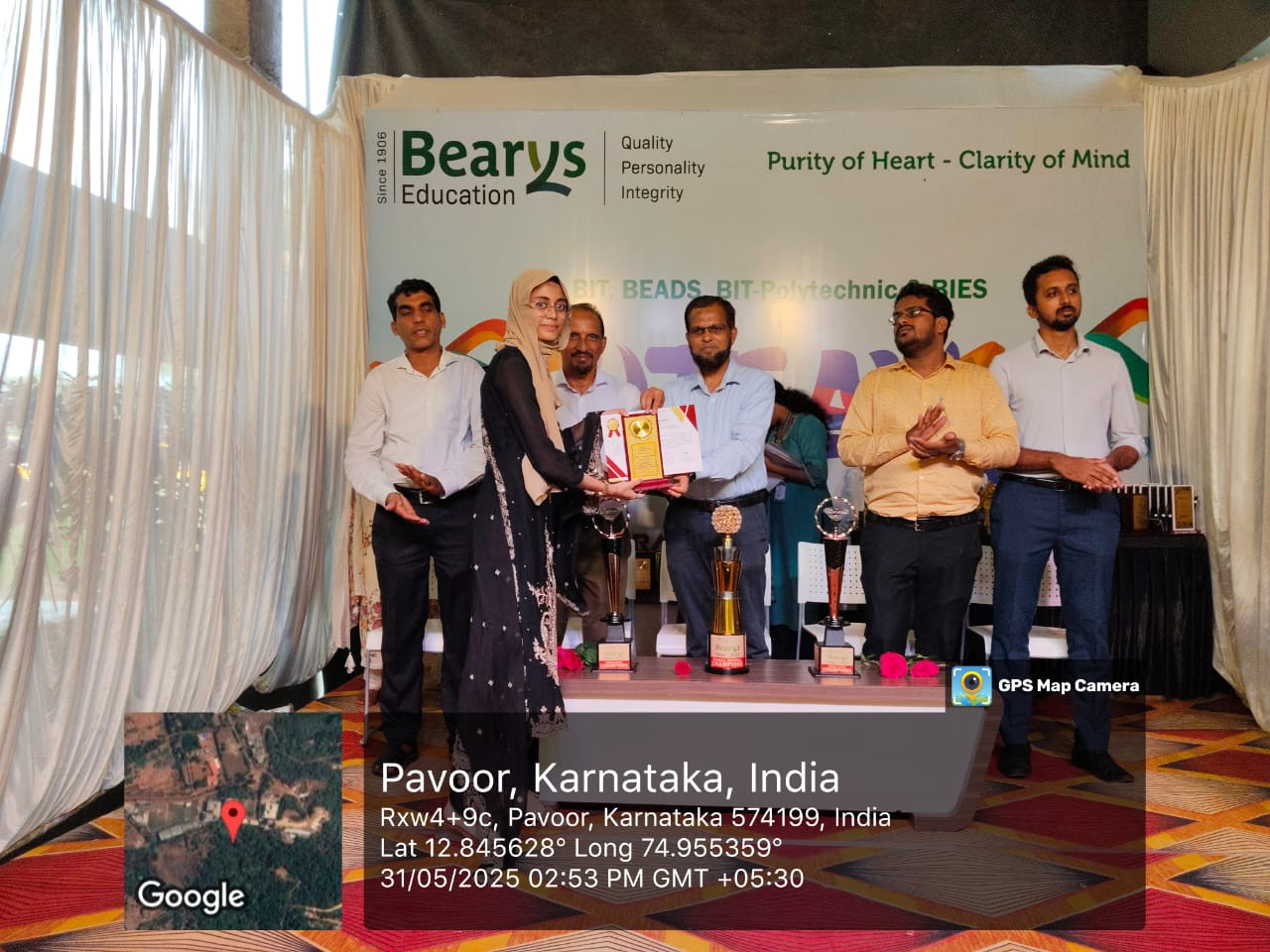
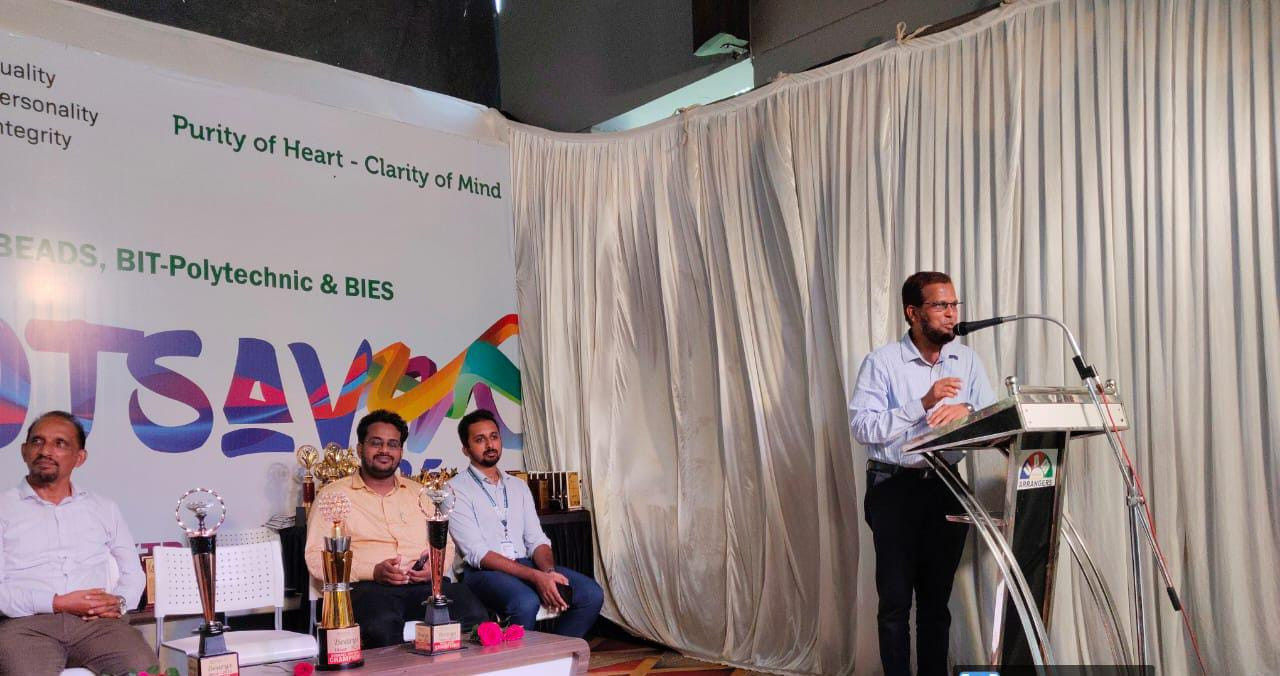
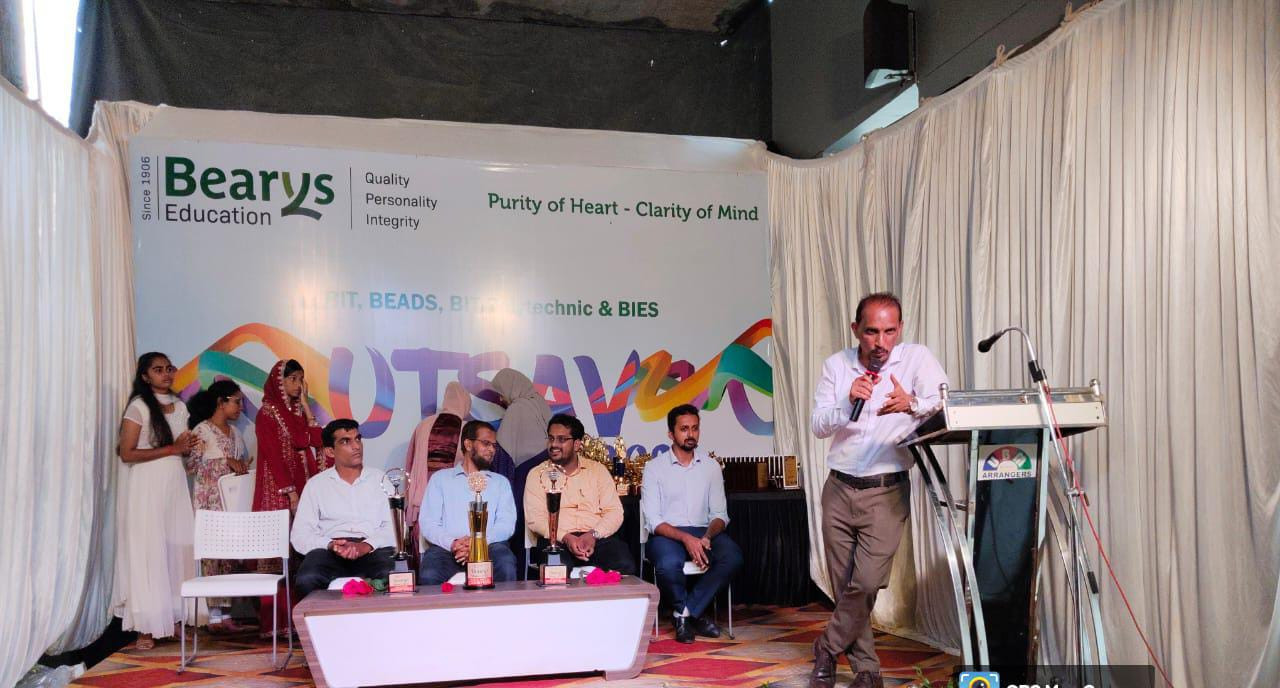
The formal session featured an inspiring address by Dr. S.I. Manjur Basha, Principal of Bearys Institute of Technology (BIT). and Dr. Aziz Musthafa, Principal BIES. Both leaders praised the students’ creativity and participation, while commending the organizers and faculty for their tireless efforts.
Academic excellence was acknowledged with the announcement of the academic achievers list by Dr. Vinutha from the Department of Basic Science.
The winners of the cultural events were announced by Dr. Mehaboob Mujawar, HOD of AI&DS, while Prof. Zaheer Ahmed from the Civil Department declared the sports event winners.
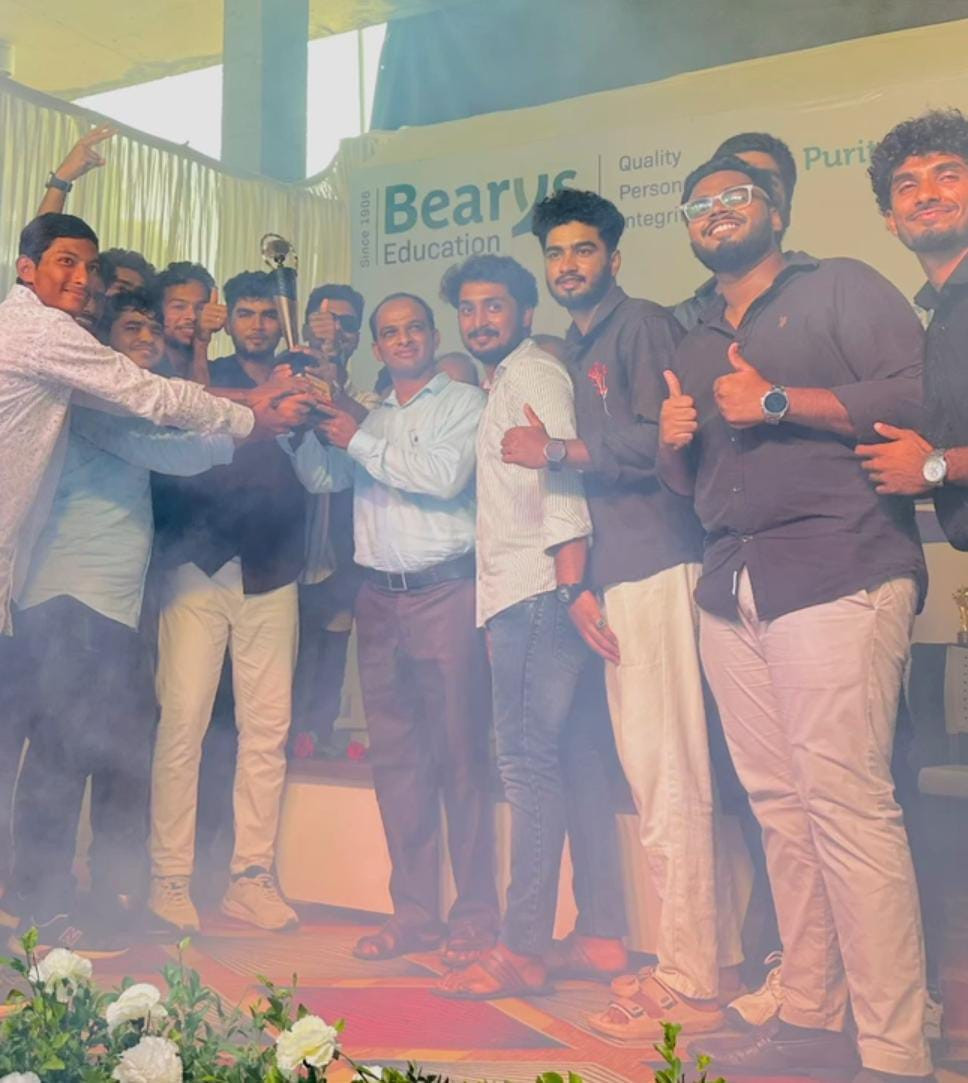
The key highlights of the day were the overall championship titles:
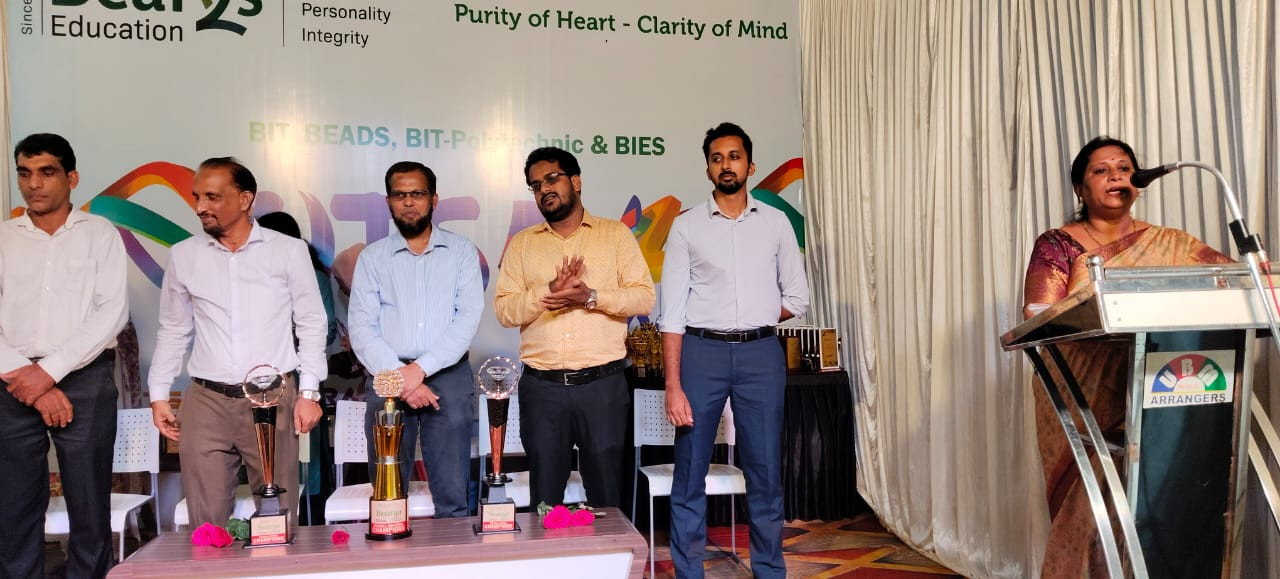
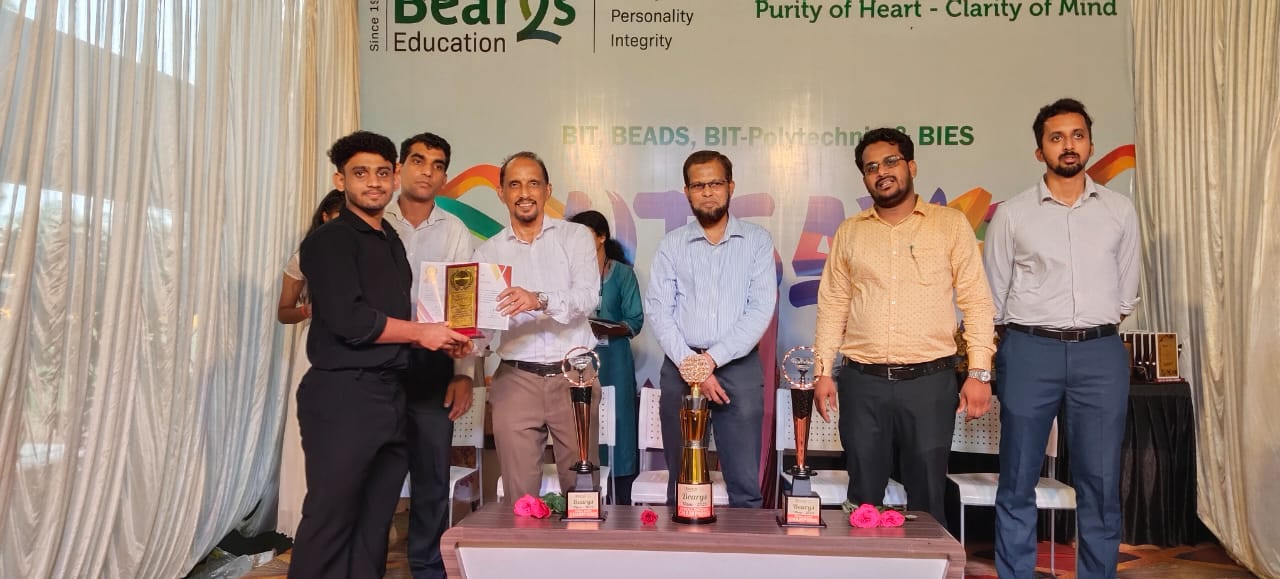
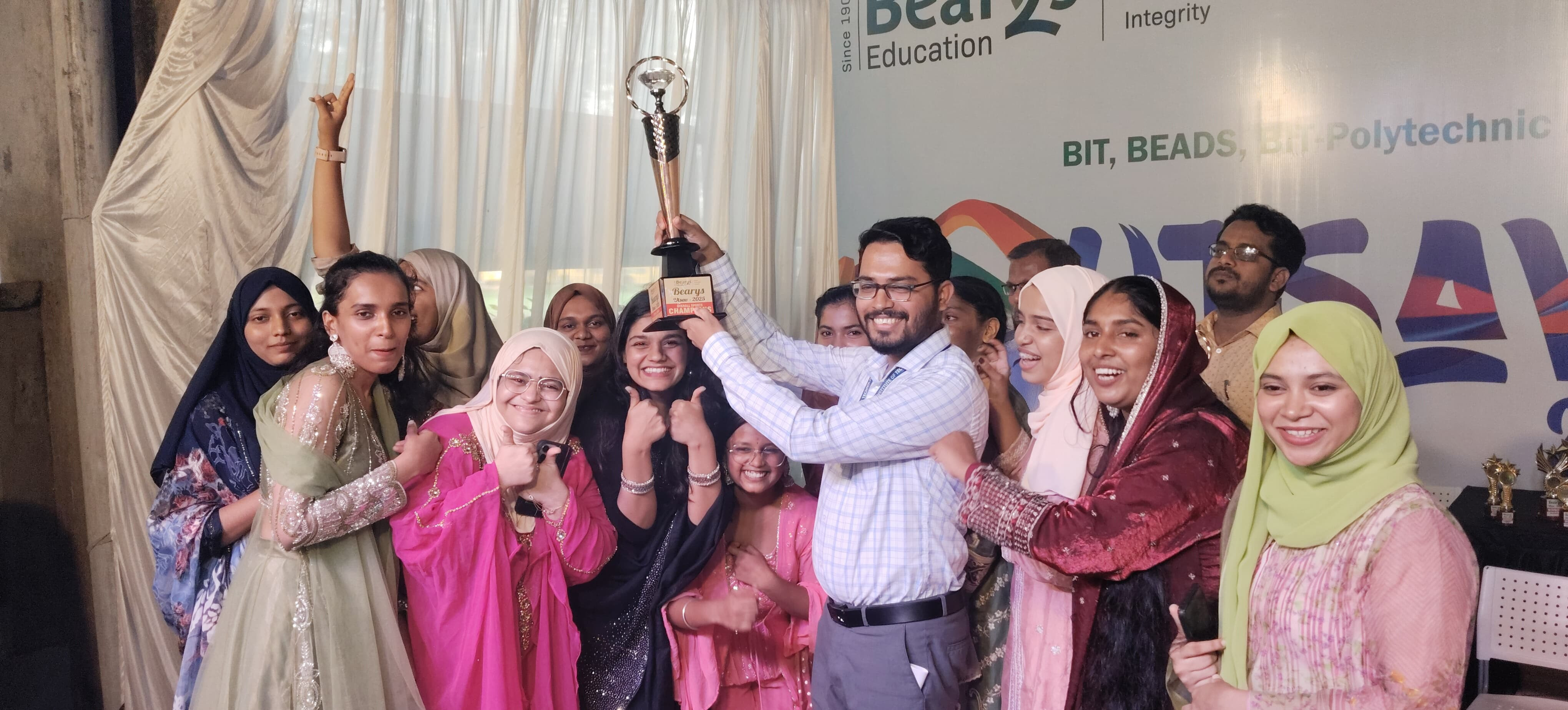
Overall Cultural Championship: AI&DS Department
Overall Sports – Boys: Mechanical Engineering Department
Overall Sports – Girls: AI&DS Department
The event concluded with a heartfelt vote of thanks delivered by Dr. Sandeep Nambiar, overall coordinator of Utsav 2025, from the Mechanical Engineering Department. He expressed his gratitude to all participants, faculty, student volunteers, and the management team for making the event a grand success.
Utsav 2025 truly reflected the spirit of unity, enthusiasm, and excellence, creating lasting memories for everyone involved.
Let the Truth be known. If you read VB and like VB, please be a VB Supporter and Help us deliver the Truth to one and all.
SC to hear pleas for reviewing wages of priests, temple staff
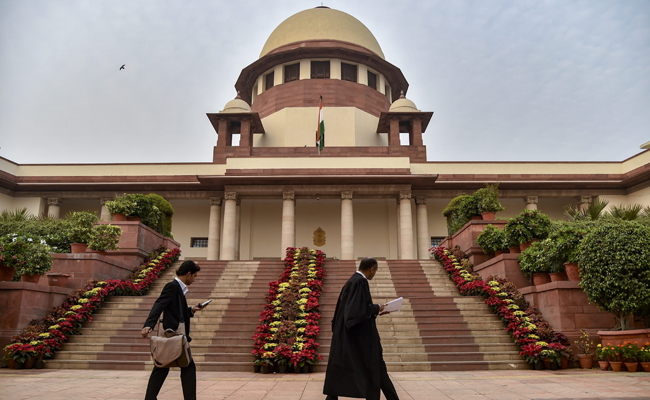
New Delhi (PTI): The Supreme Court is scheduled to hear on Monday a plea to constitute a judicial commission or an expert committee to review the wages and other benefits given to priests, 'sevadars' and temple staff in state-controlled temples.
A bench of Justices Vikram Nath and Sandeep Mehta is likely to hear the PIL filed by advocate Ashwini Upadhyay.
The plea, filed through advocate Ashwani Dubey, seeks directions to the Centre and states to constitute a judicial commission or an expert committee to review the remuneration and other benefits given to the priests and temple staff in state-controlled temples.
"Petitioner also seeks a declaration that priests and temple staff are employee' under Section 2(k) of the Code on Wages, 2019. Petitioner submits that once the State assumes the administrative, economic and financial control over temples, an employer-employee relationship arises and denial of dignified wages to priests and temple staff violates the right to livelihood guaranteed under Article 21," it said.
Upadhyay said the cause of action accrued on April 4, when he went to Varanasi to attend a public programme and after performing 'Rudrabhishek' in the Kashi Vishwanath temple, which is controlled by the state, he came to know that even the minimum wages to live with dignity are not given to the priests and temple staff.
"Recently, in Andhra Pradesh and Telangana, priests and temple staff organised a large-scale protest demanding the minimum wages. Priests and temple staff are not getting even the minimum wage prescribed by the State for unskilled and semi-skilled workers. This is a systemic exploitation. State is acting as a model employer through the endowments department, but violating the minimum wages Act and the directive principles of state policy (Article 43)," it said.
The plea further said the continued refusal to meet the minimum wages with the 2026 inflation-adjusted cost of living index has forced the petitioner to seek judicial intervention to prevent the further marginalisation of priests and temple staff.
Upadhyay further said the precarious nature of livelihood was starkly exposed on February 7, 2025, when a Tamil Nadu department issued a circular at the 'Dandayuthapani Swami Temple' in Madurai, strictly prohibiting priests from accepting 'dakshina' in 'aarti plates'.
"It is necessary to state that priests in such temples often receive no formal salary from the State and rely entirely on 'Dakshina'; the State's administrative order directly threatened them with starvation. Although withdrawn due to public outrage, the incident highlights the State's arbitrary power over the survival of the priests. This is also a bitter truth that States are controlling lakhs of temples but not a single mosque or church," the PIL claimed.
The petition, alternatively, sought direction to the Centre and states to take appropriate steps for the welfare of priests, sevadars and other temple staff in the spirit of the Allahabad High Court's earlier judgments.