Veteran Yakshagana 'Bhagavata' Padyana Ganapati Bhat passes away at 66
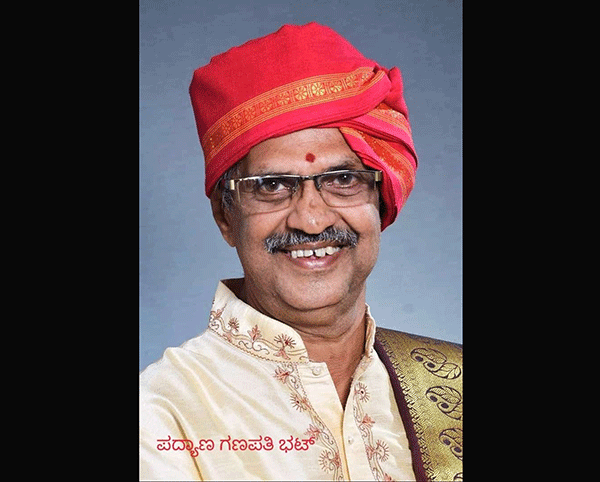
Sullya: Senior Yakshagana Bhagavata, known as the divinely gifted Yakshagana singer, Padyana Ganapati Bhat passed away due to prolonged illness at the age of 66, at his residence in Kalmadka on Tuesday.
Bhagavata Padyana Ganapati Bhat who possessed an incredible singing voice joined the field of Yakshagana in his teenage years and stayed in this field of art for more than four decades. Born on January 22, in the year 1955, Ganapati Bhat was the third son of the couple Padyana Tirumaleshwara Bhat and Savitri. He finished his formal education in his hometown. He learned the initial lessons on Bhagavatike singing staying close to his grandfather. Thereafter, he obtained classical lessons in the singing art form for 2 years with Mambadi Narayana Bhagavata. At the age of 16, he began practicing the (Bhagavatike) singing art form in the Thenkuthittu Yakshagana Stage productions.
After joining as a musician at the Chaudeshwari fair, he served as a ‘Bhagavata’ at the Kundavu Fair for 2 years. Later, he served in various fairs including Surathkal, Mangaladevi, Karnataka, Edaneeru, and Shri Ramachandrapura festivals. He stayed as the ‘Bhagavata’ for 26 years alone in the Surathkal Shri Mahammaayi Fair and served there.
He obtained great fame serving as a Bhagavata for several theatrical productions such as Sati Sheelavathi, Rani Ratnavali, Kadugali Mararama, Papanna Vijaya Gunasundari, and Bappanadu Kshetra Mahatma. He was known for his ability to understand the artistic temperament of an artist playing a role and singing in harmony with that temperament. He had a unique hold on the Naati and Bharavi Raaga (melody). Musical exercises in Yakshagana such as the rare Simhendra Medium, Khamathu, Tillana, Vasanthi, Vrindavan Shanmukhapriya, and Charukeshi are his achievements. He has adapted approximately 20 types of melodies in the Yakshagana.
He has performed in many places including Kuwait, Mumbai, Agra, and Chennai, and received honorary titles from his fans in these places. He has brought life to thousands of Kannada and Tulu Yakshagana soundtracks with his beautiful singing.
Ganapati Bhat has been the recipient of several awards including the 2007 District Rajyotsava Award.
He is survived by his wife, two sons, and a legion of friends, relatives, and admirers.
Let the Truth be known. If you read VB and like VB, please be a VB Supporter and Help us deliver the Truth to one and all.
Annpurna Devi expresses anguish over girl's rape in TN, urges NCW to act
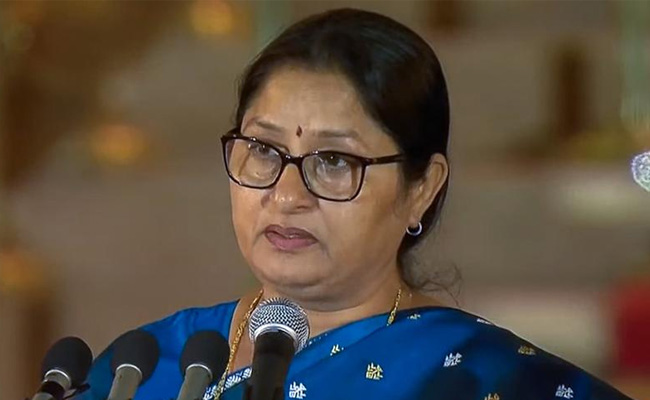
New Delhi (PTI): Union Minister for Women and Child Development Annpurna Devi on Tuesday expressed her anguish over the alleged gang rape of a girl in Tamil Nadu and urged the National Commission for Women to take immediate cognisance of the matter.
In a post on X, Devi said, "Deeply anguished by this horrific incident. I urge the NCW to take immediate cognisance and act swiftly in coordination with the concerned authorities to ensure the strictest action against all culprits."
Devi said, "Justice must be swift and unsparing — the accused must be brought to book without delay," adding, "the safety, dignity, and justice of every daughter of India remain our highest priority."
"We stand firmly with the survivor and her family in this difficult hour," she said.
Reacting to a post by former Tamil Nadu BJP president K Annamalai, who flagged concerns over the law and order situation in the state, Devi said such incidents "expose grave concerns" under the Dravida Munnetra Kazhagam government.
Annamalai, in his post, alleged that a 15-year-old girl from Kanchipuram, who had come to participate in a temple festival near Seyyaru in Tiruvannamalai district, was gangraped.
He said the incident was "deeply shocking and enraging" to him and alleged that such crimes point to a "complete failure" of law and order in Tamil Nadu.
Annamalai demanded immediate arrest of all those involved and the "harshest punishments" for the accused.
He also called for full protection and mental health counselling for the survivor and her family.