Water supply hampered to Mangaluru as water level increased in Netravati river: Mayor
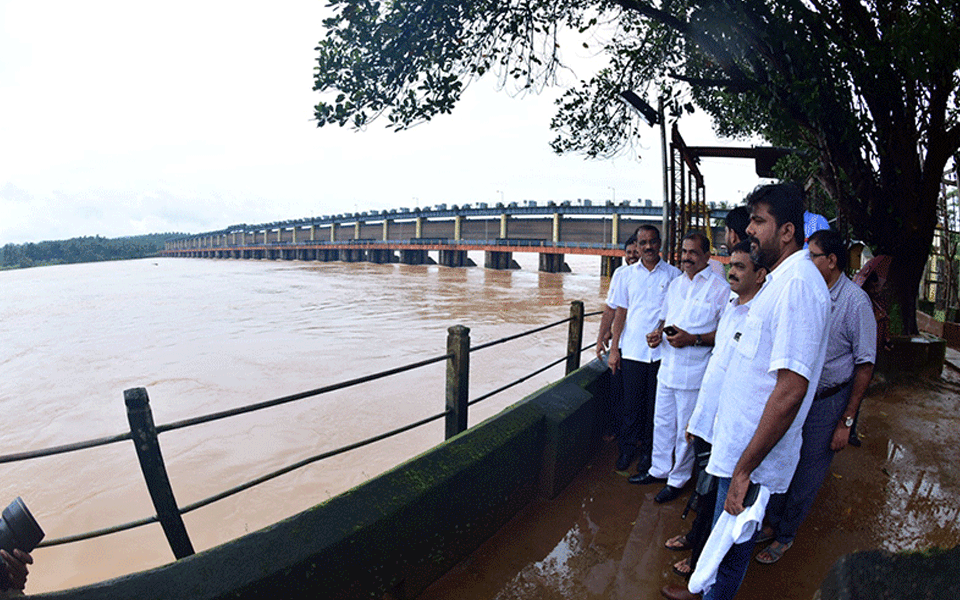
Mangaluru, August 17: Mayor Bhaskar Moily said that water supply to the city was hampered as the water level in the Tumbe dam is increased due to flood situation in Netravati river.
After visiting the newly constructed Tumbe dam along with deputy mayor Muhammad K, standing committee presidents and officials on Friday, he told media persons that as the water level was increased to 9.1 mts in the dam, pumping was stopped on Thursday night. But late night, pumping was started. Mescom was supplying power to the Tumbe dam from Bantwala sub-station. The power line passed below near the dam and when the water level increased to 9.1 mts in the dam, the power line would touch the water. So, as a precautionary measure, the MESCOM would disconnect the power supply as soon as the water level increased to 8.5 mts height due to which water supply was hampered, he said.
On August 14 night, the water level in the dam was increased to 8.2 mts and the MESCOM had disconnected the power supply. On August 15 from 3.45 am to 7.10 am, the water level again rose to 8.8 mts and on August 16 at 6.35 pm, the water level increased to 8.9 mts. As the power connection was hampered during this time, water was not pumped. On Friday morning, the water level came down to 7.9 mts and water pumping was started. As and when the water level increased in the dam, the water supply to Mangaluru city, Ullala and Bantwala get disruption in water supply, he said.
Tumbe gets record 11.9 mts water level!
Presently, there was no problem due to increase in water level in the dam. In 1974, Tumbe old dam had recorded 11.9 mts water level which is the highest water level recorded in the history of the dam, he said.
City Corporation chief whip Shashidhar Hegde, standing committee presidents Praveen Chandra Alva, and Naveen D’Souza, corporator Deepak Poojary, Commissioner Muhammad Nazeer, officers Linge Gowda and Naresh Shenoy were present.
Poligio fibre bags to check collapse of dam retention wall!
The retention wall of the Tumbe dam pump house was collapsed in some places. Around six months ago, around 35 mts long retention wall was collapsed and now, another 20 mts was damaged. In order to stop this temporarily, poligio fibre bags (huge sand-filled bags) which were placed in the sea erosion places in Ullala, would be placed. The experts of the Hyderabad-based company which laid the bags at Ullala, visited the Tumbe dam on Thursday and reviewed the situation. Once they give the proposal, the work to lay the sand bags would start by December. The work has to take up when the water level decreased to 4 mts. In order to construct permanent retention wall, the city corporation would require Rs 15 crore and the corporation has submitted a proposal for Rs 10 crore to the government, said deputy mayor Muhammad K.


Let the Truth be known. If you read VB and like VB, please be a VB Supporter and Help us deliver the Truth to one and all.
Congress using hijab issue to pacify minority anger, alleges Karnataka LoP R Ashoka
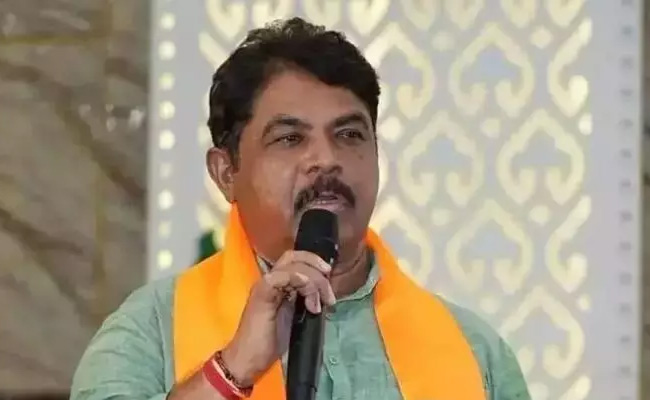
Bengaluru: Leader of Opposition in the Assembly R. Ashoka has accused the Congress government of using the hijab issue to placate what he described as discontent among minority voters after the Davanagere by-election.
In a post on X on Wednesday, Ashoka alleged that the state government, instead of addressing issues such as price rise, corruption, farmers’ distress and law and order, was attempting to retain its minority vote base by reviving the hijab issue.
Referring to the 2022 dress code introduced by the BJP government, which prohibited hijab in schools and colleges, Ashoka said the Karnataka High Court had upheld the policy and emphasised the importance of discipline in educational institutions.
He questioned the Congress government’s move to revisit the issue and asked whether setting aside the court-backed policy to benefit one community could be described as secularism.
Ashoka further alleged that while the government was willing to permit hijab, it continued to prohibit saffron shawls.
He accused the government of dividing students on religious lines rather than treating schools and colleges as spaces of equality.
Drawing a comparison with Mamata Banerjee’s government in West Bengal, Ashoka claimed that excessive appeasement politics had harmed the state and warned that the Congress in Karnataka could face a similar political response.
He said voters in Karnataka would teach the Congress a lesson for what he termed “vote-bank politics” and for compromising constitutional and judicial principles.