Welfare of humankind should be purpose of life for Muslims: Moulana Bilal Hasani
Muslim Intellectuals Meet held in Mangaluru
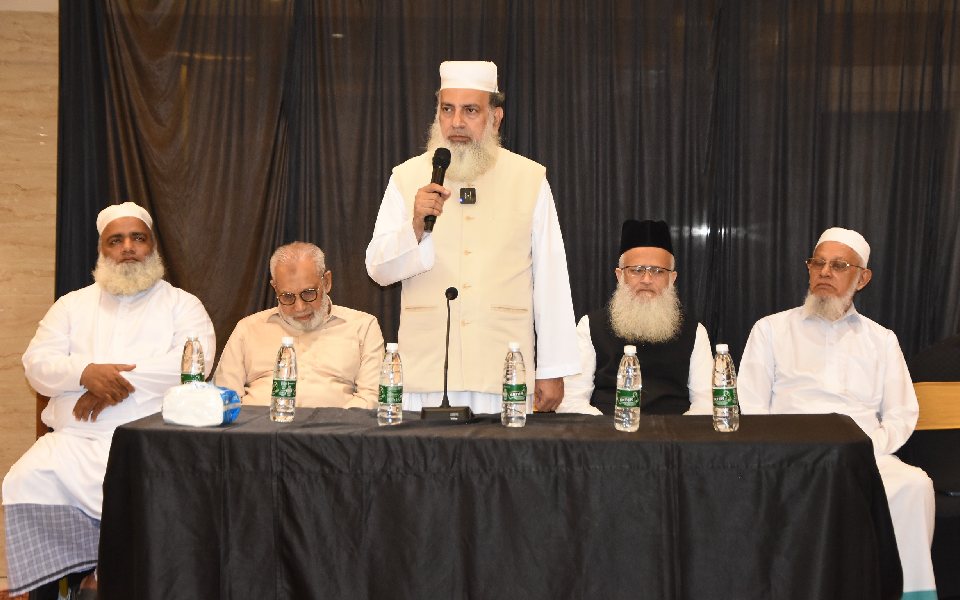
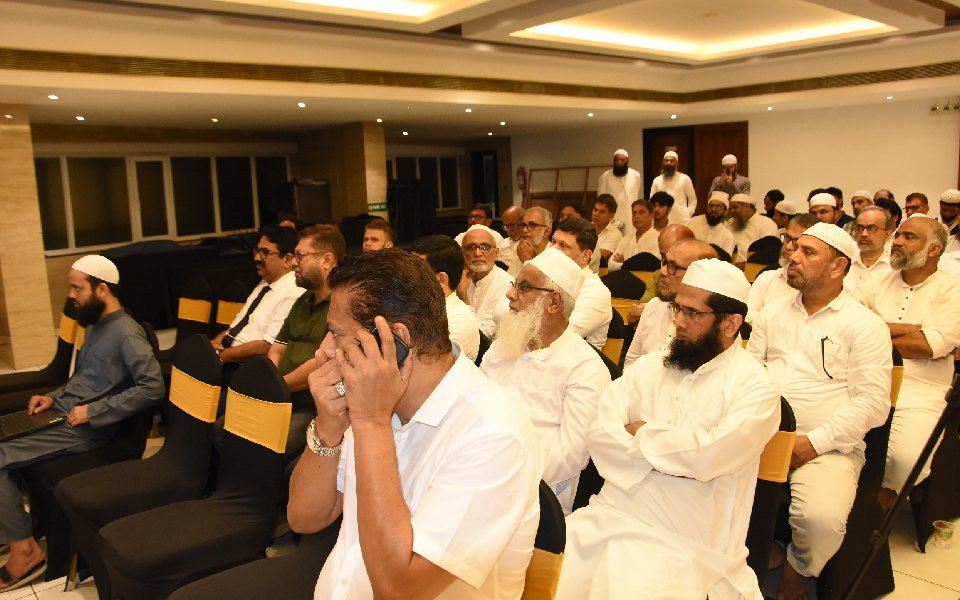
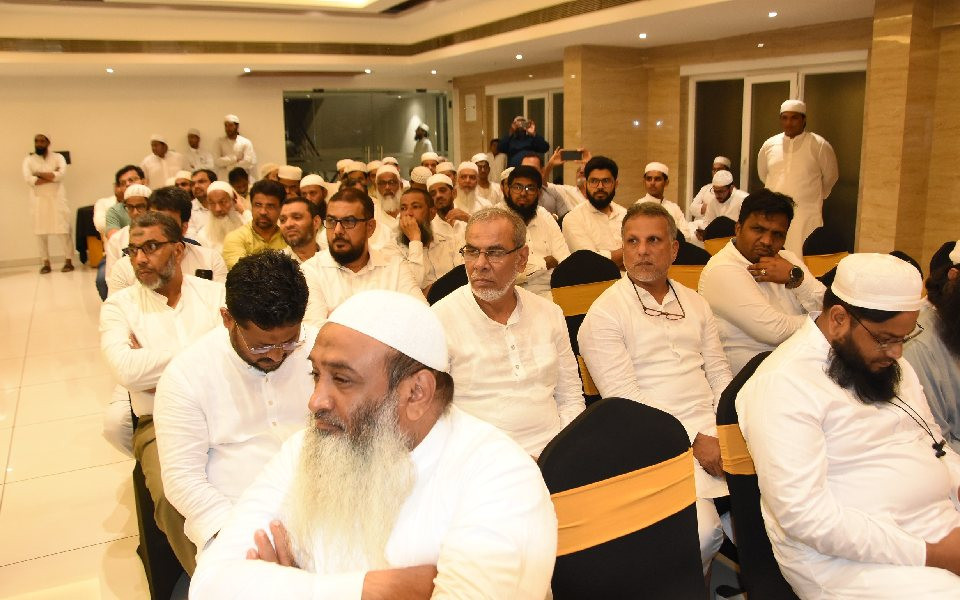
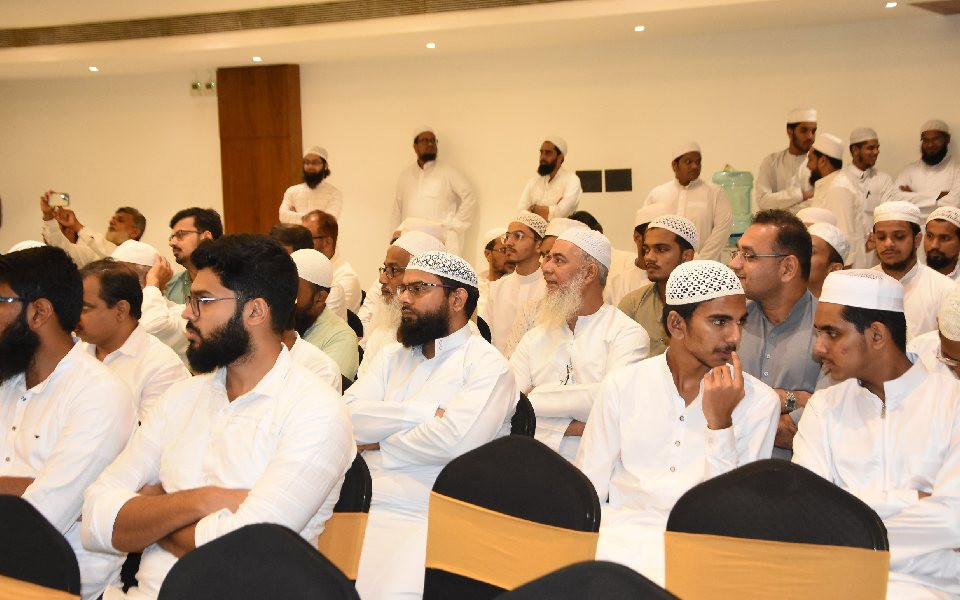
Mangaluru: Iqra Islamic School, in collaboration with the All India Payam-e-Insaniyat Forum, organized a Muslim Intellectuals Meet on Friday, focusing on the theme "Current Affairs and Our Responsibilities." The event took place at the Royal Plaza Hotel in the city.
The program commenced with the recitation of the Holy Quran by Mohsin Kempi, followed by a Naat by Ali Azhaan. Moulana Farhan Nadvi provided an introduction to both the Payam-e-Insaniyat Forum and Iqra Arabic School, Mangaluru.
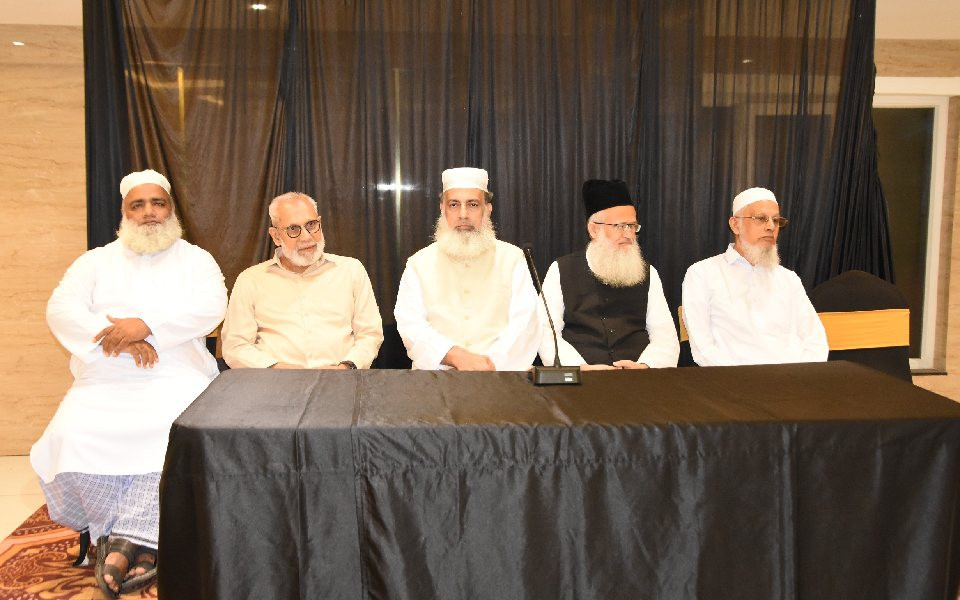
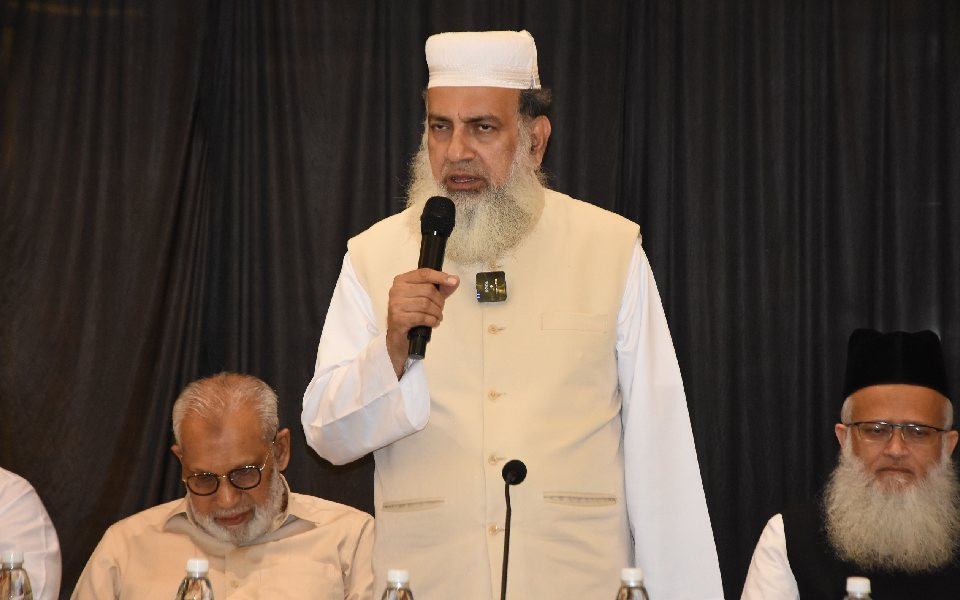
The gathering was graced by several prominent personalities. Moulana Bilal Abdul Hai Hasani Nadvi, the General Secretary of All India Payam-e-Insaniyat Forum and Secretary of the All India Muslim Personal Law Board, along with Moulana Abdus Subhan Nadvi, a member of the All India Muslim Personal Law Board, served as the chief guests. The event was presided over by Moulana Salim Khalifa Nadvi, Principal of Iqra Arabic School, Mangaluru.
Other notable guests included Dr. C.P. Habeeb Rahman, Director of Unity Hospital, Mangaluru, and Moulana Yahya Thangal, Principal of Al-Furqaan, Babukatte, who were present on the dais during the event.
Moulana Abdul Subhan Nadvi remarked that there is no need to delve deeply into current affairs, as everyone is already aware of the situation around them. He emphasized that people should not lose hope in these challenging times, reminding them that despair is not for believers. Instead, he encouraged Muslims to continue doing good deeds, believing that things will improve.
He urged the community to focus on the welfare of all humanity, stressing the importance of taking responsibility for guiding others away from wrongdoing and working towards positive change in society. He also called on Muslims to engage in self-reflection rather than placing blame on others for the difficulties they face.
Moulana Bilal Abdul Hai Hasani Nadvi expressed concern over the current global situation, noting that it is especially troubling for Muslims. He attributed this to the fact that Muslims have not fulfilled their duty to share the teachings of Islam and the Prophet Muhammad with the world.
He pointed out that while the media in India often targets Muslims and exaggerates situations against them, it is the community itself that provides the material for such stories. He stressed the importance of self-reflection and urged Muslims to be mindful of their actions.
Moulana Nadvi highlighted the vital role that Muslim scholars and Madrasas play in upholding Islam and spreading its teachings. He emphasized that non-Muslims do not judge Muslims by what happens inside mosques and Madrasas but by how they conduct themselves in markets and other public spaces. He called on Muslims to demonstrate the teachings of Prophet Muhammad through their daily lives.
He further stated that Muslims can only be true representatives of Prophet Muhammad if they fully align their lives with his teachings and follow his example. According to him, Muslims must not live in isolation but should care for the well-being of all humanity. He encouraged the spread of good and the prevention of evil.
Moulana Nadvi reminded the community that Allah has created Muslims to work for the welfare of all humanity, and this should be their life's purpose. He concluded by saying that the situation for Muslims in the country will improve significantly if they start living according to the character taught by Prophet Muhammad. He also emphasized that safeguarding Madrasas is one of the primary responsibilities of the Muslim community.
In his presidential address, Moulana Salim Khalifa expressed his gratitude to everyone who attended the event. He urged the audience to take the advice of the esteemed guests seriously and hoped for continued cooperation in future programs that will be organized.
Moulana Khalifa also praised the efforts of the All India Payam-e-Insaniyat Forum for its role in representing Muslims and promoting the practical teachings of Islam and the life of Prophet Muhammad.
Moulana Junaid Farooqi of All India Payam-e-Insaniyat Forum also addressed the event. The event was comperred by Muaad TD.
Let the Truth be known. If you read VB and like VB, please be a VB Supporter and Help us deliver the Truth to one and all.
8 children between ages of 1 and 14 dead after mass shooting in Louisiana, police say

Shreveport(US) (AP): A gunman in Louisiana killed eight children in shootings at two different homes early Sunday in the nation's deadliest mass shooting in more than two years, police in Shreveport said.
The victims ranged in age from one to about 14 years old, said Shreveport police spokesperson Chris Bordelon. A total of 10 were shot and some of the children were related to the suspect, Bordelon said.
The gunman later died after a chase with officers who fired at the suspect, Bordelon said. The suspect stole a car while leaving the scene of the shootings and was followed by police, according to Bordelon.
Police did not release the name of the suspect but did say he was an adult male. The shootings were the result of a “domestic disturbance,” Bordelon said.
Officials said they were still gathering details at the crime scenes south of downtown Shreveport — the two homes and a third location.
“This is an extensive scene unlike anything most of us have ever seen,” he said.
It was the deadliest mass shooting in the US since eight people were killed in a Chicago suburb in January 2024, according to a database maintained by The Associated Press and USA Today in partnership with Northeastern University.
At a news conference outside the residence where one of the shootings occurred, officials appeared stunned, requesting patience and prayers from the community as they sorted through multiple crime scenes.
“I just don't know what to say, my heart is just taken aback,” Shreveport Police Chief Wayne Smith said. “I cannot begin to imagine how such an event could occur.”
“This is a tragic situation — maybe the worst tragic situation we've ever had,” said Tom Arceneaux, mayor of the city in northwestern Louisiana with about 180,000 residents. “It's a terrible morning.”
Louisiana State Police say their detectives have been asked by Shreveport police to investigate. In a statement, state police say no officers were harmed in the shooting that involved an officer after a police pursuit into Bossier City on Sunday morning.
State police are asking anyone with pictures, video or information to share it with state police detectives.
Louisiana Gov Jeff Landry said in a statement that he and his wife were heartbroken. “We're deeply grateful to the law enforcement officers and first responders working tirelessly on the scene,” he added.