When you speak uncomfortable truths, you pay with blood: Dr. Meena Kandasamy in Mangaluru
Fifth PP Gomathi Memorial Lecture held
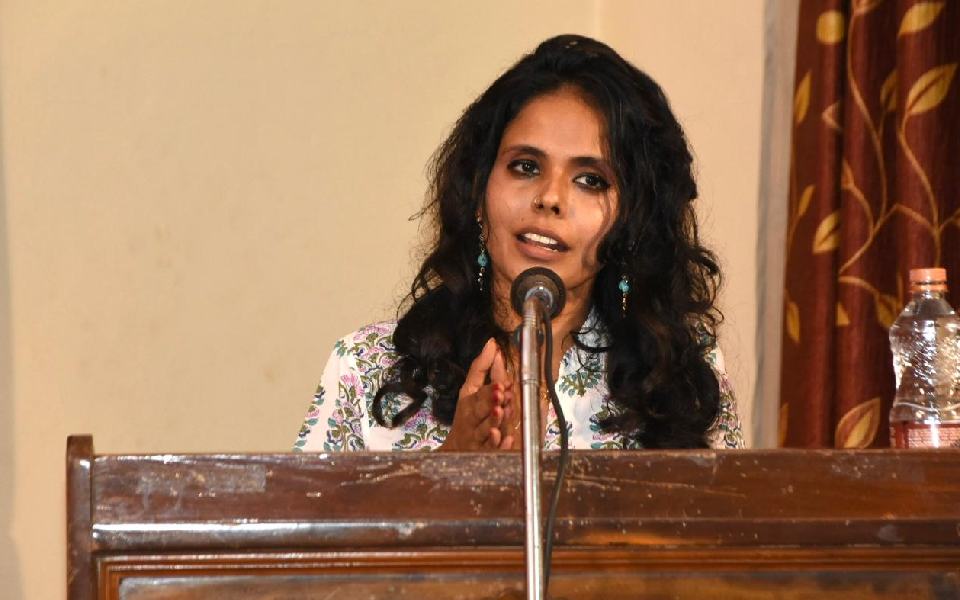
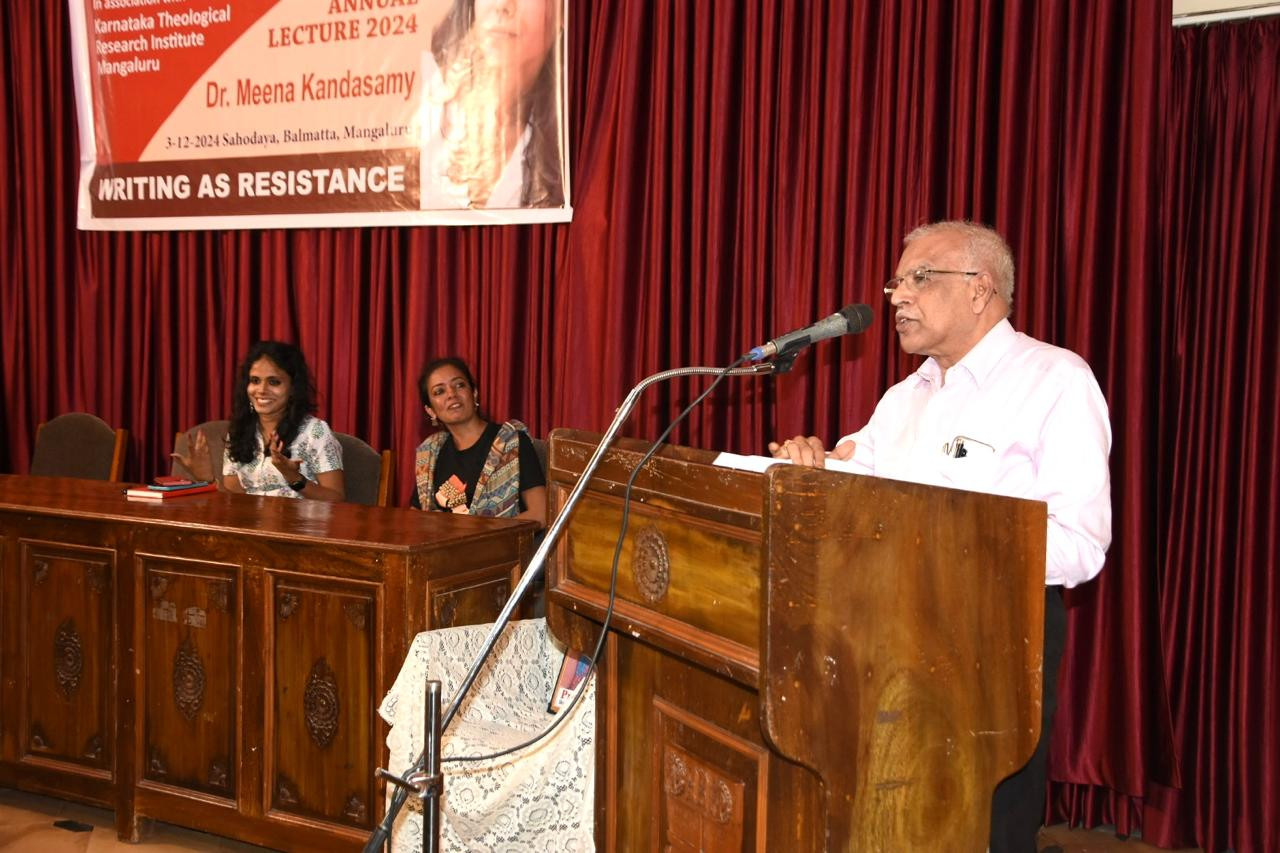
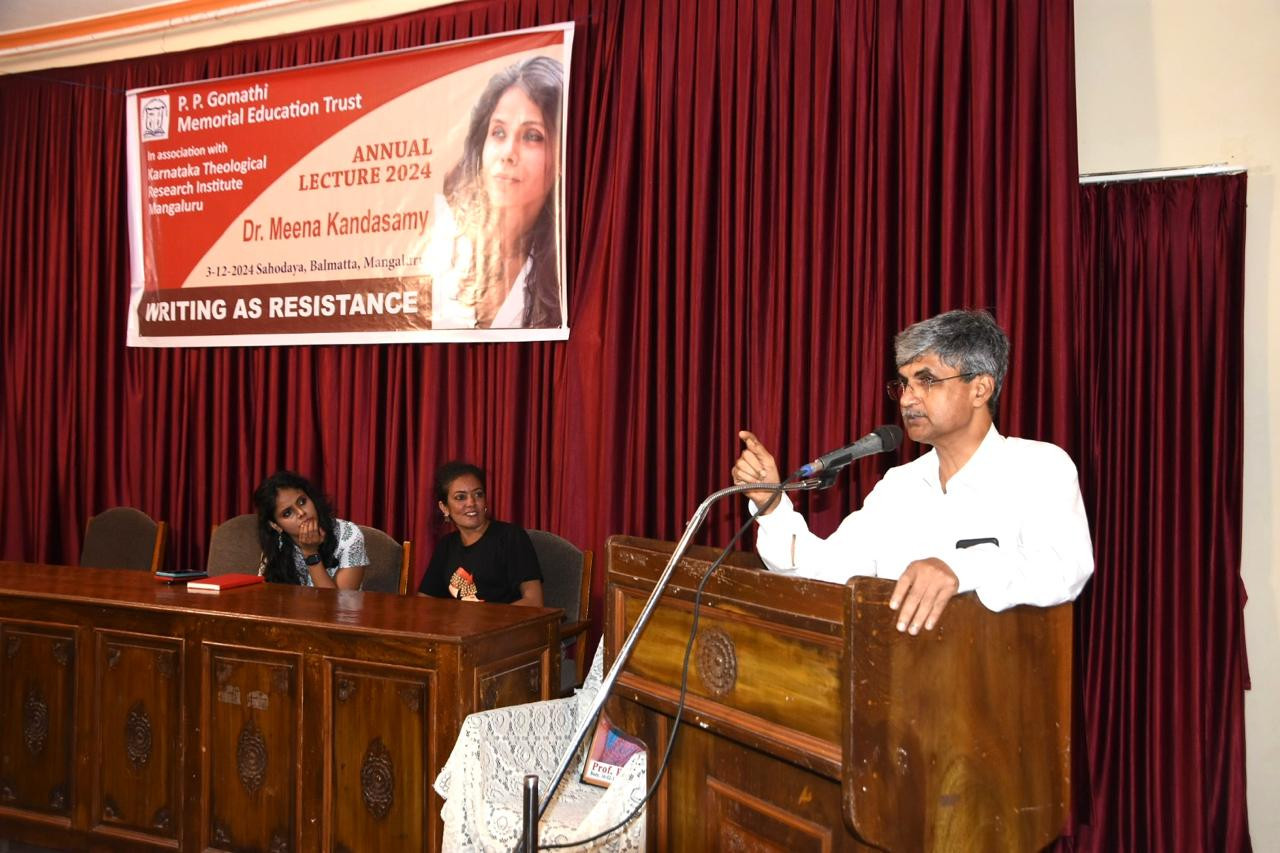
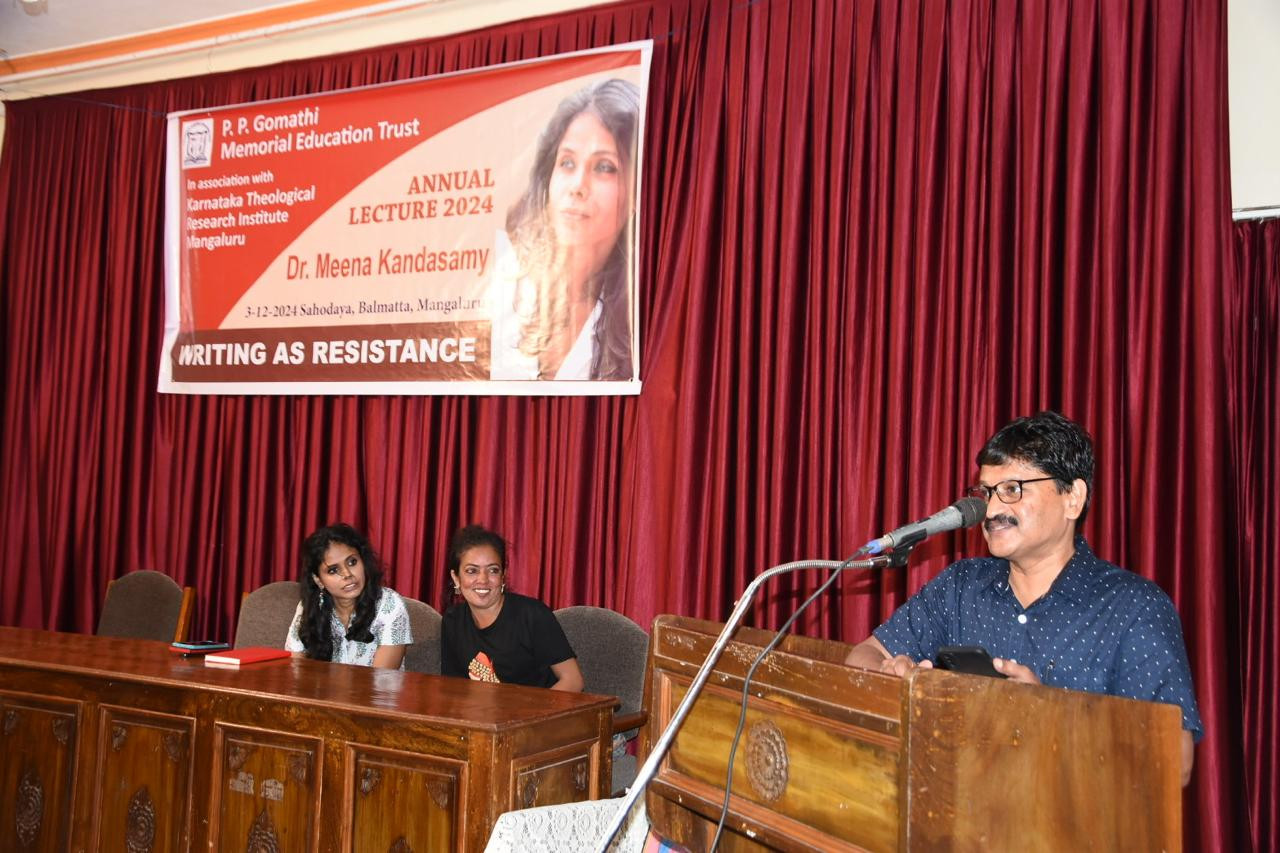
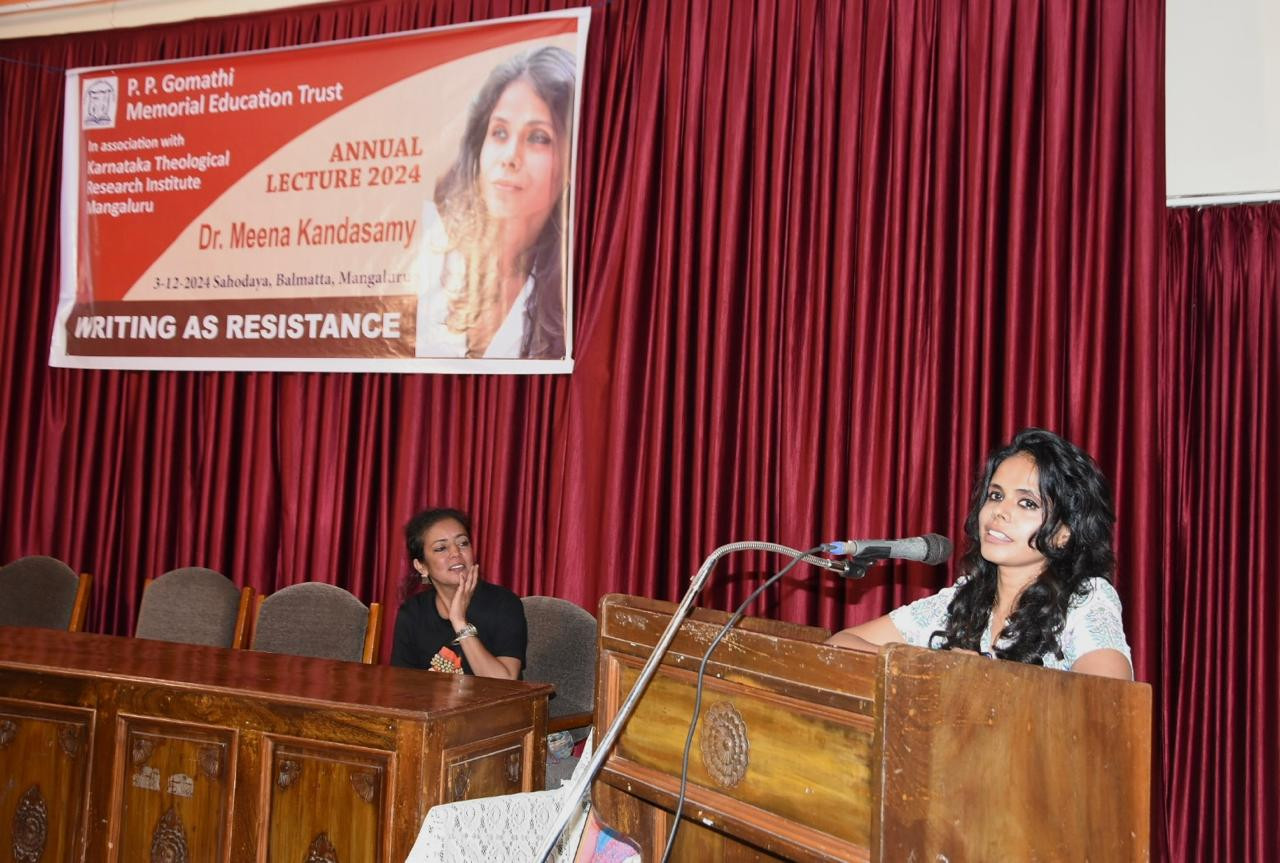
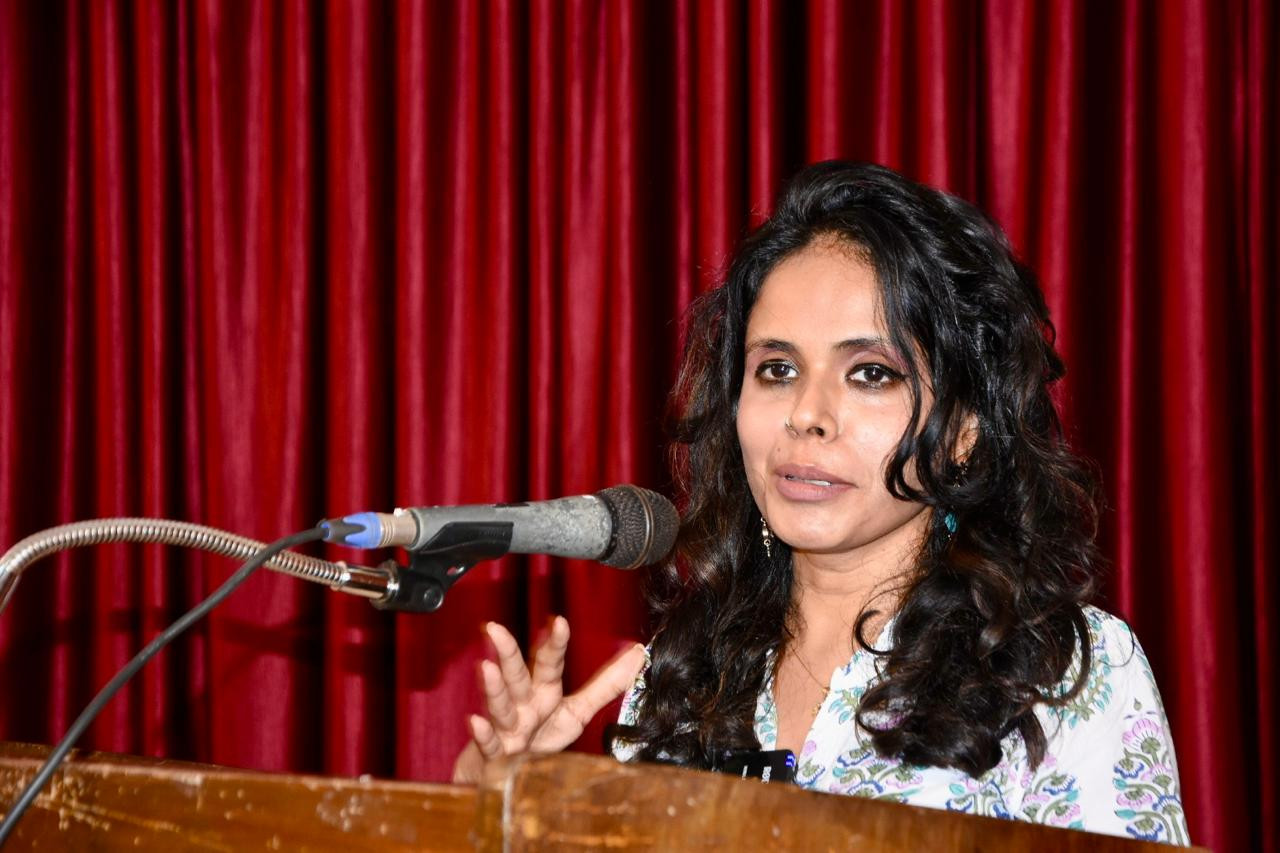
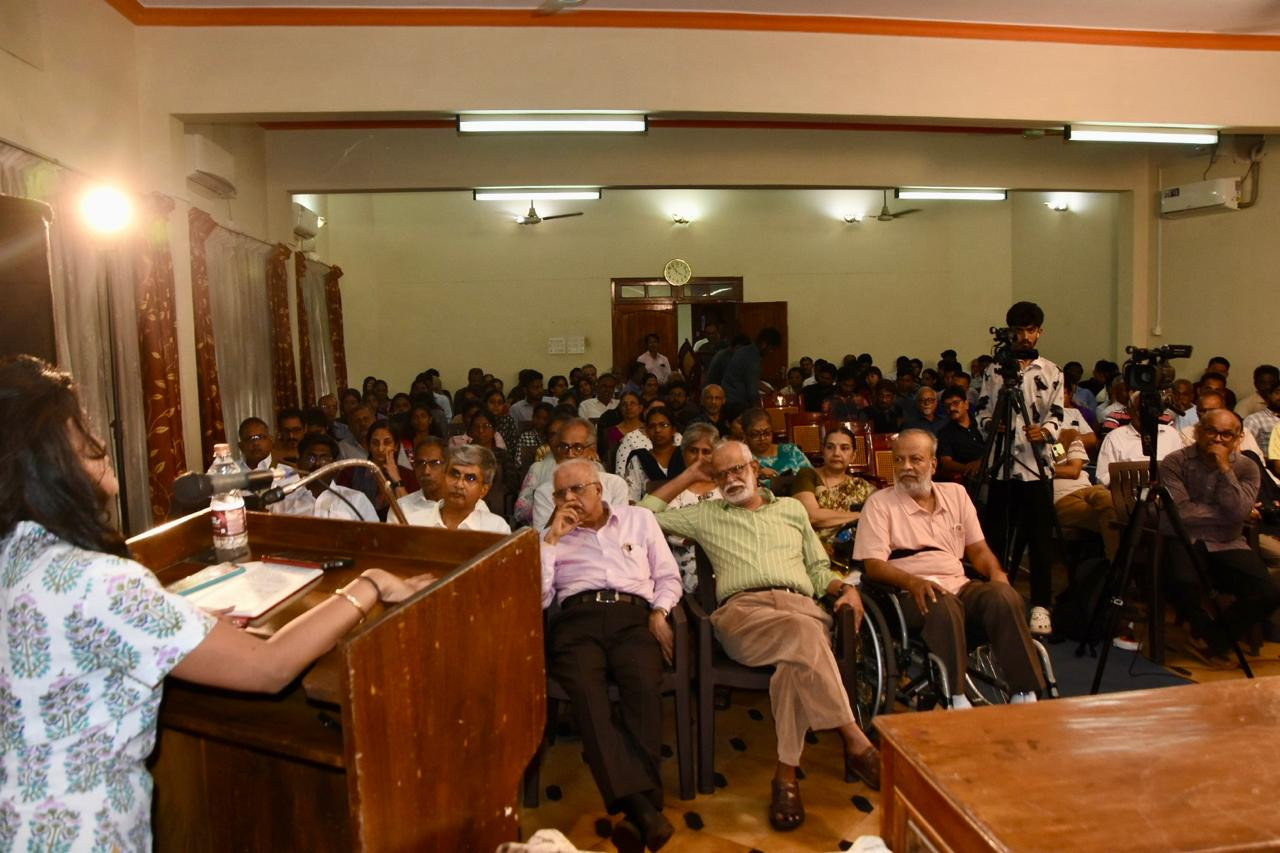
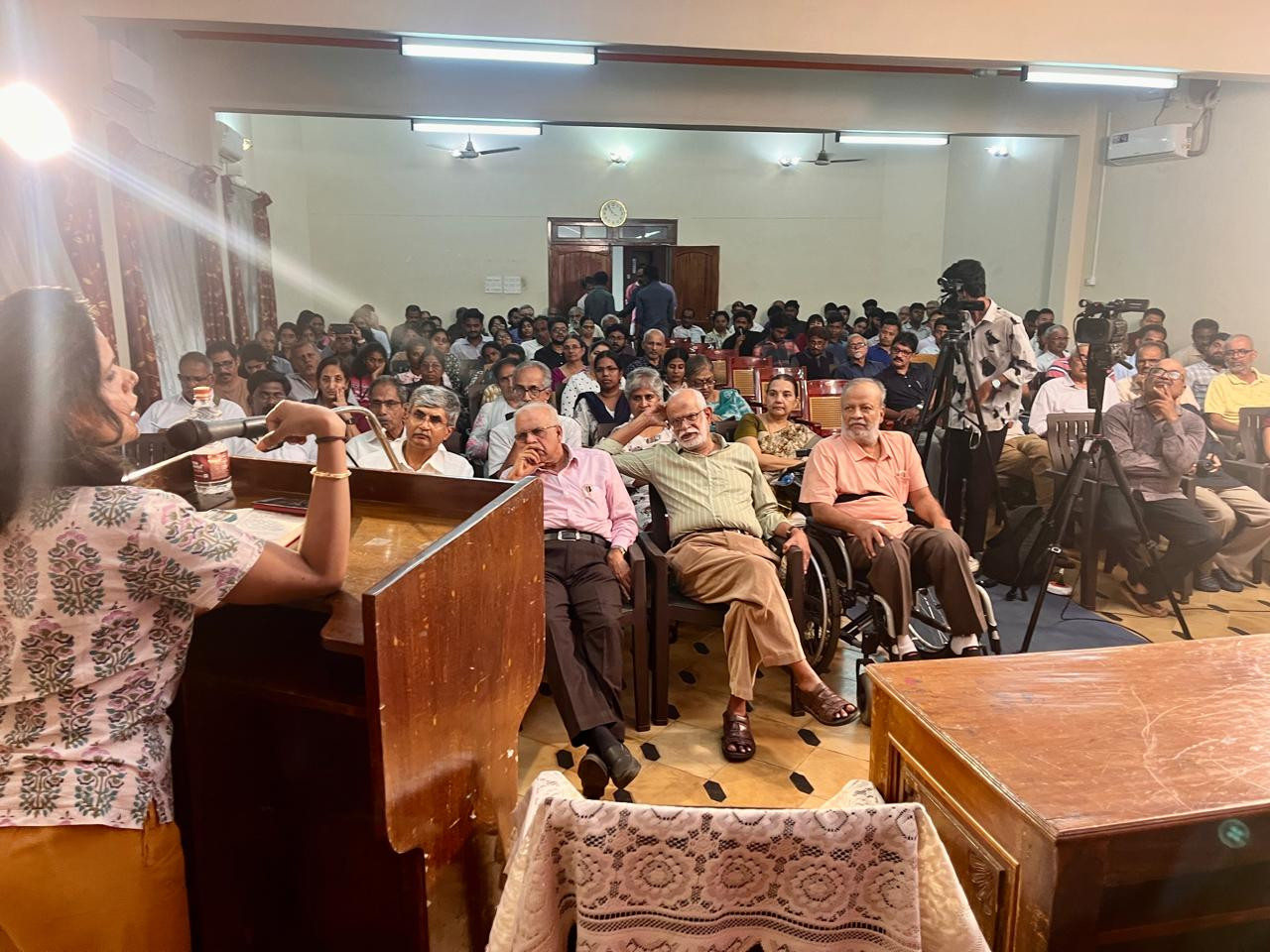
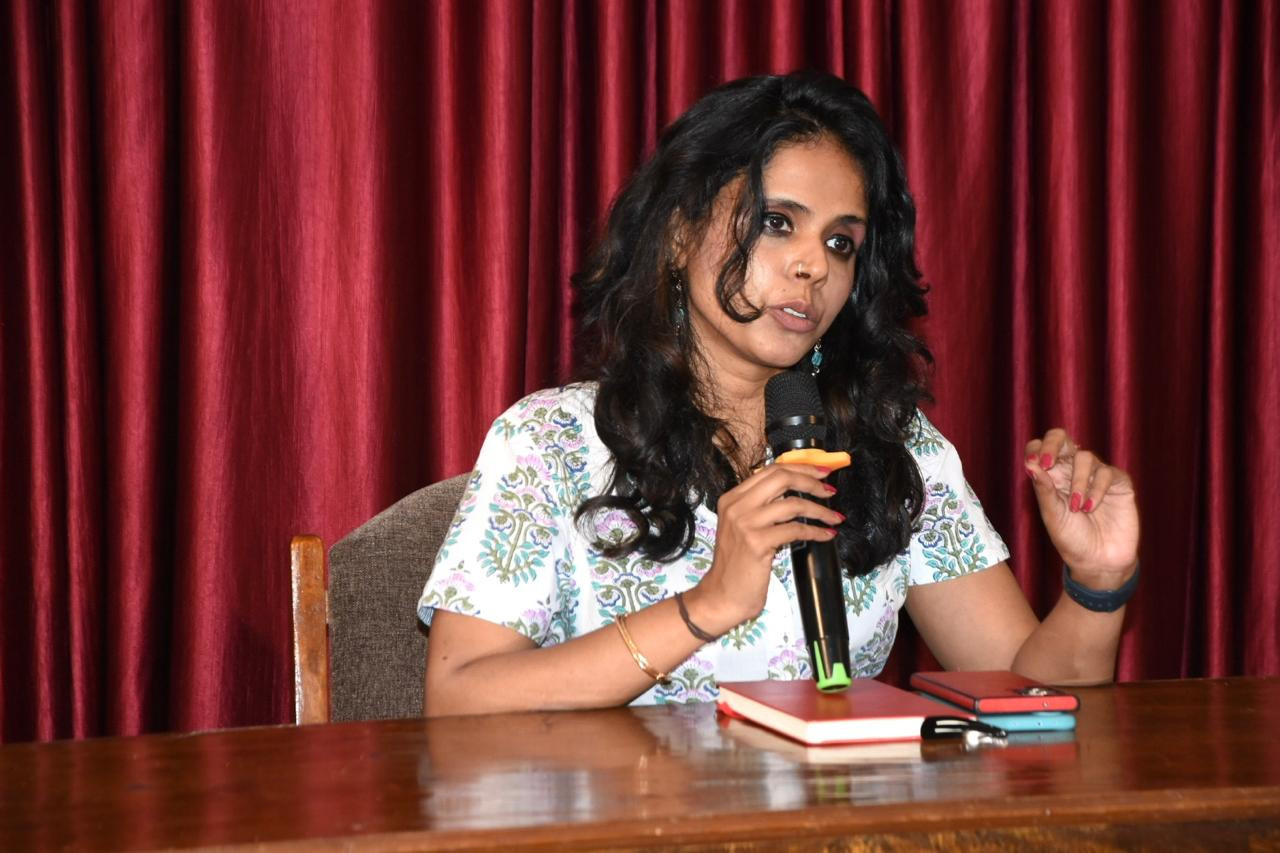
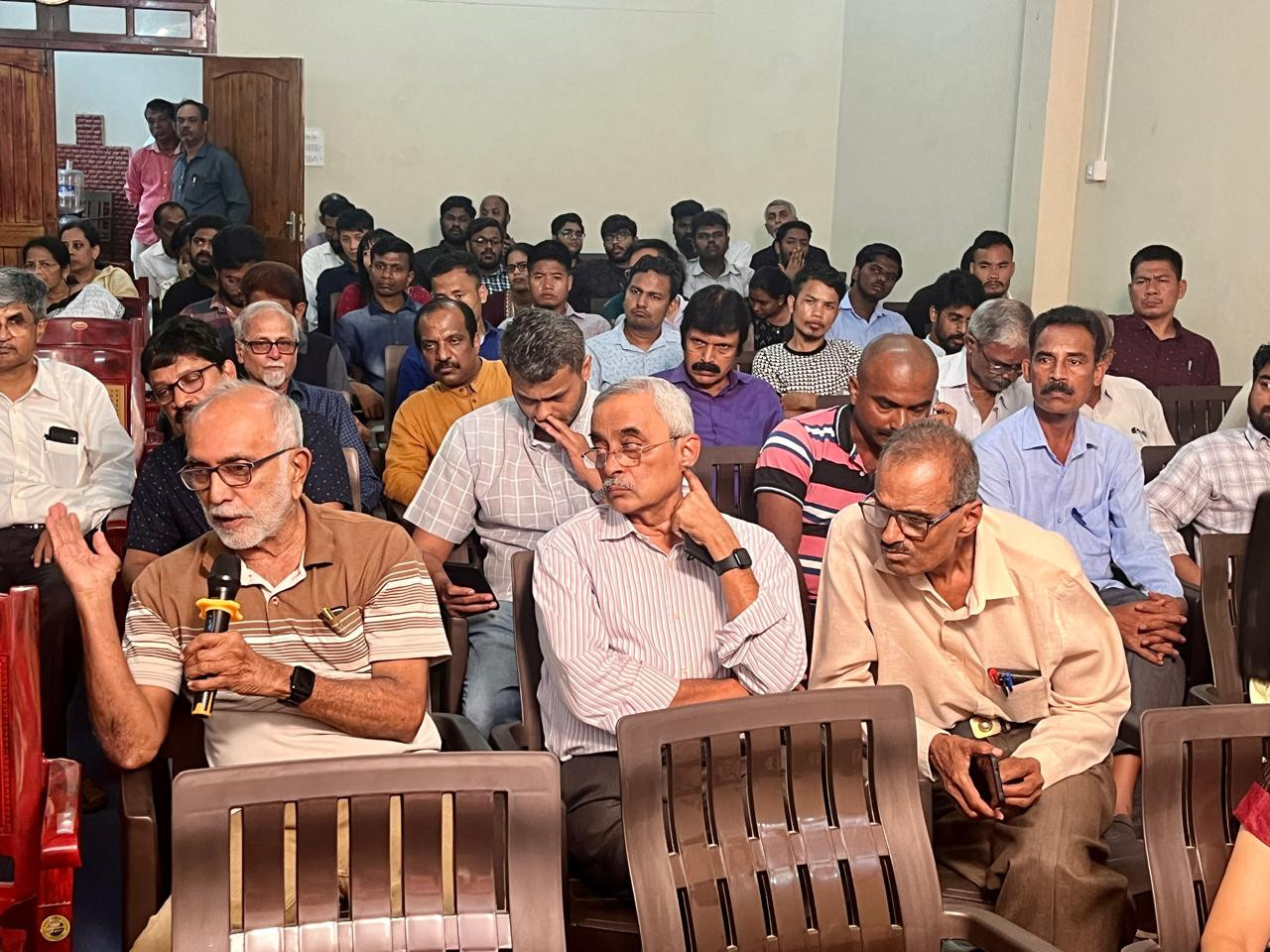
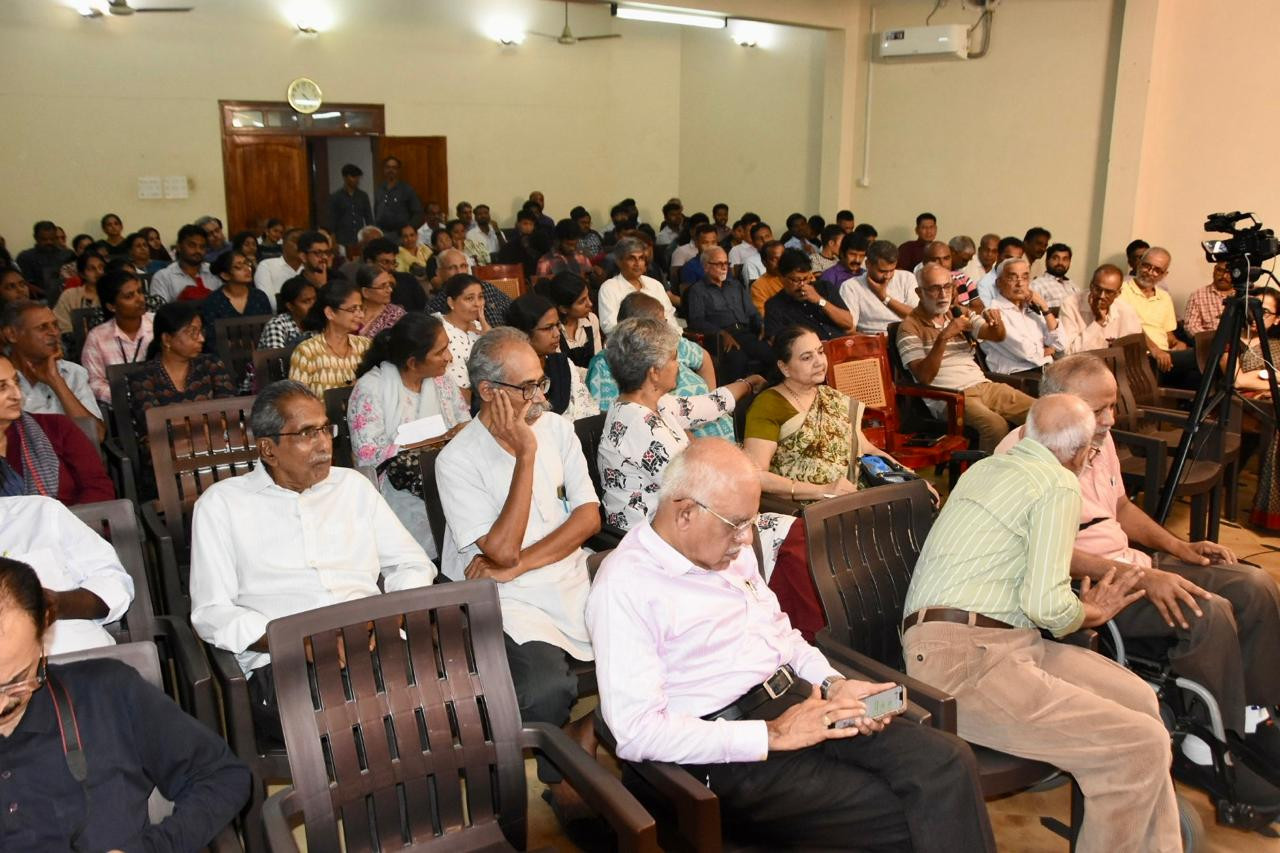
Mangaluru: Dr. Meena Kandasamy, a noted writer, poet, and anti-caste activist, delivered an incisive fifth PP Gomathi memorial lecture on ‘Writing for Resistance’ at Sahodaya, Mangaluru, on Tuesday. The event was organized by the PP Gomathi Memorial Education Trust in collaboration with the Karnataka Theological Research Institute. Addressing the audience, Dr. Kandasamy delved into the perilous intersection of writing, resistance, and censorship in contemporary India, drawing attention to the struggles faced by writers who dare to speak uncomfortable truths.
Dr. Kandasamy opened her speech by expressing gratitude to the organizers and acknowledging the sacrifices of late writers M.M. Kalburgi and Gauri Lankesh, both of whom were assassinated for their fearless expressions of dissent. “When you speak uncomfortable truths, you pay with blood,” she remarked, emphasizing the deadly consequences writers in India face for their boldness.
She lamented the current environment where dissent is stifled, and critical voices are labeled as threats to the nation. “Why is it that writers are either killed or imprisoned?” she asked, highlighting how the state equates the pens of activists and writers to the guns of insurgents by branding them as “Urban Naxals.” She warned that such comparisons legitimize the state’s persecution of dissenting voices.
Dr. Kandasamy further criticized the misuse of state machinery, such as the Enforcement Directorate (ED) and the Central Bureau of Investigation (CBI), to silence political figures and activists. She said these agencies, originally intended to uphold justice, have become tools of suppression, adding that writers increasingly find themselves victims of censorship.
Reflecting on the vital role of storytelling, she noted the heavy burden placed on individuals who protest against injustice. “When people are already burdened by protesting, why do we want to burden them further with the responsibility of telling their stories? That is where writers play a crucial role,” she said. According to her, storytelling is not just an act of resistance but a necessary means to expose injustices and amplify voices that often go unheard.
In a poignant observation, Dr. Kandasamy stated, “In this country, even reading is resistance, not just writing,” urging the audience to critically engage with literature in a time of widespread repression.
She cited the example of Mohammed Zubair, a journalist and fact-checker who has faced multiple legal challenges for exposing hate speech. She pointed out how he is being accused of compromising India’s sovereignty, unity, and integrity, epitomizing the growing trend of portraying truth-tellers as enemies of the state.
The lecture concluded with a call for resilience among writers and readers alike. Dr. Kandasamy expressed hope that those who speak the truth, expose injustices, and offer solace to the oppressed would be recognized as the true patriots.
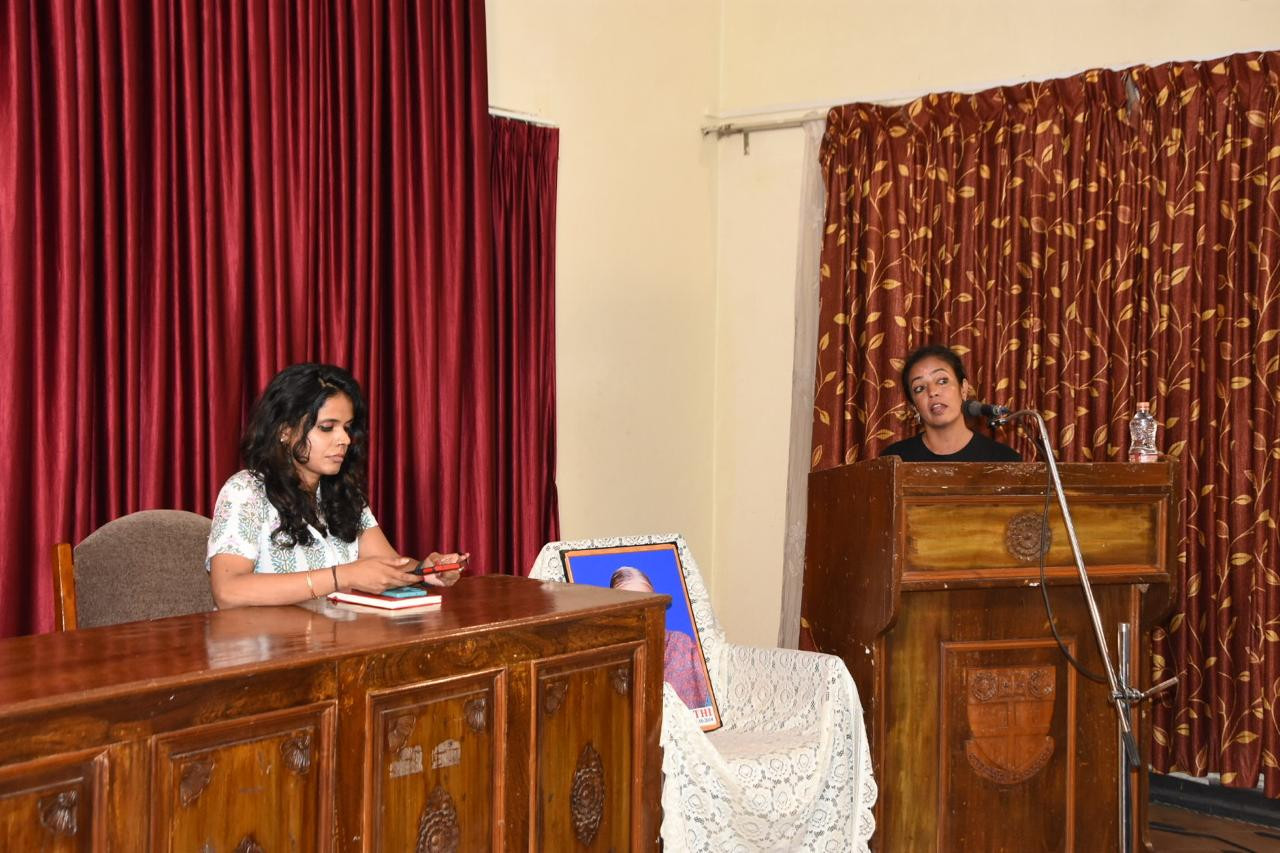
The event commenced with a welcome note by Prof. KP Vasudev, who introduced Dr. Kandasamy to the audience. Christopher George, Director of Karnataka Theological Research Institute, delivered the vote of thanks, expressing gratitude for the insightful session. Dr. B Srinivas Kakkilaya, coordinated the event while media scholar Sindhu Manjesh was also present on the dias.
Let the Truth be known. If you read VB and like VB, please be a VB Supporter and Help us deliver the Truth to one and all.
VP Radhakrishnan discusses further deepening of bilateral ties with Sri Lankan President Dissanayake
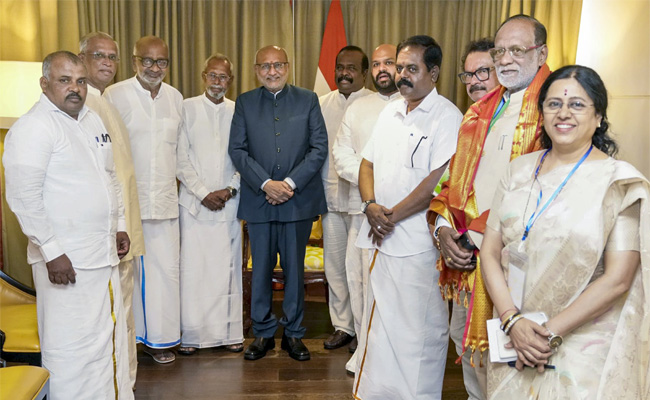
Colombo (PTI): Vice President C P Radhakrishnan met Sri Lankan President Anura Kumara Dissanayake here on Sunday and held productive discussions on further deepening the multifaceted bilateral ties, housing projects and fishermen issues between the two South Asian neighbours.
Radhakrishnan, who arrived here earlier in the day on a two-day visit, also discussed with Dissanayake the ongoing Indian project implementation in Sri Lanka with emphasis on the USD 450 million Cyclone Ditwah aid offered by India.
Accompanied by a 49-member delegation, the vice president was received at the Bandaranaike International Airport in Colombo by Sports Minister Sunil Kumara Gamage and several other dignitaries.
Radhakrishnan’s visit is the first ever by an Indian vice president to Sri Lanka, officials said.
Radhakrishnan laid emphasis on India’s 'Neighbourhood First' policy and developmental bilateral cooperation, officials said.
“Both leaders held productive discussions on further deepening the multifaceted India–Sri Lanka ties, rooted in shared history, strong civilizational and people-to-people linkages,” according to a social media post by Radhakrishnan.
They held wide-ranging discussions on various initiatives, including the Indian housing project and projects being implemented under the USD 450 million package for areas affected by Cyclone Ditwah in Sri Lanka, including reconstruction and rehabilitation efforts in the most affected regions of the Indian-origin Tamil community, it added.
The two sides also discussed addressing fishermen issues in a humanitarian manner, considering the livelihoods of fishing communities on both sides.
The fishermen issue is a contentious one in the ties between India and Sri Lanka.
The Palk Strait, a narrow strip of water separating Tamil Nadu from Sri Lanka, is a rich fishing ground for fishermen from both countries.
Fishermen from both countries are arrested frequently for inadvertently trespassing into each other's waters.
Sri Lankan Prime Minister Harini Amarasuriya hosted a luncheon meeting for the vice president at her official residence, Temple Trees, in Colombo.
“Both leaders shared the civilizational heritage of the two countries and discussed the importance of further strengthening bilateral ties, including people-to-people bonds,” Radhakrishnan said in a post on X.
Sri Lanka’s Leader of Opposition Sajith Premadasa also called on Radhakrishnan in Colombo and both leaders discussed further strengthening India-Sri Lanka bilateral ties.
“Sri Lanka and India are not just neighbours, we are true partners with shared history, shared challenges, and a shared future. It is time we move with greater ambition, intent and trust, to reap the benefits of this partnership for all citizens,” Premadasa said in a social media post.
He also met leaders of Sri Lankan Tamil parties and Indian Origin Tamil parties.
The Tamil parties thanked the Government of India for its efforts for the USD 450 million rehabilitation and relief package post Cyclone Ditwah, as well as other relief measures taken.
A number of memoranda of understanding between the two countries are also scheduled to be exchanged during the visit, a Sri Lankan Foreign Ministry release said.
Later in the day, the vice president also participated in a community reception organised by the Indian diaspora here during which he virtually handed over houses to beneficiaries from Tamil communities, built with assistance from the Indian government as part of the third phase of the Indian Housing Project.
With this, the total number of houses for Tamil communities will reach 50,000, and 10,000 more houses are being built in the fourth phase of the project, an official statement said.
On Monday, the vice president will travel to Nuwara Eliya, visit the Indian Housing Projects, and interact with the local Tamil community.
This visit, which follows recent high-level engagements between the two countries, is expected to further strengthen the millennia-old civilisational and people-to-people ties between India and Sri Lanka, an official statement said.