Wildlife conservationist files PIL in HC for violation of multiple rules at Pilikula Biological Park
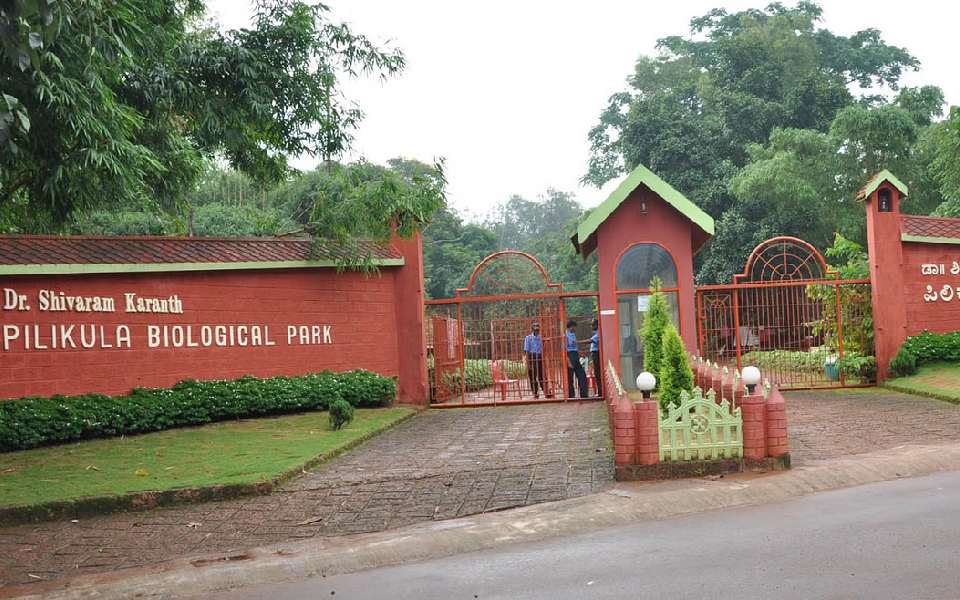
Mangaluru: A wildlife conservationist has filed public interest litigation (PIL) in the Karnataka High Court alleging serious violation of several rules at the Pilikula Biological Park and asking for immediate probe and action by the authorities concerned.
The petitioner Bhuvan M, who is also a member of the Bombay Natural History Society (BNHS), among other wildlife organizations, and High Court advocate Ashwin Joyston Kutinha, conducted an independent survey of the park at Pilikula on Oct 31, 2024. The findings of the survey are learned to have brought to light multiple breaches of the Wildlife Protection Act, 1972, and the Recognition of Zoo Rules, 2009 at the park, reports Times of India.
The conservationist, speaking on the issue, has alleged that the enclosures for the animals were unsafe and deteriorating in condition, with the barriers being rusted and damaged. He pointed out that the condition of the enclosures posed serious risks to the animals inside. The survey further found that fishing nets were being used as barriers, which was a hazardous and also unauthorized arrangement. The Central Zoo Authority has mandated minimum size requirements to be used for enclosures but the management at Pilikula has failed to follow the rule, Bhuvan said.
Speaking about care of the animals at the biological park, the conservationist has said that the survey found veterinary care to be substandard as the administration failed to follow the government rules. The animals lived in highly unhygienic conditions with the water used being contaminated.
Bhuvan has further alleged that the unauthorized acquisition and release of animals was a violation of Central Zoo Authority guidelines.
Stating that multiple RTI applications were filed by him on the above issues, the conservationist accused the concerned authorities of attempting to suppress the truth regarding the condition at the biological park through delays in response to the applications. He also said that the matter would be escalated by submitting a detailed representation to the Central Zoo Authority, the chief wildlife warden, the principal chief conservator of forests and the commissioner, Pilikula Development Authority on February 24.
He has demanded action against the concerned government officials and transfer of the management of the Pilikula Biological Park to ensure the wellbeing of animals.
Let the Truth be known. If you read VB and like VB, please be a VB Supporter and Help us deliver the Truth to one and all.
Belagavi youth’s murder case projected as road accident, cracked in Uttara Kannada; Three arrested

Karwar: Uttara Kannada police have cracked a murder case in which a Belagavi youth was killed and his body burnt inside a car to make it appear like a road accident.
Addressing a press meet in the city, Superintendent of Police Deepan M.N. said three accused from Old Hubballi have been arrested in connection with the case. The crime was a pre-planned act driven by personal enmity, he said.
The case came to light on April 8 morning when a car (KA-04/MJ-8996) was found completely burnt in a roadside ditch near Talekumbri bus stand in Yellapur. Only charred human remains were found inside the vehicle. Initially, it was suspected to be an accident caused by overspeeding, and a case was registered at Yellapur police station based on a complaint filed by the deceased’s father, Jagannath Dhapale.
However, the father later expressed suspicion that his son’s death was not accidental, prompting a detailed investigation.
Taking the matter seriously, two special teams were formed under the leadership of Yellapur Inspector Ramesh Hanapur. On analysing technical evidence and CCTV footage, police found that it was a planned murder.
The accused have been identified as Abdul Raheem Basheer Ahmed Mujawar (32), Maulasab Bavahan Wada (36) and Dadapeer alias Aftab Mehboob Saab Balasangi (22), all chicken traders from Old Hubballi.
Police have seized the car used in the crime along with two scooters. The accused have been remanded to judicial custody.
Investigations revealed that the accused killed Nitesh Dhapale due to personal enmity and later set the car on fire along with the body to project it as an accident.
SP Deepan M.N. appreciated the efforts of Inspector Ramesh Hanapur, PSIs Rajashekhar Vandali and Siddappa Gudi, and the entire team for solving the complex case.