Joining Defence Forces brings pride, honour to entire families, villages: Anees Kutty
VB Interview with Defence careers mentor Anees Kutty
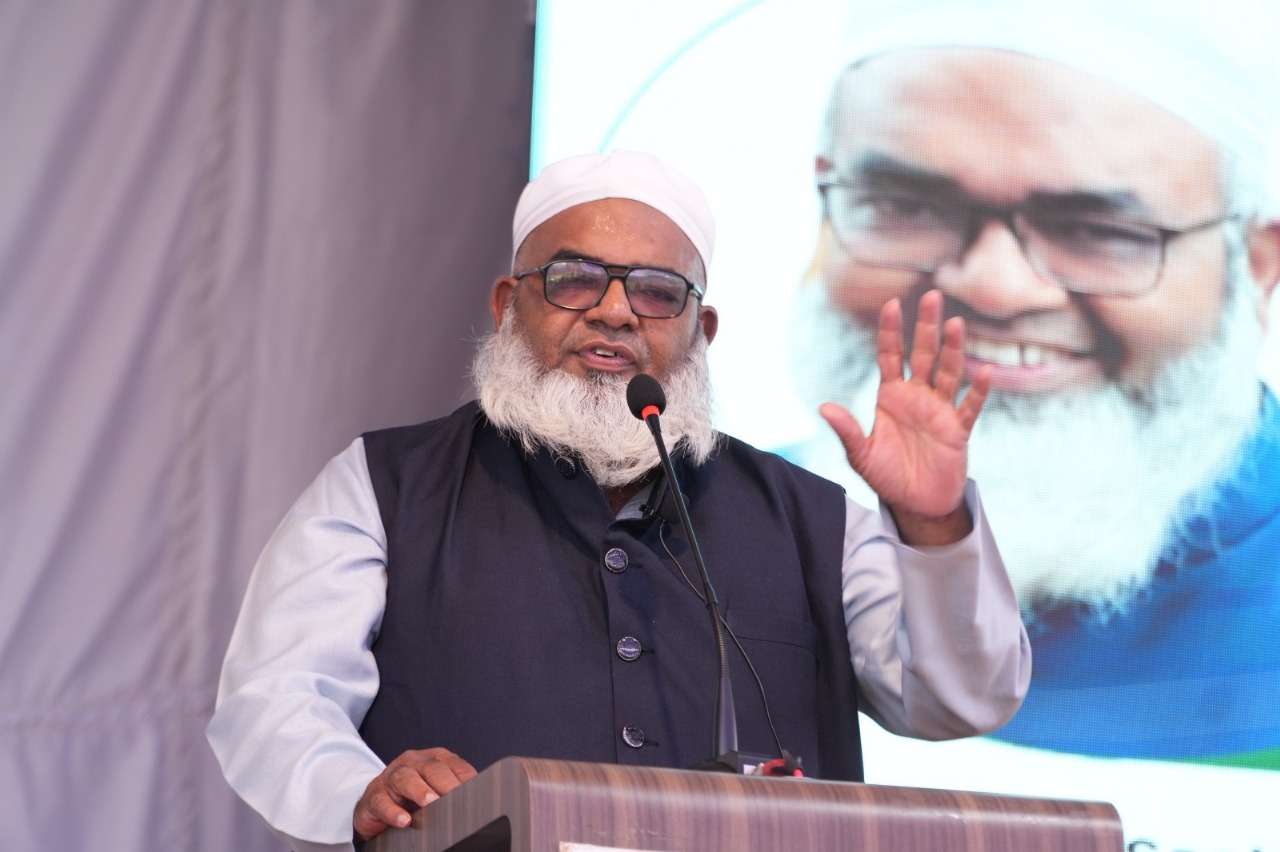
With over 36 years of experience as a Defence Career Counsellor, Anees Kutty, Founder and Director of Anees Defence Career Institute (ADCI), Pune, has guided thousands of students who now serve with pride in the Indian Armed Forces. Known for his practical insights and deep understanding of defence recruitment, Kutty has been instrumental in shaping the aspirations of young Indians across disciplines.
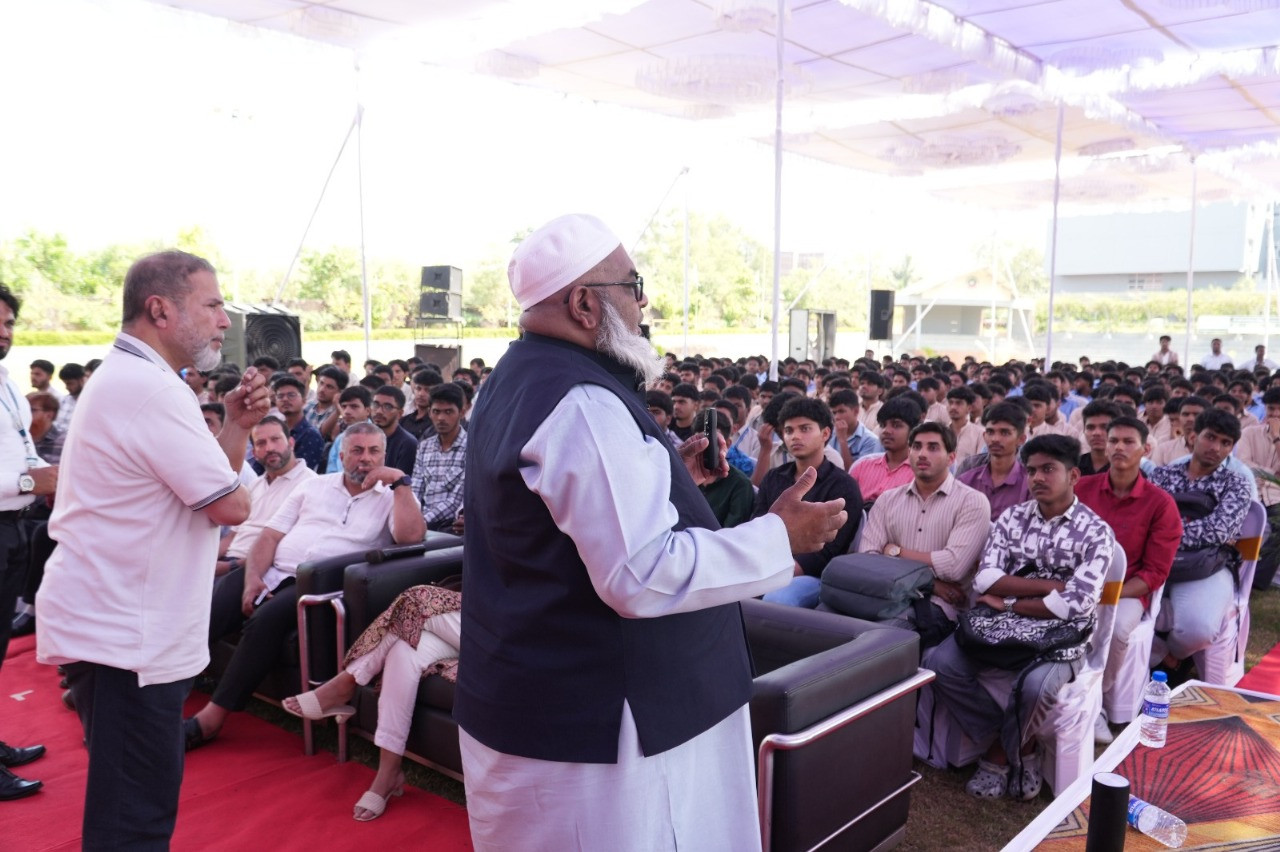
During his visit to Mangalore to address a career guidance session at Bearys Academy of Learning, he spoke to Vartha Bharati about the qualities of successful defence candidates, the inclusivity of defence opportunities, and how recruitment has evolved over the decades.
Excerpts from the interview:
You have mentored thousands of aspirants over the years. What do you think are the most common qualities that successful defence candidates share?
Answer: Passion is the key to joining the Armed Forces. Without it, the journey becomes hard to sustain. It builds the mindset and drive to serve and lead. You can often see that spark in those who love sports, martial arts, or adventure. But those truly drawn to the Army, Navy, or Air Force feel a deeper pride and purpose.
Defence life is unique from strict discipline to unmatched exposure. There are 36 water sports in India, world-class training, and huge campuses where even breakfast must be finished in seven minutes. The uniform itself inspires respect and leadership. An officer commands hundreds, and that responsibility demands courage and conviction. When the uniform excites you, that’s when you truly belong to defence forces. It is a career that when you join, it doesn't only bring pride to you, but it brings honor to the entire family and villages.
Many students, especially from non-science backgrounds, feel the defence services are beyond their reach. How true is that perception?
Answer: That’s a big misconception. Joining the Armed Forces isn’t just for science students. Those from arts, commerce, or humanities can also become officers if they have the right guidance and awareness.
For example, mathematics isn’t compulsory for the NDA exam, though basic knowledge helps. I always tell students your stream doesn’t matter; your determination does. Even medical students can join through AFMC after clearing NEET. Everything there, from education to accommodation is free, and you graduate as both a doctor and an officer.
Through JEE or Technical Entry too, students can become officers in the Army, Navy, or Air Force, earning degrees like B.Tech, B.Sc., or BA from JNU, fully sponsored by the government.
In the end, it’s all about willpower and consistency what we call Istiqamat in Urdu. I’ve seen students clear it after 13 or 14 attempts. One of my students, Shubhankar Naidu, made it in his 14th attempt, and another, Vaishnav Kumar, in his 13th. Perseverance matters more than anything else.
What major changes have you observed in the defence recruitment process and examination patterns over the past three decades?
Answer: Earlier, joining the Armed Forces often ran in families, officers’ children became officers, much like the saying, “The king’s son becomes the king.” But things changed after the 7th Pay Commission and the IT boom, as many defence families moved towards IT careers.
Now, the trend is reversing. Youth from rural and farming backgrounds are showing strong interest in defence jobs, drawn by the respect, stability, and financial security the forces offer. A student who joins after Class 12 receives a stipend during training, with all expenses covered from books to uniforms. By 22, he’s commissioned as an officer, and after 15 years, at just 37, he’s eligible for pension. Many Air Force officers later earn high salaries, sometimes up to seven lakh rupees a month, in commercial airlines like Indigo.
Awareness has also grown in the past decade. The government has opened more army schools Karnataka, for instance, now has additional ones beyond Bijapur and Kodagu.
How should students balance their academic studies with preparation for exams like NDA, CDS, or AFCAT?
Answer: Most schools and colleges, including IITs, function for about 180 days a year. With weekends and holidays, students must plan their time smartly to manage both academics and defence exam preparation.
Good marks matter, especially for technical entries. Many think academics end after joining NDA, but cadets continue learning subjects like robotics, drone-making, and ethical hacking.
Unfortunately, interest in defence exams is still low in South India about 80% of candidates come from the North. Through awareness efforts by institutions like Bearys Academy, more students are being encouraged to see defence as one of the most respected and fulfilling careers in India.
The idea of a “defence mindset” was mentioned in your session. Can you explain what this mindset means and how young aspirants can develop it?
Answer: Syed Beary made a strong point about sacrifice how, in our faith, one who gives his life for the nation attains heaven even before his blood touches the ground. Our religion teaches us to always keep the nation above everything.
Our ancestors lived by that belief, but the real question is are today’s youth doing the same? How many from Gen Z truly dream of serving in the defence forces? This mindset needs to change. Every community must play its part in protecting the nation.
Young people should look up to Dr. A.P.J. Abdul Kalam, who always put India first. Just as parents push their children to become doctors, engineers, or civil servants, they should also inspire them to join the Army, Navy, or Air Force.
As I often say, someone has to ring the bell someone from every community must take that first step and wear the uniform. Serving in defence should be seen not just as a career, but as a duty and honour.
In your opinion, what role do institutions like Bearys Academy of Learning play in building awareness and interest among students for defence careers?
Answer: Institutions like Bearys Academy can make a real difference. As Chairman Syed Beary suggested, setting up a full-time career guidance cell that works round the clock would help students immensely.
I’ve also recommended that every campus should have at least one officer from a defence background of Army, Navy, or Air Force to mentor students. Like Sanjay Dutt says in Munna Bhai MBBS, before an operation, you must fill the form meaning, proper process and initiative are key.
New opportunities in defence open every few months. Students who follow Employment News or stay updated will find openings in fields like cybersecurity, robotics, and drone technology.
India today needs skilled professionals in DRDO, ISRO, BARC, and the Intelligence Bureau. Even entry routes like Agniveer, Airman X and Y, SSR, or the Army Cadet Corps are great starting points. Instead of spending hours on social media, students should use their time to explore these paths after Class 12. The goal should be simple — to contribute to the nation by becoming part of the system.
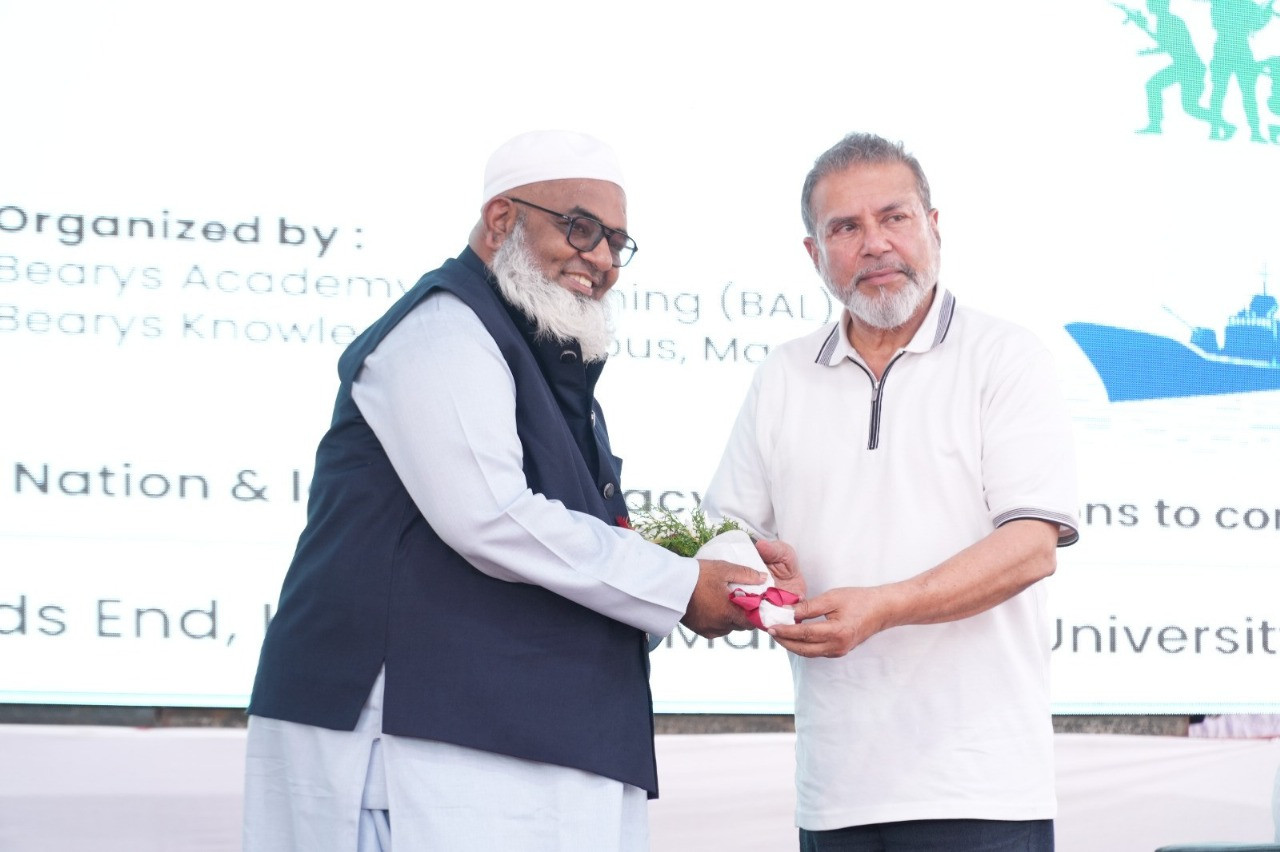
Anees Kutty with Chairman of Bearys Academy of Learning, Syed Beary.
Defence exams are becoming increasingly competitive every year. What are some practical steps students can take to stay motivated during long preparation phases?
Answer: At my institute, we start training students from Class 5 for Navodaya exams — not directly defence-related, but a great base for discipline. Then come Sainik School exams; Karnataka has two, in Bijapur and Kodagu.
Navodaya offers free education and stay in Classes 6, 9, and 10. After that, students can aim for Rashtriya Military Schools in Belgaum and Bengaluru, and then Rashtriya Military College, where only one student per state gets selected.
It’s a funnel system — once a student enters, success follows. I’ve suggested to Chairman Syed Beary to start a service-preparatory institute for boys and girls, as Karnataka still doesn’t have one.
Students can attempt NDA till 19. Even clearing the written test among eight lakh candidates is a big feat. Even if they don’t make it through SSB, the discipline and confidence gained help them excel later — in banks, PSUs, or private firms.
Defence preparation builds a solid foundation. Even if one doesn’t become an officer, he surely becomes a responsible and capable professional.
Interviewer: Yes, but what specific steps can students take to keep themselves motivated during this long process? Many tend to give up after repeated failures.
Answer: The key to success is perseverance or Istiqamat, as we say in Urdu consistency in simple terms. You must keep going with steady effort and passion. In Marathi, there’s a word Paltaghada, meaning to keep changing directions — but that’s exactly what one must avoid.
Think of a bucket under a dripping tap. Drop by drop, it fills up. But if you turn it upside down, nothing happens. That’s how effort works — slow, steady, and consistent.
Next comes capacity building and goal setting, but what truly helps is Reflective Journaling. It’s beyond goal-setting it helps students note their progress, emotions, and learning patterns. At our institute, we practice this regularly to build focus and consistency even if it takes years or dozens of attempts.
As Shah Rukh Khan once said, a person who wins after losing many times isn’t a failure he’s a fighter. Out of 40 students, only one can top the class, but that doesn’t mean the rest lack talent. The real officer is the one who fails, learns, and still keeps going.
With more women joining the armed forces in recent years, what advice would you give to young female aspirants aiming for a career in defence?
Answer: I always tell young women to explore every path into the Armed Forces. When I was invited by the Karnataka Wakf Board, we held a programme where I encouraged girls to apply for AFMC (Armed Forces Medical College). Over 650 girls attended, but sadly, many didn’t submit the form.
AFMC has 120 seats, with about 20 reserved for girls, and the education there is completely free. Opportunities also exist through JEE and technical entries, but awareness is very low.
Girls’ entry into the NDA became possible only after a Supreme Court ruling. When the case came before Justice Chandrachud, the NDA initially resisted due to the lack of hostels and facilities. Thanks to efforts by many, including Sophia Qureshi, the court directed that women be admitted. Today, even Sainik Schools, including those in the Northeast, have started enrolling girls.
Currently, NDA offers 40 seats for girls. Another great option is the Military Nursing Service (MNS), which has 220 seats across India. Girls with even 300 marks in NEET can apply through a separate exam. The stipend is around Rs 46,000, along with uniform, accommodation, and full officer privileges. Their attire is modest and professional, similar to a safari suit, making it Sharia-compliant too. Yet, most students — nearly 90% haven’t even heard of MNS.
I once met a girl in Solapur who scored 500 marks in NEET the first time, 400 the next, and 300 later, before falling into depression simply because of poor guidance. Nursing is a noble and fulfilling profession; in some countries like Germany, nurses even earn more than doctors.
My advice is simple: choose your career based on your passion and skill. The Army, Navy, and Air Force offer excellent avenues for women, especially through MNS — a career that brings respect, financial stability, and lifelong pride.
Beyond exams and physical fitness, how important are qualities like leadership, teamwork, and emotional resilience in building a successful defence career?
Answer: Leadership, like music, starts from the basics. When someone like Arijit Singh creates a song, it begins as a “scratch” that later becomes a full song. In the same way, true leadership must be built from the ground up from the foundation.
In our society, that foundation is often missing. Many still stay away from mainstream education and national participation, even though our faith places great importance on learning. The very first word revealed in the Quran was “Read.” Prophet Muhammad (peace be upon him) even freed prisoners of war on the condition that they teach others to read and write showing how deeply education was valued more than 1,400 years ago.
The Prophet was sent as a teacher a reminder of how dignified the teaching profession is. Yet, very few in our community want to become teachers today. Look at Finland — one of the happiest countries in the world where teachers are among the best paid. When teachers are respected and empowered, they create leaders.
Leadership begins at home. The mother is a child’s first teacher, the first Madrasa. If mothers are educated and guided with purpose, they will raise children with the same strength and vision.
So, to truly build leadership, teamwork, and emotional resilience, we must start at the roots by valuing education, honouring teachers, and nurturing families that inspire curiosity and courage. That’s where real leadership is born.
Finally, what is your message to students who wish to serve the nation but are uncertain about where or how to begin their journey?
Answer: My mission is simple to make career guidance available to every young person in India. Nearly 25 lakh students need proper counselling, but structured systems are still missing. That’s why I’m here to fill that gap.
We offer free, round-the-clock counselling through WhatsApp and social media, focused only on career guidance. Students can reach out anytime for help or updates.
I follow what I call the 3P’s Model, or as I like to say, Amar, Akbar, Anthony Purpose-based learning, Project-based learning, and Problem-based learning. These are global education ideas I’ve tried to adapt to Indian classrooms. I’ve also introduced FLIP classes, From Lower Order Thinking Skills to Higher Order Thinking Skills (LOTS to HOTS) a 40-minute method that helps students move from rote learning to real understanding.
My advice to every student: build your life on three Ps Passion, People, and Planet. Love what you do, serve those around you, and care for the world you live in. Think globally, act locally be “Glocal.”
Today, with tools like ChatGPT and Generative AI, what once took hours now takes minutes. The world is changing fast. If you want to bring change, do it with consistency and purpose the way Dr. A.P.J. Abdul Kalam did. That’s the spirit every young Indian should carry forward.
Let the Truth be known. If you read VB and like VB, please be a VB Supporter and Help us deliver the Truth to one and all.
Karnataka: GBA city corporation polls likely between June 14 and 24
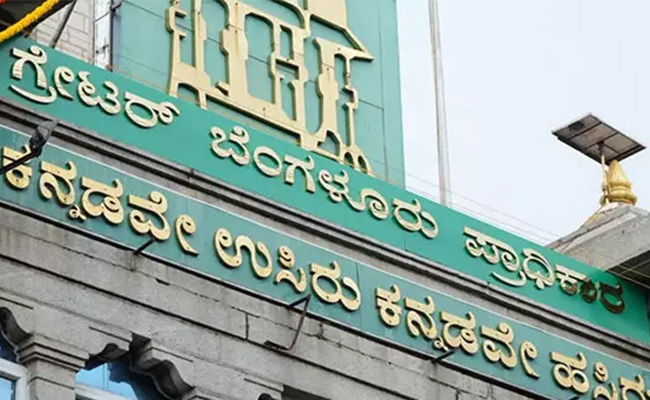
Bengaluru (PTI): Karnataka State Election Commissioner G S Sangreshi on Friday said elections to the five city corporations under the GBA will be held anytime between June 14 and June 24.
He said the exact date for the polls will be announced after a week, asserting that the power to postpone the elections, as requested by GBA authorities, lies with the Supreme Court.
The Supreme Court had directed the Karnataka government and the State Election Commission to conduct Bengaluru local body elections by June 30.
On Friday, the SEC held a consultation meeting with the GBA Chief Commissioner and commissioners of the five city corporations regarding the election schedule, as per the provisions of the GBA Act.
“During the meeting, I informed GBA officials that only the election date has to be fixed, as all other measures and formalities for conducting the polls have already been completed,” Sangreshi said.
“They requested the Commission to consider factors such as rains, exams, census work, SIR, and manpower shortages while fixing the date and sought additional time,” he added.
Speaking to reporters after the meeting, he said, “I told them this meeting was not for seeking time. Elections to the five corporations under the GBA must be held before June 30, as directed by the Supreme Court, and a compliance report must be submitted to the court. I do not have the power to postpone the elections as requested.”
The Supreme Court has already given a “final opportunity,” and both the SEC and the government must comply with its directions, the State Election Commissioner said.
He asked GBA officials to suggest suitable dates between June 14 and June 24.
“While stating that they are ready for elections, the officials highlighted operational challenges, including manpower shortages. However, I have informed them that the elections will have to be held between June 14 and June 24. After a week, I will announce the final date,” he said.
Reiterating that he does not have the power to postpone the elections, Sangreshi said the authority rests with the Supreme Court, and elections must be conducted as scheduled.
“We have consulted the GBA as per the rules. It is up to them to suggest a date within the given window. If they need more time, they must approach the court. Our responsibility is to fix the date and complete the polls before June 30,” he said.
The matter regarding manpower and other concerns raised by GBA officials is already before the Supreme Court, and the State Election Commission has also filed a petition in this regard. The case is yet to be heard.
“Since the matter has not come up for hearing, the earlier order remains binding. Therefore, preparations are underway,” he added.
The tenure of the previous elected body under the erstwhile Bruhat Bengaluru Mahanagara Palike (BBMP) ended on September 10, 2020, and since then, a government-appointed administrator has been managing its day-to-day affairs.
Bengaluru was divided into five municipal corporations—Central, East, West, North, and South—under the Greater Bengaluru Authority in September 2025, replacing the BBMP.
Sangreshi had earlier said that elections to the five corporations would be conducted using ballot papers instead of Electronic Voting Machines.
This follows the Congress government’s decision last September to recommend the use of ballot papers in all future panchayat and urban local body elections, citing concerns over declining public confidence in EVMs.
The state government subsequently enacted the Karnataka Gram Swaraj and Panchayat Raj (Amendment) Act, 2026, paving the way for the use of ballot papers in local body elections.