1984 anti-Sikh riots verdict: Sack Kamal Nath, Sambit Patra demands in Bengaluru
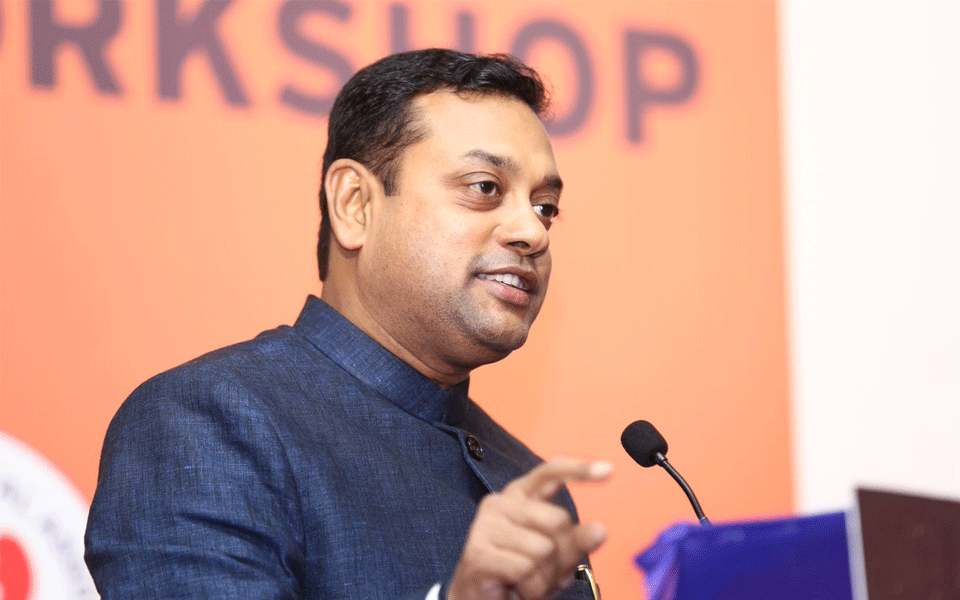
Bengaluru, Dec 17: Hailing the conviction of Congress leader Sajjan Kumar in a 1984 anti-Sikh riot case, the BJP Monday demanded the removal of Kamal Nath as Madhya Pradesh Chief Minister who they alleged was involved in the riots.
The demand came on a day when Nath took oath as the state's 18th chief minister, while Kumar was sentenced to life imprisonment by the Delhi High Court.
"The way Delhi High Court verdict has come indicting Sajjan Kumar, it is very clear that it is not an order against Sajjan Kumar but an order against the Congress party," BJP spokesperson Sambit Patra told reporters here.
"Look at the double face of the Congress party. Only today the Congress has made him (Kamal Nath) the chief minister of Madhya Pradesh. Rahul Gandhi should immediately remove him from his position," Patra added.
The Bharatiya Janata Party (BJP) leader alleged that the Nanavati Commission, constituted by the then Prime Minister Atal Bihari Vajpayee to probe the riots, had named Nath with evidence.
Patra also sought Rahul Gandhi's resignation as the party president as the judgment was also against the Congress, which, he alleged, had shielded the accused for decades.
While Sajjan Kumar has been imprisoned for life, "Gandhi has been imprisoned in his own conscience as it will continuously prick him all through his life, that his party members massacred thousands of Sikhs and he kept quiet," he said.
"I want to tell Rahul Gandhi to listen to your conscience and resign as the Congress chief," Patra demanded.
On the issue of Rafale fighter jet deal, Patra said truth had triumphed after the Supreme Court set aside the PILs challenging the deal between India and France for procurement of 36 fighter jets.
The BJP leader said the PILs were "Politically Inclined Litigations".
"Rahul Gandhi has lied through his teeth on the Rafale issue. The three Supreme Court judges in their 29-page judgment have categorically concluded that they did not find any reason for any intervention by the court after its findings in all three aspects and having heard the matter in detail," Patra said.
The three allegations, Patra said, were faulty pricing, faulty procurement and commercial favouritism benefiting industrialist Anil Ambani.
Patra said the three charges were rejected by the top court which also examined the pricing details and did not find anything wrong.
Let the Truth be known. If you read VB and like VB, please be a VB Supporter and Help us deliver the Truth to one and all.
Brothers awaiting board exam results drown in canal

Erode (Tamil Nadu) (PTI): Minor brothers who were awaiting their board exam results have drowned in a canal in this district while spending their Summer holidays at their aunt's place, police said.
According to Arachalure Police, Santhosh, aged 17, and his younger brother Sanjai, aged 15, natives of Musiri village in Tiruchirapalli district, came to Gopaliparai hamlet near Arachalure to their Aunt's house a couple of days ago after writing their annual 12th and 10th examinations, respectively.
The police said on Friday that both boys went to the nearby Lower Bhavani Project canal to take a bath. It was alleged that while taking a bath, both boys went to a deeper area of the canal and went missing.
As they didn't return home, even two hours after they left, their aunt grew suspicious and informed the Fire and Rescue Services, Chennimalai. A rescue team from the department rushed to the spot. After a few minutes of searching, they located the dead bodies of the brothers and sent them to the hospital. Arachalure police registered a case of death due to drowning and are investigating.