2,070 cattle die due to Lumpy Skin Disease in Karnataka
CM Bommai orders releasing Rs 13 cr to tackle lumpy skin disease

Bengaluru, Oct 14: As many as 2,070 cattle have died due to the Lumpy Skin Disease (LSD) in Karnataka, while about 19,000 are affected, the state government said on Friday.
Karnataka Chief Minister Basavaraj Bommai has ordered releasing Rs 13 crore for the treatment and vaccination of cattle suffering from this viral disease and also to provide relief to those who lost their cattle due to it.
He instructed officials to intensify the vaccination drive, especially in Haveri and Kolar districts where the prevalence is high, a government statement said.
"This disease has been noticed in 4,380 villages of 160 taluks in 28 districts. Of the total 45,645 cattle afflicted by this disease, 26,135 have recovered and 2,070 have died," the statement said.
It added that Rs two crore had already been released as the compensation for those who lost cattle.
"An additional Rs five crore will be released towards the treatment of diseased cattle and Rs eight crore for vaccinating them," the statement said.
The Chief Minister was quoted as saying that as many as 6.57 lakh cattle have been vaccinated.
As per guidelines of Government of India, even the healthy cattle within five km range where this disease has been noticed, must be vaccinated.
"The vaccination must be done on priority in the chronically affected districts," the Chief Minister said and directed officials to immediately obtain 15 lakh doses of vaccine from companies approved by the Government of India.
The Chief Minister noted that lumpy disease does not spread to people by drinking milk from the ailing cows, and awareness in this regard must be created on a big scale.
Steps must be taken to check this disease in the badly-hit districts such as Haveri and Kolar; preventive steps should be taken so that it does not spread to other districts. The vaccination drive must be intensified, he said.
LSD is a contagious viral disease that affects cattle and causes fever, nodules on the skin and can also lead to death. The disease gets spread by mosquitoes, flies, lice, and wasps by direct contact among the cattle, and through contaminated food and water.

Let the Truth be known. If you read VB and like VB, please be a VB Supporter and Help us deliver the Truth to one and all.
KPTCL sets target to complete Kadandale 400 kV power substation project by July 15
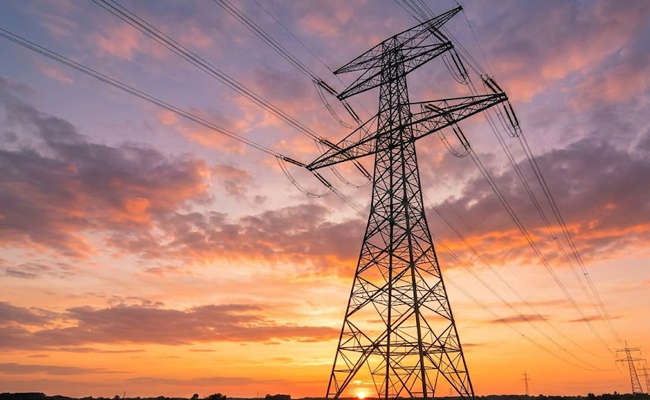
Mangaluru (Karnataka) (PTI): The KPTCL has set a target to complete the strategically important Kadandale 400 kV power substation project by July 15, aiming to ensure uninterrupted and quality power supply to the coastal districts of Dakshina Kannada and Udupi, officials said on Wednesday.
The target has been fixed by the KPTCL (Karnataka Power Transmission Corporation Limited) following the directions of State Energy Minister K J George, they said.
The project, located at Kadandale village in Moodbidri taluk of Dakshina Kannada district, had remained stalled for nearly three years due to land-related litigation affecting the 400 kV transmission line works, officials said.
However, the hurdles were successfully resolved through the sustained efforts of Energy Minister George and Energy Department Additional Chief Secretary Gaurav Gupta, they said.
Following the minister's directions, KPTCL Managing Director Ram Prasath Manohar visited the project site on Wednesday to review the progress of the works, according to an official statement.
"Mangaluru is one of Karnataka's key industrial hubs and requires a reliable and uninterrupted power supply. As directed by the Hon'ble Minister, we are working towards completing the project before the onset of the monsoon and commencing transmission operations at the earliest," Manohar said.
According to officials, the Kadandale 400 kV substation is expected to significantly strengthen the power infrastructure of Dakshina Kannada and Udupi districts, which are major industrial and commercial regions of the state.
Manohar said the project would provide a long-term solution to recurring monsoon-related voltage fluctuations and low-voltage issues in the coastal belt.
"The new substation will improve grid stability and ensure quality power supply to the region. In the event of a technical fault in any one station, load can be quickly diverted through this substation, enabling faster restoration of electricity supply," he explained.
To expedite completion of the project, KPTCL has planned to obtain line clearance on the existing 400 kV UPCL-Hebbanahalli transmission corridor between May 6 and May 24, 2026, the statement said.
During this period, alternative arrangements have been made to manage transmission loads and maintain supply based on demand conditions, it said.
However, officials stated that short-duration load shedding may become unavoidable under technically exigent situations.
"This project is crucial for the long-term energy security of Mangaluru and the coastal region. We request consumers and the public to extend their cooperation during this temporary operational phase," the KPTCL MD stated.
Minister George said that ensuring uninterrupted power supply for the benefit of the public and the industrial growth of the coastal region is one of the government's top priorities.
"Due to certain legal hurdles, the 400 kV transmission line work was delayed. The department has taken special initiative to resolve these obstacles. The Kadandale substation will ensure high-quality power supply for Mangaluru and Udupi regions," he said.
"The department continuously monitored the land-related disputes affecting the project and ensured timely resolution through coordinated intervention. KPTCL has been instructed to complete the works within the stipulated timeline and dedicate the project to public service at the earliest," Gupta stated.