3,000 covid infected go 'missing' in Bengaluru, to be traced by police: R Ashok
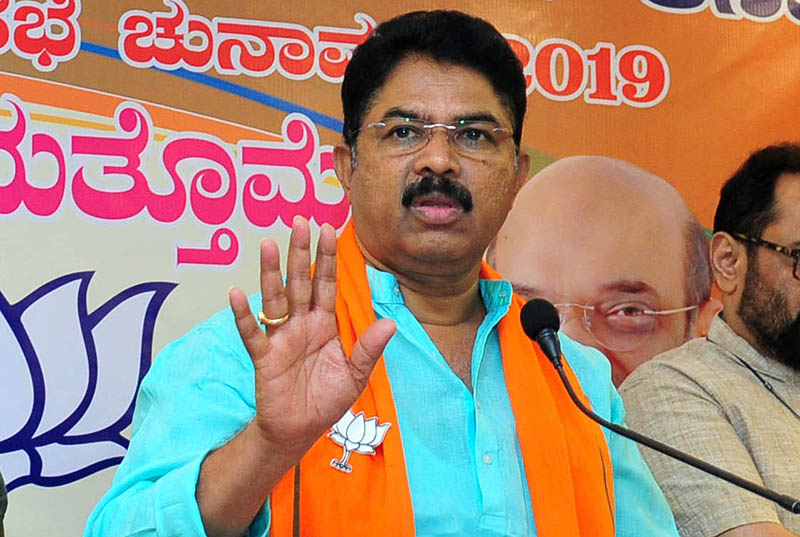
Bengaluru, Apr 28: Posing another challenge to the already overburdened system tackling the covid crisis, about 3,000 infected people have gone missing in the city and many have switched off their phones, prompting the government to task the police to trace them.
Karnataka Revenue Minister R Ashoka claimed that the missing people are spreading the disease, in a state that has seen the positive cases skyrocket in the past few days.
On Wednesday, the southern state recorded its highest single-day spike of 39,047 cases and 229 deaths, with Bengaluru Urban logging 22,596 of those infections.
Ashoka said police have been asked to trace the missing people. However, the police remained tight-lipped on their strategy to track the 'missing' individuals.
Health Minister Dr K Sudhakar said the issue of the infected going missing has been going on for the past one year.
"We are giving free medicines to the people, which can control 90 per cent of cases, but they (covid-infected people) have switched off their mobile phones."
"They reach hospitals in a critical stage, desperately looking for ICU beds. This is what is happening now," Ashoka told reporters.
He said most of the infected people have switched off their phones and are not letting people know about their whereabouts, which is making things difficult.
"I feel that at least 2,000 to 3,000 people in Bengaluru have switched off their phones and left their houses. We don't know where they have gone," he added.
Appealing to the infected people to keep their phones switched on, Ashoka said police have been asked to track them.
"I pray to them with folded hands that covid cases will only increase due to this (behaviour). It is wrong when you reach for ICU beds at the last moment," the minister said.
Agreeing with his cabinet colleague, Sudhakar said this problem has been going on for the past one year.
"At least 20 per cent of the patients do not respond to our phone calls...police will track them in their own way," Sudhakar said.
"Some switch off their phones, some migrate to other states and some do not answer the calls," the Minister added.
To stem the spread of the contagion, happening at an alarming pace, the state government has imposed a 14-day lockdown starting Tuesday, restricting unnecessary movement of people.
There were 3,28,884 active cases in the state on Wednesday, with 2,192 of them receiving treatment in the Intensive Care Units (ICU) of various hospitals.
Let the Truth be known. If you read VB and like VB, please be a VB Supporter and Help us deliver the Truth to one and all.
Allahabad HC orders probe into 'reinstatement' of teacher in UP's Barabanki
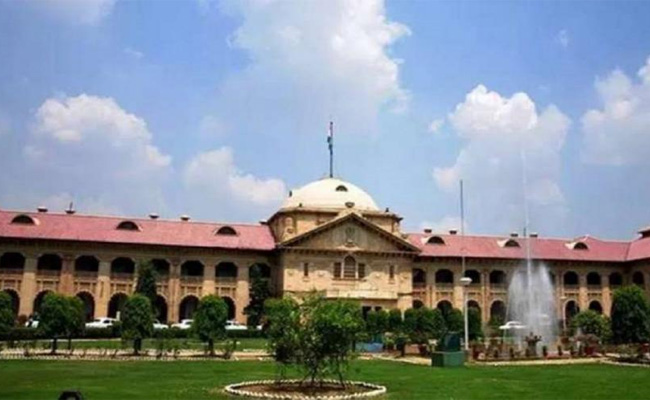
Lucknow (PTI): The Lucknow Bench of the Allahabad High Court on Friday ordered a probe by the special task force (STF) into alleged irregularities in the rejoining of a teacher at City Intermediate College in Barabanki, observing that the reinstatement appeared to be prima facie illegal.
The court also directed the recovery of the salary paid to the teacher during the disputed period.
A bench of Justice Rajeev Singh passed the order on a petition filed by the college management committee. The court expressed doubts over the roles of the District Inspector of Schools (DIOS), Barabanki, the college principal and the teacher concerned and hence, directed a detailed inquiry into the matter.
Taking note of alleged manipulation of records and misleading submissions, the court ordered the immediate transfer of the Barabanki DIOS to ensure a fair probe. It also directed the initiation of disciplinary proceedings against the then joint director of education of the Ayodhya division.
In its order, the court found that the teacher, Abhay Kumar, was initially appointed as an assistant teacher in 2018 but joined an Eklavya Model Residential School in Chhattisgarh as a lecturer in June 2024 without obtaining permission from the management. His subsequent request to retain the lien was rejected.
Despite this, he was allowed to rejoin the Barabanki College in September 2025 on the directions of the joint director of education and the DIOS, and was even paid the salary for October 2025. The court termed the rejoining "wholly illegal" and lacking any legal basis.
The bench also expressed concern over lapses in communication within the education department and directed the Uttar Pradesh chief secretary to ensure that official orders are communicated through email and WhatsApp as well, to prevent disputes.
The matter is next listed for hearing on May 28 when a compliance report is sought.