5 guarantee schemes of Congress should be treated as social welfare, cannot be called corruption: HC
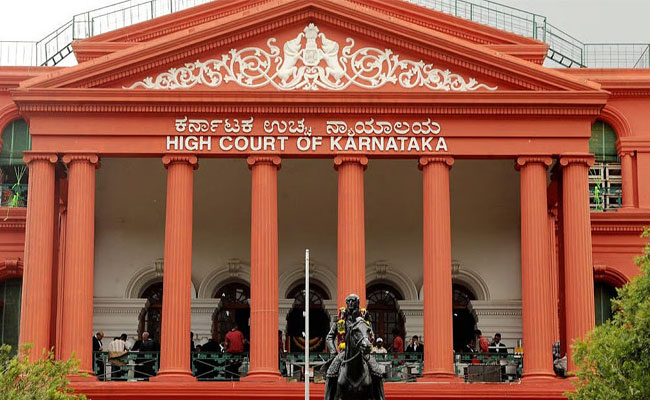
Bengaluru: The Karnataka High Court on Saturday ruled that while the manifesto released by the state Congress during the 2023 assembly elections can be criticized for wrong policies, it cannot be deemed as corruption under the Representation of People Act.
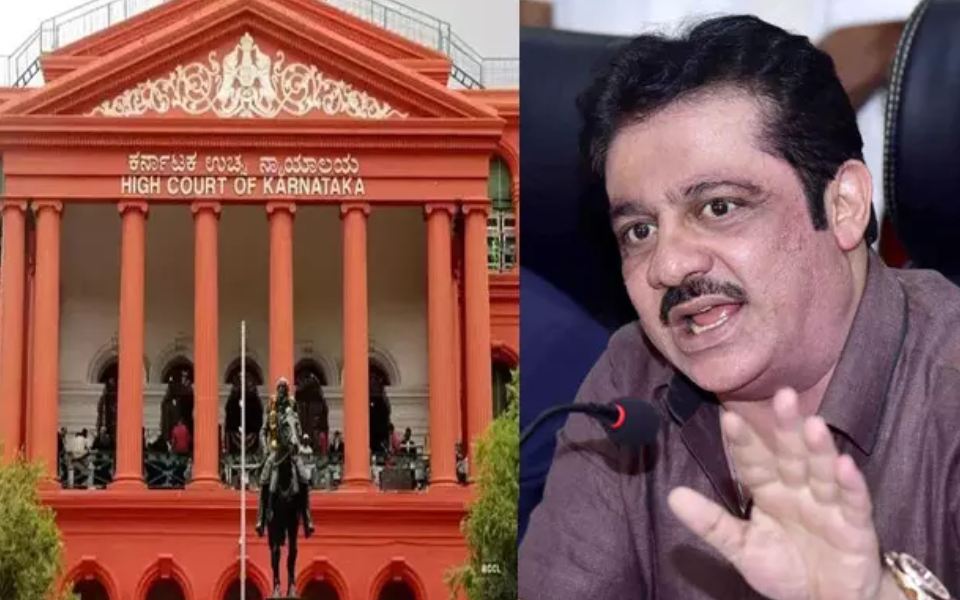
A single member bench headed by Justice MI Arun dismissed an election dispute petition filed by a local voter Shashank J Sridhar challenging the election of Chamrajpet MLA Zameer Ahmed. Subsequently, the bench said that the five guarantee schemes announced by the Congress party should be considered as social welfare schemes.
The bench further stated, “alongside questioning about whether it is possible to advance the guarantees economically. Other parties will have to show how implementation of these schemes will bankrupt the state exchequer and lead to mismanagement of the state. Depending on the facts and context of the case they may be interpreted as wrong policies. However, they cannot be called corruption.”
ALSO READ: Fighting against Joshi's divisive tactics, oppression of Veerashaiva-Lingayats: Dingaleshwar Swami
However, the court stated that if a candidate, their agent, or any other person associated with the campaign makes such announcements with the candidate's consent, it would constitute corruption.
The court further emphasised that voters must scurtinise whether the policies are beneficial or merely involve distributing freebies, potentially favoring one group over others. The court also clarified that under Section 123 of the Representation of the People Act, such declarations cannot be considered acts of corruption. Consequently, the petition challenging the election of Zameer Ahmed Khan solely on the grounds that the Congress Manifesto constitutes corruption was dismissed.
Let the Truth be known. If you read VB and like VB, please be a VB Supporter and Help us deliver the Truth to one and all.
Karnataka issues order on internal quota within SC reservation; 56,432 recruitments to proceed
Bengaluru: The Karnataka government on Tuesday issued an order implementing internal reservation within the 15 per cent quota earmarked for Scheduled Castes in appointments and admissions.
As per the order, 5.25 per cent reservation has been allocated to Left-hand communities under Category-A, 5.25 per cent to Right-hand communities under Category-B, and 4.50 per cent to other touchable Scheduled Caste communities under Category-C.
The government said the decision follows the recent Cabinet meeting held in view of the interim order of the High Court. It was decided to temporarily adopt the 50 per cent overall reservation ceiling and continue recruitments subject to the final verdict of the court.
Accordingly, the 15 per cent SC reservation in recruitment and admissions will now be distributed among the three categories in the prescribed ratio.
The order further stated that 20 per cent of posts or seats available under Category-C must be reserved for 59 most backward castes within the Scheduled Castes. If eligible candidates from these 59 castes are not available, the vacancies or seats should be filled by candidates from other communities within Category-C.
For implementing the revised quota in recruitment, authorities have been directed to follow a 400-point roster system. Where fewer than three Scheduled Caste roster points are available in any cadre, the reserved posts should be treated as general SC category posts for appointment purposes.
The government has also directed departments to revise ongoing recruitment processes by incorporating internal reservation. Notifications already issued without such quota distribution are to be withdrawn and fresh revised notifications issued immediately.
The order added that if the court upholds the enhanced 24 per cent reservation for Scheduled Castes and Scheduled Tribes, the additional 6 per cent posts should be treated as backlog vacancies and filled accordingly.
The government has instructed all recruiting authorities to take urgent steps to fill 56,432 posts already cleared by the Finance Department through direct recruitment.