B'luru: 5 officials suspended, 2 issued show cause notice in mother-daughter electrocution incident
Bengaluru, Nov 20: The Bangalore Electricity Supply Company has suspended five of its officials for "dereliction of duties" and issued show cause notice to two senior officers after a woman and her daughter died due to electrocution here, officials said on Monday.
Taking serious note of the Sunday's incident at Kadugodi sub-division, the state-owned BESCOM said it took action against them based on a prima-facie enquiry.
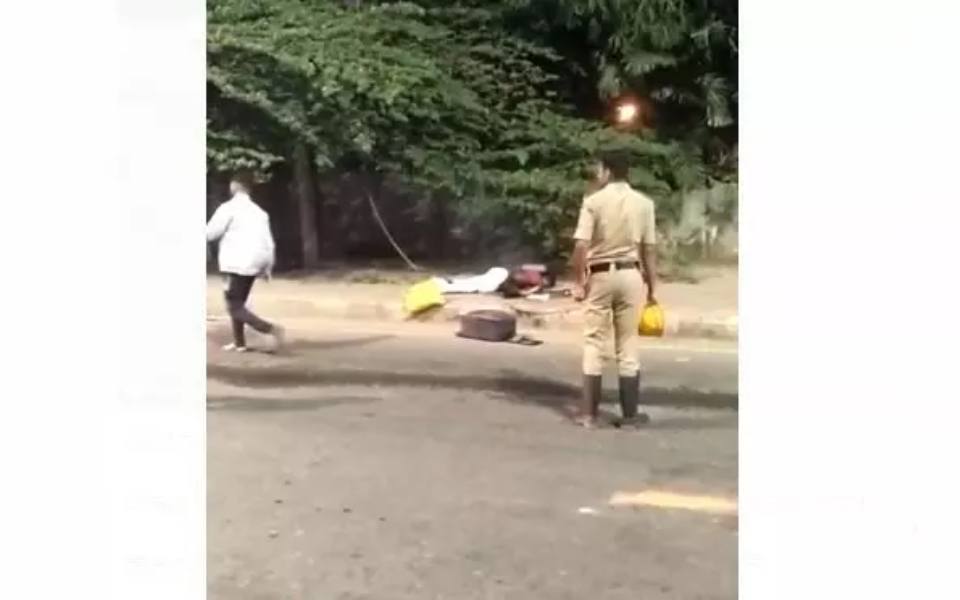
According to police, 23-year-old Soundarya, who was walking home after arriving from Tamil Nadu, along with her nine-month-year-old baby girl Leela died of burn injuries after she accidentally stepped on a live electric wire lying unattended on the pavement. Her husband, Santosh Kumar, tried to save them but was helpless.
Their luggage-trolley bag and other belongings were seen lying scattered at the scene.
Five BESCOM officials -- who have now been suspended -- were arrested in connection with the incident, police said.
"In a non-department fatal electrical accident, Soundarya (23) and her daughter Leela came in contact with a live 11KV wire fallen on the foot path of Hope Farm Signal and got electrocuted on Sunday morning around 5.30 AM," a BESCOM statement said.
Energy Minister K J George took serious note of the accident and ordered suspension of officials, it said.
A detailed investigation will be conducted in the matter, the BESCOM said.
A case of death due to negligence under Section 304 A of the Indian Penal Code was registered and the five employees of BESCOM named in the FIR were arrested in connection with the incident. However, they were released on bail later, police said.
Let the Truth be known. If you read VB and like VB, please be a VB Supporter and Help us deliver the Truth to one and all.
Bengaluru airport introduces AI-based system to enhance safety at vehicle-aircraft intersections
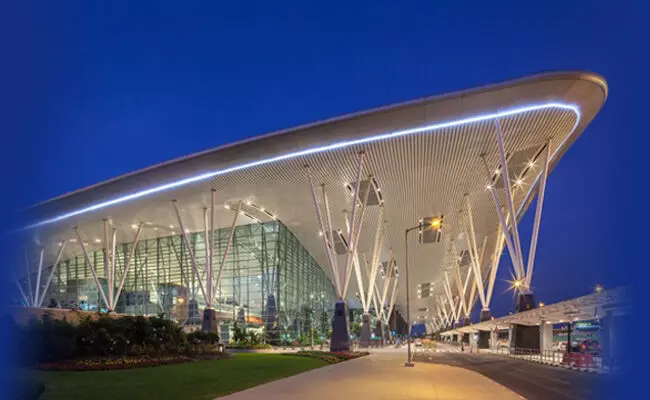
Bengaluru: Bangalore International Airport Limited (BIAL) has introduced an integrated smart airside safety system at Kempegowda International Airport to improve operational safety at key intersection zones.
According to The Hindu, the system has been designed to enhance safety at Cross Service Roads (CSRs), where aircraft and ground vehicle movements intersect.
According to BIAL, the system integrates AI-based computer vision, automation, and centralised monitoring to manage right-of-way movements and reduce the risk of human error.
“CRSs are among the most sensitive areas within airport operations, requiring precise and seamless coordination between aircraft and ground vehicles. Traditionally, right of way protection at these intersections relied on manual or semi-manual inset light activation, creating dependencies on human intervention, increasing the risk of delays and limiting operational visibility,” TH quoted BIAL as saying.
The new system uses real-time detection of vehicle movement, risk assessment, and automated signalling. AI-enabled cameras identify potential conflicts and trigger automated inset light signals to ensure aircraft priority. Normal operations resume once the area is confirmed clear.
“Based on these detections, the system triggers automated inset light activation to protect aircraft right‑of‑way and restores normal signalling once the intersection is confirmed clear. A centralised monitoring and analytics platform digitally logs all events, strengthening governance, compliance, and operational control,” BIAL said.
By embedding technology into operations, the system creates a data-driven separation layer between aircraft and ground vehicles, significantly reducing human error, especially during night and low-visibility conditions.
“Precision-led signal activation improves traffic flow, minimises unnecessary stoppage and enhances turnaround efficiency. It also establishes a scalable foundation for predictive safety analytics, enabling trend analysis, peak-hour optimisation, compliance mapping and risk forecasting to support continuous improvement and stronger airside governance,” BIAL said.