
50 elephants electrocuted in four years in Karnataka
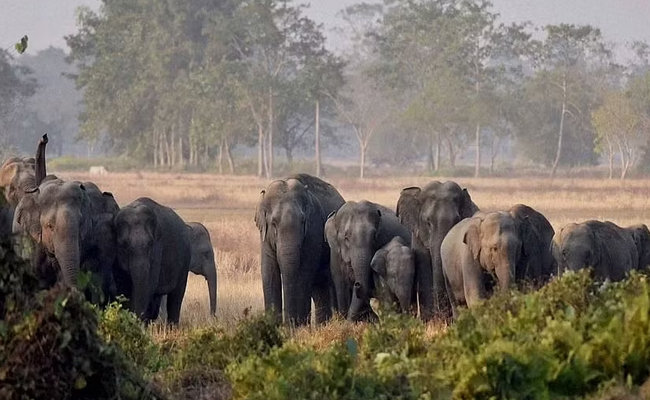
Bengaluru: Karnataka has witnessed the tragic deaths of 50 elephants over the past four years due to electrocution, with the Madikeri division reporting the highest number of such fatalities. In this division alone, eight elephants were electrocuted, while another 12 deaths were recorded within the state's tiger reserves, underscoring the urgent need to address this issue.
The number of elephants in Karnataka have increased steadily, rising from 6,049 in 2017 to 6,395 by early 2023. Despite this apparent success in conservation efforts, the rising number of elephant electrocutions has raised alarms among wildlife activists, particularly as many habitats are being disrupted by expanding 'development' projects.
Nagaraj, a resident from Padavinangady in Mangaluru, filed a request seeking district-wise data on elephants killed due to electrocution from 2021 to 2024. In response, the forest department provided division-wise figures, including details of electrocutions within protected areas.
Alarmingly, 19 elephant deaths have occurred in zones where wildlife is supposed to receive the highest levels of protection. These include the Nagarahole tiger reserve with 5 deaths, Bandipur tiger reserve with 4, BRT tiger reserve with 3, and the Shivamogga wildlife division with 3. Other affected areas include Cauvery wildlife sanctuary with 3 deaths and Bannerghatta National Park with 1 death.
Let the Truth be known. If you read VB and like VB, please be a VB Supporter and Help us deliver the Truth to one and all.
Iran-US talks in Islamabad held via indirect, direct channels: sources
_vb_31.jpeg)
Islamabad (PTI): The Iran-US peace talks were conducted first indirectly through Pakistan and later through direct negotiations between the two sides, official sources said on Sunday.
Pakistan remained involved at every stage of the process, with the talks beginning with separate meetings of the US and Iranian delegations with Prime Minister Shehbaz Sharif on Saturday.
This was followed by an exchange of messages between the two sides through Pakistani interlocutors, the sources said.
The Iranian delegation was led by Parliament Speaker Mohammad Baqir Galibaf, while the US team was headed by Vice President JD Vance.
According to sources, the negotiations then moved to direct talks between the visiting delegations, which continued for about two-and-a-half hours in the presence of Pakistani officials.
In the next phase, a one-hour break was taken and technical aspects of the demands presented by the two sides were discussed at the expert level. The exchange of messages on technical aspects continued until late at night.
However, by Sunday morning, it became clear that the differences could not be bridged, leading US Vice President JD Vance to announce at a brief press conference that the talks ended without a deal.
The sources said Pakistan remains hopeful of further rounds of talks, though no date or venue has been finalised so far.
The Pakistani government had earlier said it would continue to play its role as a mediator and expressed hope that the talks would prove to be a step towards resolving the dispute.
The Iranian delegation had arrived in Islamabad on Friday night, while the US team arrived on Saturday morning.
The US side also included President Donald Trump’s son-in-law Jared Kushner and Middle East envoy Steve Witkoff, while Iran was also represented by Foreign Minister Abbas Araghchi and other senior leaders.
The two sides travelled to Islamabad, days after Iran and the US announced a two-week ceasefire on April 8. It was the first direct, high-level engagement between Iran and the US since the 1979 Islamic Revolution.
The failure to arrive at an agreement following the face-to-face negotiations between the two sides raised doubts over the effectiveness of their fragile two-week ceasefire as well as the prospect of reopening the Strait of Hormuz to stabilise the global energy market.
_vb_89.jpeg)
_vb_30.jpeg)
_vb_76.jpeg)