50% traffic fine rebate will make roads unsafe in Karnataka, warn experts: Report
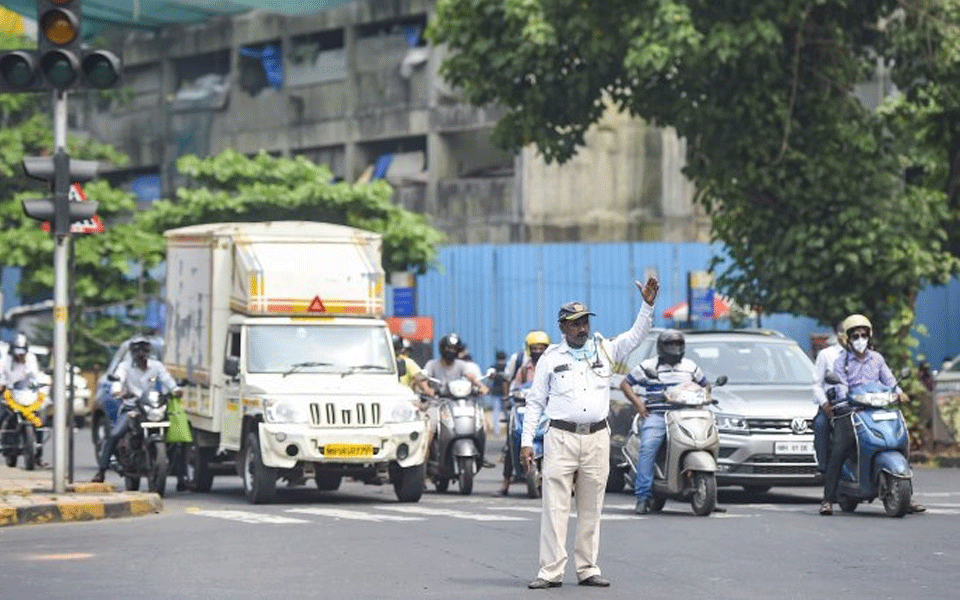
Bengaluru: The Karnataka government's 50% rebate on traffic e-challan fines has drawn sharp criticism from road safety experts. While some welcome the financial relief, experts warn it sends the wrong message—urging violators to “wait for discounts” instead of following rules—potentially encouraging repeat offences by reducing the fear of penalties.
Traffic and transport expert Prof. M.N. Sreehari described the decision as a "wrong signal" from the government. “Instead of collecting fines, the government is giving offers to violators, which is unlawful. The law clearly states that anyone who violates the law should be penalised, not offered discounts. Such measures will only encourage more violations and reduce the fear of law and rules. Instead of offering discounts, the government should focus on educating violators about road safety,” The New Indian Express quoted him as saying.
Prof. Sreehari stressed that such blanket concessions risk eroding the deterrent value of fines, which are meant to discourage reckless driving. “Motorists may assume that penalties can always be negotiated later, encouraging repeated violations. Meanwhile, others who paid their fines promptly at full rates may feel penalised for their compliance,” he added.
A senior traffic police officer quoted by TNIE acknowledged that while the rebate offers temporary financial relief, particularly for delivery personnel, auto-rickshaw drivers, and cab operators, it also raises serious safety concerns. These groups, often in a rush due to work demands, are among the most frequent violators. The officer noted that such individuals may break rules, pay only half the fine, and continue repeating offences. These violations, including signal jumping, riding without helmets, or driving without seat belts, are not minor lapses but serious risks that can lead to injuries or fatalities.
Another officer emphasised that the government must treat this rebate as a one-time measure to recover pending dues, not a recurring policy. If repeated, such concessions could shift public perception from following traffic rules to simply waiting for the next discount.
This is not the first time the Karnataka government has introduced such a concession. In 2023, similar rebate schemes were announced on two separate occasions.
Let the Truth be known. If you read VB and like VB, please be a VB Supporter and Help us deliver the Truth to one and all.
Real Madrid fines Valverde and Tchouaméni half a million euros each for altercation
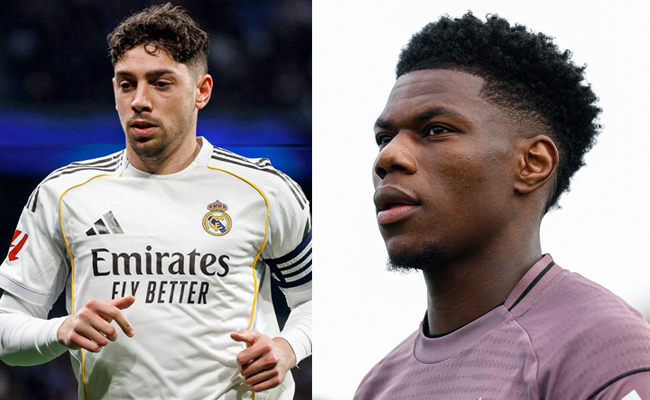
Barcelona (AP): Real Madrid slapped players Federico Valverde and Aurélien Tchouaméni with half-a-million-euro ($588,000) fines on Friday for their altercation during practice.
The massive fines came a day after the midfielders tussled when the team trained. Valverde said in a post on social media on Thursday that no punches were thrown. But Valverde knocked his head on a table and he suffered a small cut that required a brief hospital visit.
On social media, Valverde initially called it a “meaningless fight” with a teammate and said “everything has been blown out of proportion."
His employers, however, considered it a significant enough breach of team discipline to nail both Valverde and Tchouaméni with fines that bite even the bank account of a top soccer player. The half-a-million euro penalties reflect the reputational damage the club was enduring in a chaotic end to a disappointing season.
In a statement, the 15-time European champion said its disciplinary action was concluded after both players expressed to the club “their complete remorse for what happened and apologized to one another.”
Madrid added they also apologized to their teammates, the coaching staff and club supporters, as well as showing their willingness to accept whatever disciplinary action the club deemed “opportune.”
Tchouaméni was back training with Madrid on Friday, two days before they play at Barcelona in a clasico. Madrid has to win otherwise Barcelona will be crowned La Liga champion.
After being notified of the fine, he posted a public apology to the club and its fans on social media.
“What happened this week in training is unacceptable,” Tchouaméni wrote. "I say this while thinking about the example we are expected to set for young people, whether in football or at school.
“Above all, I am sorry for the image we projected of the club.”
Valverde was not at practice due to the head knock.
Both players are set to play in the World Cup next month, with Tchouaméni playing for France and Valverde for Uruguay.
Chaotic end to a poor season
===================
The run-in between the players, who for seasons have played side by side in Madrid's midfield, came after they argued this week in previous training sessions. But tempers boiled over on Thursday. Spanish media was rife with reports that the players previously disagreed over the club's decision to let coach Xabi Alonso go after just months on the job.
It was not the only altercation involving Madrid players during training this week. Álvaro Carreras confirmed he was in a “minor” incident with a teammate. Spanish media said he and fellow defender Antonio Rüdiger got into a scuffle.
Álvaro Arbeloa, the coach who was promoted from Madrid's reserve team when Alonso was fired in January, will face tough questions on what went wrong inside the changing room when he gives a press conference on Saturday ahead of the clasico at Camp Nou.
Madrid is facing a second consecutive campaign without a major trophy amid rumors in the Spanish media that club president Florentino Pérez is considering bringing back Jose Mourinho to straighten out his underperforming team.