7 kg rice to continue in Anna Bhagya scheme: Minister
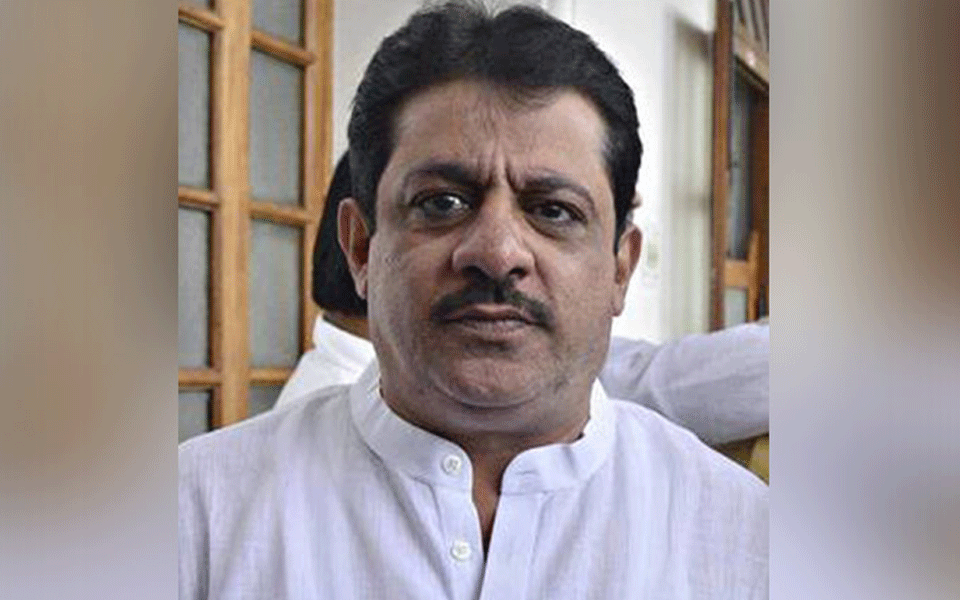
Bengaluru, August 07: Food and Civil Supplies Minister Zameer Ahmed Khan clarified that as earlier, the BPL card holders would be given 7 kg rice under the Anna Bhagya scheme.
Speaking to reporters at the Chief Minister’s Home Office Krishna here on Tuesday, the Minister said that as the Chief Minister said, 7 kg rice would be given to the beneficiaries. But it was misinterpreted in the media saying that the Minister has been acting as Super CM by saying seven kg rice though the Chief Minister has clarified that only five kg rice would be given under the scheme, he added.
“How should we turn down the order of the Chief Minister? While giving answer during the Budget Session, Chief Minister Kumaraswamy had said that he would consider on giving seven kg rice and continue all programmes introduced by Siddaramaiah. So, if the CM asked us to give five kg instead of seven kg rice, we will follow it. But Palmolive oil and iodine salt would not be distributed as of now”, he said.
Responding to the allegation on corruption in purchasing stoves under the Chief Minister’s Anila Bhagya scheme, the Minister said that the stoves were purchased before the election. As there was election code of conduct, the stoves were not distributed. The stoves were not purchased during this government. But they were distributing them now, he said.
Already, 10 lakh stoves were purchased and 20 lakh stoves should be purchased, for which a government order would be issued shortly, he said.
Let the Truth be known. If you read VB and like VB, please be a VB Supporter and Help us deliver the Truth to one and all.
3 killed, 15 injured in fire after blast at firecracker unit in MP's Dewas; CM orders probe
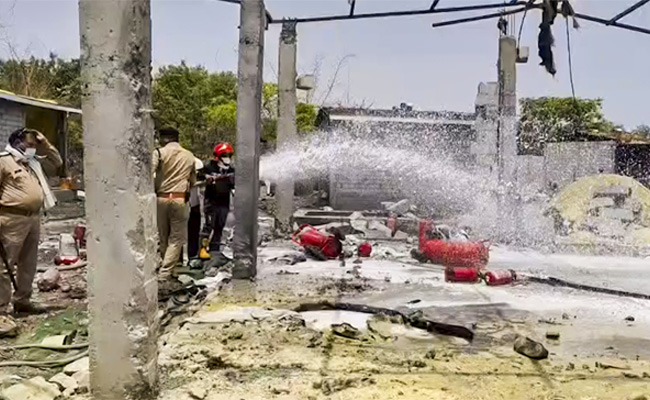
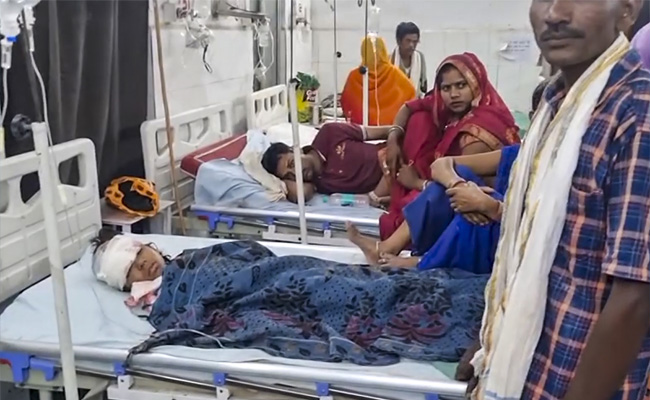
Dewas/Indore (PTI): At least three workers were killed and 15 persons injured after a fire broke out following an explosion at a firecracker factory in Madhya Pradesh's Dewas district on Thursday, an official said.
Chief Minister Mohan Yadav expressed grief over the incident and ordered an investigation. The state government will provide an assistance of Rs 4 lakh to the kin of each of the deceased, and the injured will receive free treatment, he said in a post on X.
Three persons were killed in the fire at the firecracker unit located in Tonk Kalan area, and around 15 injured persons were sent to hospitals in Indore and Dewas, Collector Rituraj Singh told reporters after inspecting the site.
Videos of the aftermath surfaced on social media, showing thick white smoke billowing from the factory along the Agra–Mumbai national highway. The clips also showed people rushing the injured for treatment amid cries for help, with body parts seen scattered at the site.
The collector said the fire has been brought under control. The administration has taken possession of explosives stored at another location within the unit, he said.
The work to manufacture small firecrackers at the factory of a person named Anil Malviya had begun only 15 days ago, and a licence has been issued for the unit, the collector said.
A detailed investigation is underway into the incident, he added.
CM Yadav said, "I have directed Deputy Chief Minister and Dewas district guardian minister Jagdish Devda, the home secretary and senior officials to visit the spot. An inquiry has also been ordered into the incident."
Local residents said there was a massive explosion at the factory, and the victims' body parts were found scattered far away from the site.
They said construction work was underway at the site and different sheds were being built there.