75 programmes on parliamentary democracy across nation, announces LS Speaker Om Birla
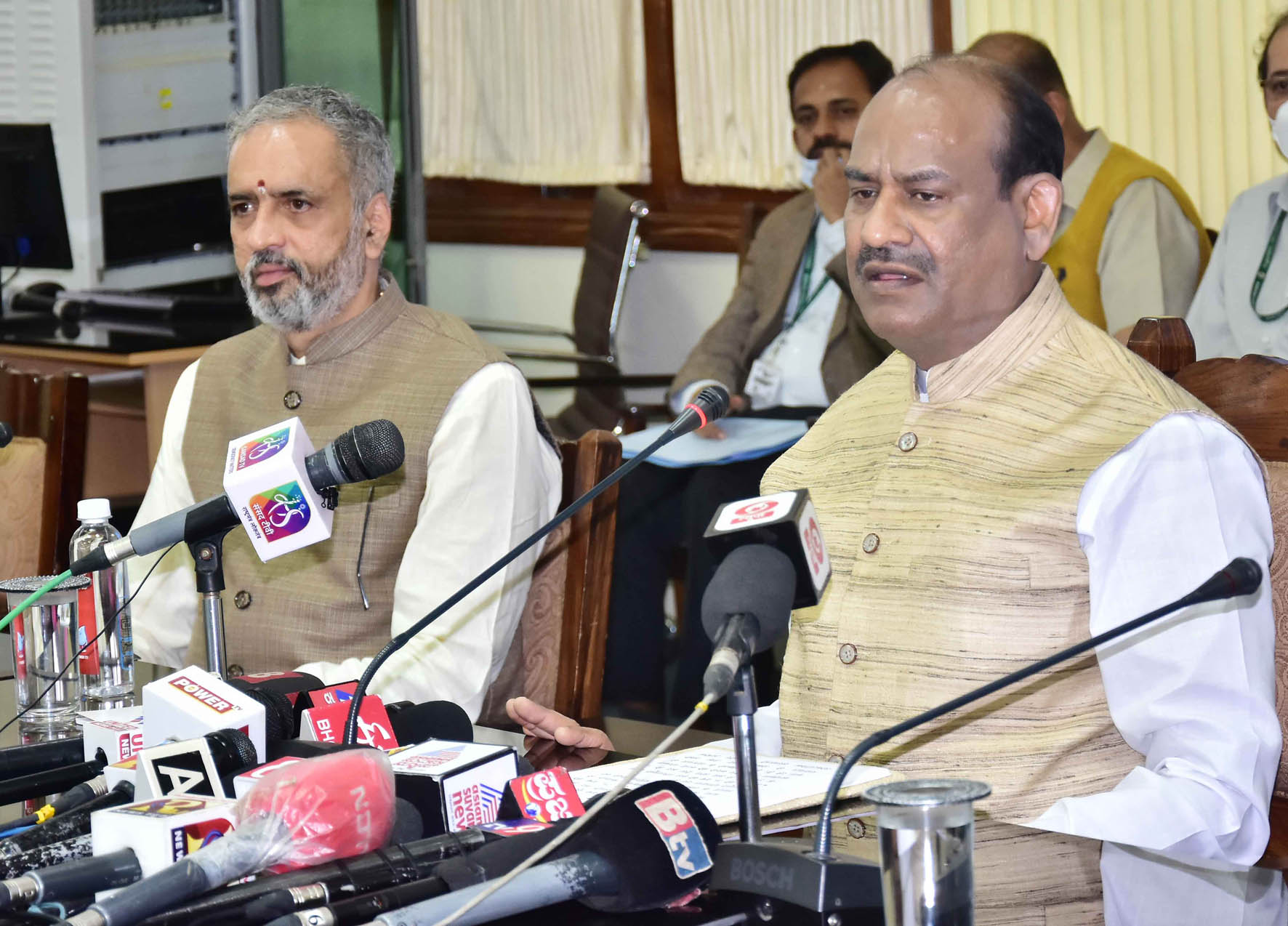
Bengaluru, Sep 25: Celebrating 100 years of the Speakers' Conference which coincides with the platinum jubilee of Indian independence, 75 different programmes on Parliamentary democracy would be organised in different parts of the country, Lok Sabha Speaker Om Birla said on Saturday.
"The tradition of holding Speakers' Conference is completing 100 years this year. The first such conference was held in 1921 at Shimla and once again after 100 years, the conference is taking place in Shimla," Birla told reporters here.
He said the participants would discuss issues related to the parliamentary democracy, including the objectives achieved in the past 75 years.
"Along with it, we plan to hold the 75 different programmes in different parts of the country involving the smallest but the most important and responsible institution of the democracy, which is village Panchayat to Parliament, municipal corporations, legislative assemblies or Panchayats," Birla said.
The Speaker said this is the centenary of the Public Accounts Committee (PAC) as well. In this regard, an important international conference would take place on December 4 and 5 in New Delhi.
"The Speaker, PAC chairperson, its members, and the PAC chairpersons from other countries will take part in the conference," Birla said.
There would be programmes on increasing the participation of youth and women in Assemblies, Parliament and other democratic institutions, Birla said. Plans are afoot to hold an international meeting on participation of youth and women in the democratic process, he said.
Birla said the sole objective of the programmes is to strengthen the democratic institutions, make them accountable and prepare an actionplan to run the House. "We will make an advisory on the standard operating procedure (SOP) to run the House in the lowest level of institutions, which the States can follow," he said.
The Assembly Speakers would hold such programmes in their respective States as well.
Speaking about his visit to Karnataka, the LS Speaker said the State has a long history of democracy.
Referring to the Anubhava Mantapa set up by 12th century social reformer Basaveshwara in Basava Kalyan in Bidar district of the State, Birla said, "The foundation of the oldest democracy was laid in Karnataka. That's why we say that India is the mother of democracy."
He said he was not referring to the democracy after independence but the one which was always ingrained in the action, behaviour and thought of Indians.
The Speaker said the Panchayat Raj system was a symbol of democratic values, which every villager used to follow.
Stating that din and interruptions in Parliament, Assemblies and other Councils were a matter of concern, Birla said wide-level discussions took place between the speakers and leaders of various political parties for the dignified behaviour of the members in the House.
"We will once again discuss in Shimla how to maintain the discipline, dignity and decorum of Parliament and Legislatures," Birla said.
Replying to a query on sessions being held till late in the night, the Lok Sabha Speaker said the past five sessions saw an increase in the productivity of the proceedings.
"Despite the prevalence of COVID-19, our members sat in the House till late in the night and held the proceedings more than the scheduled time. During the fourth session, the members remained in the House till late in the night. The productivity was 167 per cent and there was members' participation. We want a similar kind of atmosphere whether be it in Parliament, Legislatures, Panchayat or the Municipal Councils," he said.
Birla said a database on the important discussions held in Parliament and the Legislatures would be prepared in Hindi and English in six months to add to the library in Parliament for the capacity- building of the members in the elected bodies.
"We are preparing a platform where our Legislatures can access the database by the name or subject," Birla said.
To a question on discussion on 'One Nation, One Election', he said many Legislatures tried to hold discussions and Karnataka was one among them.
Stating that there was a discussion in Parliament on this topic on a private Bill, he said there should be more discussions and dialogues on this issue for fruitful results.
Let the Truth be known. If you read VB and like VB, please be a VB Supporter and Help us deliver the Truth to one and all.
Union government assumes full control over TV ratings, TRAI role curtailed: Report
New Delhi: The Union government has assumed full control over television audience measurement, removing the Telecom Regulatory Authority of India (TRAI) from oversight of the ratings system that underpins the country’s ₹36,000 crore television advertising market, according to a report published on Wednesday.
The report in Mint said the Ministry of Information and Broadcasting (MIB) now has exclusive authority over the framework governing how television ratings are measured and regulated. TRAI had been entrusted with oversight of TV ratings in 2012 during the UPA government’s tenure. TRAI is no longer mentioned in the relevant policy document, effectively vesting sole authority in the MIB.
The report said TRAI will continue to regulate other aspects of broadcasting, including channel pricing, advertising caps, interconnection and distribution norms, service quality and compliance standards. Its role in determining how ratings agencies track viewing behaviour has been withdrawn.
Television Rating Points (TRPs), which reflect viewership patterns, guide advertisers in deciding where to allocate spending across channels and time slots.
A government source quoted in the report said the ministry could modify TRAI’s decisions even when the regulator oversaw broadcasting.
A former CEO of Prasar Bharati told the newspaper that the MIB has historically regulated rating agencies through licensing and guidelines, and by holding them accountable under existing norms.
During its tenure overseeing ratings, TRAI had taken decisions affecting the broadcast sector, which included capping advertising time at 12 minutes per hour following complaints about excessive commercial breaks and it now remains unclear how these matters will be addressed under the revised arrangement.
Satya N. Gupta, former principal advisor at TRAI, was quoted as saying that merging regulatory functions with policy oversight and removing an independent regulator from the process was a retrograde step.
TRAI’s involvement in broadcasting had earlier attracted criticism as well. In 2012, its consultation paper on quantitative limits on television advertising was viewed by some as overlapping with the Advertising Standards Council of India’s code. Subsequent recommendations covering television audience measurement, ownership of news channels and issues such as paid news had also raised concerns among sections of the industry.
Television ratings have faced scrutiny in recent years, including during the controversy involving the Broadcast Audience Research Council (BARC), where officials of the ratings body were prosecuted over allegations of manipulation of viewership data.