95% drop in property registrations as Karnataka's E-Khata initiative faces major technical glitches

Property registrations in major cities like Bengaluru, Mangaluru, and Mysuru have dropped dramatically by 95% as a result of a major impediment to the Karnataka government's initiative to digitize real estate transactions through the mandated e-khata registration system.
This sharp decrease comes as the stamps and registration department tries to boost revenue by keeping select sub-registrar offices open on weekends. In the first two quarters of this fiscal year, property registrations had shown a 5% increase compared to last year, generating ₹11,550 crore in revenue, up from ₹9,419 crore during the same period last year.
Out of Karnataka's 257 sub-registrar offices, only 26 in Bengaluru are exempt from the e-khata requirement. In Bengaluru, 43 sub-registrar offices are spread across five registration districts. E-khata is currently mandatory in Basavanagudi and Gandhinagar, with plans to extend it to Jayanagar, Rajajinagar, and Shivajinagar next week.
Local authorities are tasked with issuing e-khata documents, which serve as legal proof of property ownership for tax payments. The Bruhat Bengaluru Mahanagara Palike (BBMP) has published draft e-khatas online for the city’s 2.1 million properties. To obtain a final e-khata, property owners must download the draft and submit various electronic IDs, including the sale deed, Aadhaar e-KYC, a 10-digit Bescom number, GPS details, and a photograph of the property, along with encumbrance details. However, many individuals have faced challenges due to reported glitches on the portal and a general lack of awareness about the process.
Launched on September 9, the e-khata system was introduced in four districts to curb fraudulent transactions and was expanded to eight districts by September 23 and the entire state by October 7. However, sub-registrar offices are now witnessing a dramatic drop in registrations. “Normally, a sub-registrar office registers 50-60 properties a day, but this has plummeted to just five to six due to technical glitches with the e-khata mandate,” said a sub-registrar from Bengaluru.
In light of these ongoing issues, Revenue Minister Krishna Byre Gowda convened a meeting with BBMP and revenue officials to address the challenges, particularly in Bengaluru. “I have informed Deputy CM DK Shivakumar, who has directed BBMP officials to resolve these issues promptly. These are initial glitches, and once the system stabilizes, people will benefit from the digitization,” Gowda stated.
He reassured property owners that there is no immediate deadline for obtaining an e-khata. “Only those looking to sell their properties need to secure it now; others can take their time,” he added. To assist residents with the e-khata process, helpdesks have been established at various locations, including the BBMP ARO office, Bengaluru One, and local body offices in rural areas.
Let the Truth be known. If you read VB and like VB, please be a VB Supporter and Help us deliver the Truth to one and all.
Gujarat builds 870 MW battery power backup network to stabilise renewable energy grid
Gandhinagar (PTI): Gujarat has initiated battery storage systems at five locations in the state, with a total capacity of 870 MW, to maintain the stability of the renewable power grid, officials said on Saturday.
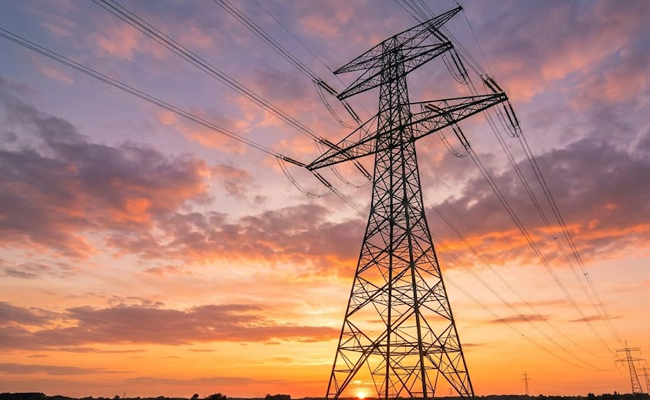
Battery Energy Storage Systems (BESS) are essential for storing electricity generated from solar and other renewable sources. They help manage additional load and maintain grid stability.
“Gujarat has initiated battery storage systems at five locations with a total capacity of 870 MW,” an official release stated.
The state has also registered 13 projects across Ahmedabad, Gandhinagar, Banaskantha, Patan and Kutch districts to set up additional battery storage systems, it said.
Modhera in Gujarat, India’s first solar village, has launched the country’s first BESS integrated with a solar power plant, it said.
"Under the leadership of Chief Minister Bhupendra Patel, the state has continued to advance in this direction and has strengthened its position among the leading states driving battery storage systems in India,” the release said.
Recently, a battery storage system was commissioned at Charal in the Sanand taluka of Ahmedabad, it said.
Four systems are operational at Modhera in Mehsana and Lakhpat in Kutch. The state government has also included advanced energy storage systems as a key component in the Gujarat Integrated Renewable Energy Policy, 2025, the release said.
Accordingly, standalone battery storage projects, works linked with new renewable energy installations, and those integrated with existing renewable energy systems are being approved, it said.
Once the Standard Operating Procedure is approved, registrations for battery storage will open for commercial and industrial users, it said, adding that the move will allow them to set up battery storage alongside their solar or wind projects.
The state government is developing battery storage systems across Gujarat, with companies being invited in through a competitive bidding process.
GETCO (Gujarat Energy Transmission Corporation) and power distribution companies strategically identify locations for battery storage systems based on grid capacity and operational requirements, the release said.
Power generation from solar and other renewable sources fluctuates throughout the day. Excess energy generated during peak hours can be stored and supplied later during periods of high demand, especially in the evening when solar output declines. Battery storage systems help reduce stress on the grid and improve grid stability, it added.