Adani, Tata among major firms eyeing Bengaluru’s ambitious tunnel road project
Bengaluru: Ten of India’s top construction firms, including industry giants Adani Group, Larsen & Toubro (L&T) Ltd, and Tata Projects, have expressed interest in building a 16.75-km tunnel road that aims to connect Central Silk Board with Hebbal in Bengaluru.
Representatives from these companies attended a pre-bid meeting recently convened by Bengaluru Smart Infrastructure Ltd (B-SMILE) at its Vasanthnagar headquarters, as reported by Deccan Herald on Tuesday. The newly constituted government body had floated tenders nearly 20 days ago for the design and construction of the three-lane underground twin-tunnel corridor.
Other notable companies present at the meeting included Megha Engineering and Infrastructure Ltd, ITD Cementation India, Vishwa Samudra Engineering Ltd, Jayashankar, Ceigall India Ltd, Afcons Infrastructure Ltd, and IRB Infrastructure.
The ambitious project is proposed under a revised Build-Own-Operate-Transfer (BOOT) model. As per this plan, the companies are also expected to invest 60% of the project cost (Rs 10,619 crore), besides depositing Rs 44 crore at the time of submitting the bids. In return, the government will provide toll collection rights for 30 years, added the report.
BS Prahallad, Technical Director at B-SMILE, expressed satisfaction over the response and mentioned that top construction companies had sent their representatives to the meeting. "Some have requested us to extend the last date for bid submission given the complexity of the project. They also raised queries about land allocation for debris disposal and the casting yard. We are confident that many will participate in the final bidding,” DH quoted him as saying.
The proposed tunnel project will involve the deployment of eight Tunnel Boring Machines (TBMs), each expected to drill approximately 2 km annually. The three-lane underground twin tunnel road—which will have a total tunneling length of 33.49 km— has reportedly come under environment, feasibility and technical scrutiny from various stakeholders.
Let the Truth be known. If you read VB and like VB, please be a VB Supporter and Help us deliver the Truth to one and all.
Congress using hijab issue to pacify minority anger, alleges Karnataka LoP R Ashoka
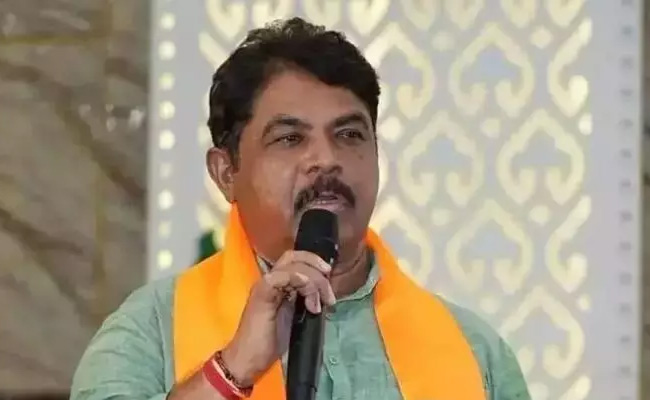
Bengaluru: Leader of Opposition in the Assembly R. Ashoka has accused the Congress government of using the hijab issue to placate what he described as discontent among minority voters after the Davanagere by-election.
In a post on X on Wednesday, Ashoka alleged that the state government, instead of addressing issues such as price rise, corruption, farmers’ distress and law and order, was attempting to retain its minority vote base by reviving the hijab issue.
Referring to the 2022 dress code introduced by the BJP government, which prohibited hijab in schools and colleges, Ashoka said the Karnataka High Court had upheld the policy and emphasised the importance of discipline in educational institutions.
He questioned the Congress government’s move to revisit the issue and asked whether setting aside the court-backed policy to benefit one community could be described as secularism.
Ashoka further alleged that while the government was willing to permit hijab, it continued to prohibit saffron shawls.
He accused the government of dividing students on religious lines rather than treating schools and colleges as spaces of equality.
Drawing a comparison with Mamata Banerjee’s government in West Bengal, Ashoka claimed that excessive appeasement politics had harmed the state and warned that the Congress in Karnataka could face a similar political response.
He said voters in Karnataka would teach the Congress a lesson for what he termed “vote-bank politics” and for compromising constitutional and judicial principles.