Additional Rs 4,000 to Kisan Samman Yojana beneficiaries: CM Yediyurappa
Rs 100 crore loan waiver promise to weavers

Bengaluru, Jul 26: Karnataka Chief Minister B S Yediyurappa on Friday said an additional relief of Rs 4,000 would be given to beneficiaries of the Prime Minister "Kisan Samman Yojana" scheme, under which Rs 6,000 is given.
He also announced waiver of weavers' loans, which now stands at around Rs 100 crore.
Speaking to reporters after holding a cabinet meeting here, he said two important decisions were taken, the first of which was to disburse Rs 4,000 in two instalments to beneficiaries of the Kisan Samman Yojana scheme.
"The other is waiving weavers' loans totalling around Rs 100 crore," he said.
Yediyurappa said that being a farmer's son, it was his commitment to help farmers reeling under drought.
On the existing crop loan waiver scheme floated by the erstwhile H D Kumaraswamy government, the chief Minister said he would take a call after reviewing it.
To strike a cordial note with the opposition Congress and the JD(S) which had accused the BJP of indulging in horse trading to topple the government, the chief minister said he would not encourage the politics of vengeance.
"I assure the people of Karnataka and the opposition parties that under no circumstances will I ever practice the politics of vengeance.
I will treat with humility whoever finds fault with me.
Forget and forgive is the policy I believe in,"Yediyurappa said.
He alleged that there was administrative breakdown in the last 14 months and said the people would see for themselves in the next three to four months how transformation occurs.
Let the Truth be known. If you read VB and like VB, please be a VB Supporter and Help us deliver the Truth to one and all.
BJP using women's quota bill as front to pass Delimitation Bill that will break India: Mamata
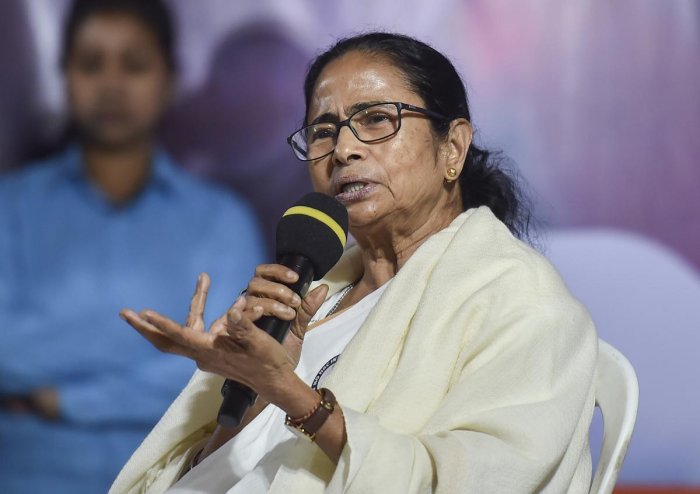
Cooch Behar (WB) (PTI): Chief Minister Mamata Banerjee on Friday alleged the BJP-led NDA government at the Centre was using the proposed amendment to the women's quota law in Parliament as a front for the Delimitation Bill that would "break the country into pieces".
The TMC will fight this Central government's move at every step, she asserted at her party's poll rally here.
The Constitution (131st Amendment) Bill to tweak the women's quota law, along with the Delimitation Bill and the Union Territories Laws (Amendment) Bill, to implement the proposed amended women's quota law, in the Union territories of Delhi, Puducherry and Jammu and Kashmir, were introduced in the Lok Sabha on Thursday.
According to the Constitution amendment bill, Lok Sabha seats will be increased to a maximum of 850 from the current 543 to "operationalise" the women's reservation law before the 2029 parliamentary polls, following a delimitation exercise based on the 2011 Census.
Seats will also be increased in state and Union territory assemblies to accommodate 33 per cent reservation for women.
Opposing the Centre's move, Banerjee alleged that "the BJP brought the Delimitation Bill while keeping the women's reservation bill at the front".
"The BJP is trying to increase the number of seats in the Lok Sabha to nearly 850 through the Delimitation Bill. It will break the country into pieces," the TMC supremo said.
She also alleged that Prime Minister Narendra Modi was not speaking the truth about the development of north Bengal at a BJP rally last week.
"The prime minister said nothing was done for the development of north Bengal. But we spent Rs 1.72 lakh crore on the development of the region," Banerjee said and asked Modi to cross-check data before making such remarks.