Karnataka to present ground realities to Cauvery authorities before approaching SC: DCM Shivakumar
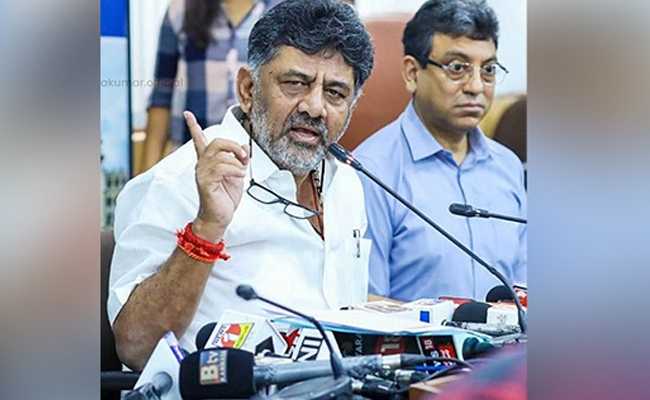
Bengaluru (PTI): Karnataka Deputy Chief Minister D K Shivakumar on Friday said the state government has decided to present the ground realities before the Cauvery Water Management Authority (CWMA) and Cauvery Water Regulation Committee (CWRC) before going to the Supreme Court on the issue of releasing Cauvery river water to neighbouring Tamil Nadu.
Karnataka will appeal to the twin bodies to visit the state and assess the ground realities, he said. The state will also press for construction of the Mekedatu balancing reservoir, by highlighting it as the only solution for the water dispute between the two states during the times of rainfall distress, he added.
As the lack of rains in the Cauvery basin has led to water scarcity, Shivakumar said the situation is grim and expressed hope that Tamil Nadu will show a "soft corner" to Karnataka in allowing it to use at least the water needed for drinking purposes.
"Our latest request is -- CWMA has asked us to release 5,000 cusecs. We have to honour it and we are honouring it, but the situation is very grim, so we are going before them highlighting our difficulty, and we are requesting them to come and see the exact ground situation in both the states," Shivakumar, who holds the Water Resources portfolio, said.
Speaking to reporters, he said the situation is very bleak, pointing out: "There are no rains. We expected some rains. It had only rained in Bengaluru yesterday, but no rains in Cauvery basin. I hope they will visit, look at the situation with their own eyes and make a decision."
Further noting that opposition parties are demanding that the government stop releasing water to Tamil Nadu, the Deputy CM said, "I have consulted legal experts and the Advocate General and they have advised us to submit the ground situation before the authorities -- as they are a technical team -- before going to the Supreme Court,"
"We will place the ground situation with data of water level at Krishna Raja Sagara, Kabini and Hemavati (reservoirs) before both the committee and the authority, after that we will look at the option of going before the Supreme Court," he said.
The issue was mentioned before the Supreme Court by Tamil Nadu today, but it has been posted for Wednesday, he said, adding, "We will present the factual position."
The CWMA has directed Karnataka to release 5,000 cusecs of water daily to Tamil Nadu for the next 15 days from August 29.
The CWMA took the decision based on the recommendation of the CWRC.
Shivakumar also noted that Karnataka will also be filing an application before the concerned authority emphasising that the Mekedatu balancing reservoir project is the "only solution" for the issue.
"We will make them understand that with the Mekedatu project, water could have been stored and such a situation could have been averted. Looking at the ground realities they will be able to understand," he said.
Cauvery is the major source of water for Bengaluru, Mysuru, Ramanagara, Channapatna and surrounding areas, Shivakumar said, adding, the government will safeguard the drinking water needs of the state, and has issued necessary advisories to farmers.
"Protecting the interest of the state is our priority, but we will also have to equally respect and abide by the law," he said.
Various farmers' bodies have been staging demonstrations in Mysuru, Mandya and Chamarajanagar in the Cauvery heartland against the government's move of releasing water to Tamil Nadu, and opposition parties have criticised the Congress government of "doing nothing" to protect the interests of Karnataka.
Noting that during the CWMA meeting on August 29, Tamil Nadu sought for 24,000 cusecs of water, Shivakumar said, "but the state argued about its inability to release
that much and agreed for 3,000 cusecs, but finally the CWMA ordered to release 5,000 causes to Tamil Nadu."
He said Karnataka has released water to Tamil Nadu despite the distress situation, but now the state's farmers are in trouble. Also there is drinking water issue due to inadequate rainfall, and the government has the responsibility to protect the interest of farmers and provide drinking water to people.
Pointing out that Tamil Nadu is aware of the distress situation because of deficit rains and should ideally control its crops in such a situation, the DCM said, but they have not done so, and have used excess water compared to usual from their dams, this year.
"Without utilising water keeping the distress situation in mind, they (TN) are demanding for water before the CWMA," he said, adding that during the CWMA meeting on August 29, the state has highlighted the advantage of the Northeast monsoon to Tamil Nadu, and its utilisation of excess water.
Asked about taking an all-party delegation to Delhi to meet the Prime Minister and central ministers on the inter-state water dispute, Shivakumar said, "We will make a request for appointment during Parliament session that has been called and inform on getting an appointment." PTI KSU RS KSU
Let the Truth be known. If you read VB and like VB, please be a VB Supporter and Help us deliver the Truth to one and all.
SC asks Centre to consider amending law on terminating pregnancy of rape survivors
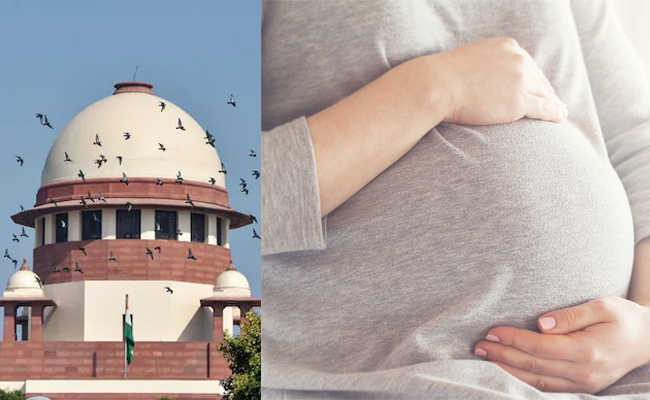
New Delhi (PTI): The Supreme Court on Thursday took strong exception to a plea by AIIMS seeking to set aside its order allowing a 15-year-old girl to medically terminate her 30-week pregnancy, and asked the Centre to consider amending the law to permit rape survivors to terminate unwanted pregnancies even beyond 20 weeks.
The top court said when there is pregnancy due to rape, there should not be a time limit.
Law needs to be organic and in sync with evolving time, it stressed.
A bench of Chief Justice Surya Kant and Justice Joymalya Bagchi said this is a case of child rape and the survivor will have a lifelong scar and trauma if termination is not allowed.
The top court said if the mother does not have permanent disability then it should be carried out.
ALSO READ: Chlorine gas leaks at defunct water purification plant in Pune; 24 persons hospitalised
It asked AIIMS to counsel parents of the survivor over the issue and said the decision has to be of the person concerned.
"There are children for adoption. In this country we have lot of sympathies...There are deserted, abandoned children on the streets and even mafias on it. We have to look at them. This is an unwanted pregnancy of a 15-year-old child.
"This is a curative petition. Unwanted pregnancy cannot be thrusted on a person. Imagine she is a child. She should be studying now. But we want to make her a mother. Imagine the pain, the humiliation the child has suffered in this," the bench said.
Additional Solicitor General Aishwarya Bhati, appearing for AIIMS, mentioned the curative plea, and said the termination of pregnancy is not possible.
"It will be a live baby with severe deformities. Minor mother will have lifelong health issues and cannot reproduce. Minor mother will have lifelong health issues. This child can be given for adoption. It has been 30 weeks now. It is a viable life now," she said.
The top court said the decision on termination has to choice of the survivor and her parents and AIIMS may help them take an informed decision.
On April 24, a bench of Justices B V Nagarathna and Ujjal Bhuyan had allowed the girl to medically terminate her pregnancy of 30 weeks.