After poll drubbing, Kumaraswamy to resume village stay programme
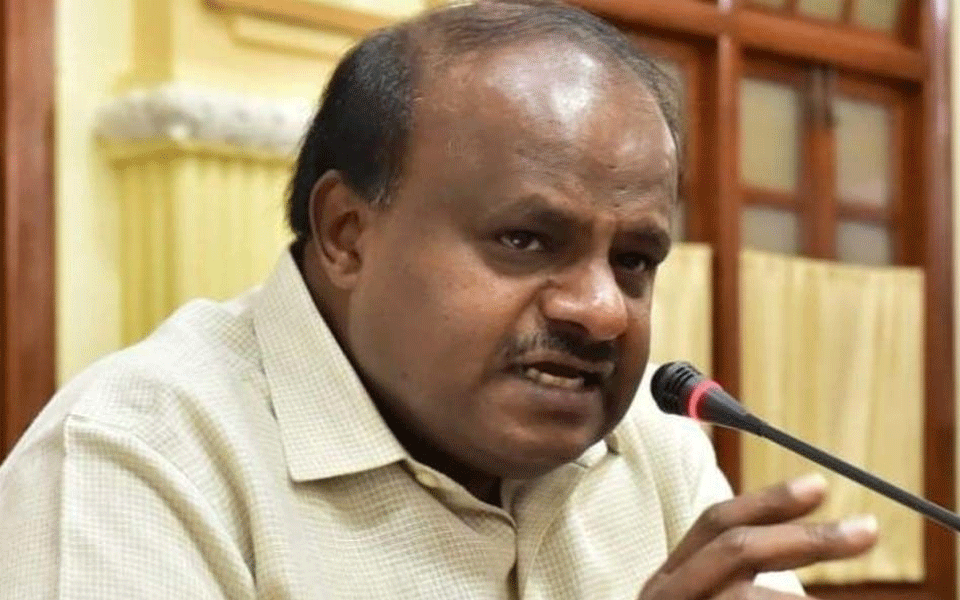
Bengaluru, Jun 2: Days after the JD(S) was decimated in the Lok Sabha elections in Karnataka, Chief Minister H D Kumaraswamy Sunday announced that he will resume his "Grama Vastavaiya" (village stay) programme to find out the challenges facing the state's rural areas.
Kumaraswamy had initiated the programme to interact with villagers during his previous tenure as chief minister, which lasted from February 2006 to October 2007.
"'Grama Vastavaiya' is a way to reach out to the people, to understand their problems and to know the functioning of the government. Soon 'Grama Vastavaiya' is going to start in government schools," Kumaraswamy said in a tweet.
During his previous stint, Kumaraswamy used to spend the nights at villagers' houses as part of the initiative.
This time, however, he has decided to stay in government schools.
"During his previous term as chief minister, Kumaraswamy had conducted 47 'Grama Vastavaiya'. He had stayed in 47 houses. This time he has decided to stay in government schools," an official associated with the Chief Minister's Office said.
The idea behind staying in government schools is to improve the conditions there, he said.
Officers will ensure that the rooms, desks, benches and other school infrastructure are in good shape, he added.
The modalities are being worked out and the details of the programme will soon be made public, the officer said.
Most likely, the chief minister will kick-start the village stay programme from Kodagu district, which has still not fully recovered from last year's devastating floods.
Let the Truth be known. If you read VB and like VB, please be a VB Supporter and Help us deliver the Truth to one and all.
Trump says EU has until July 4 to approve last year's trade deal or it will face higher tariffs
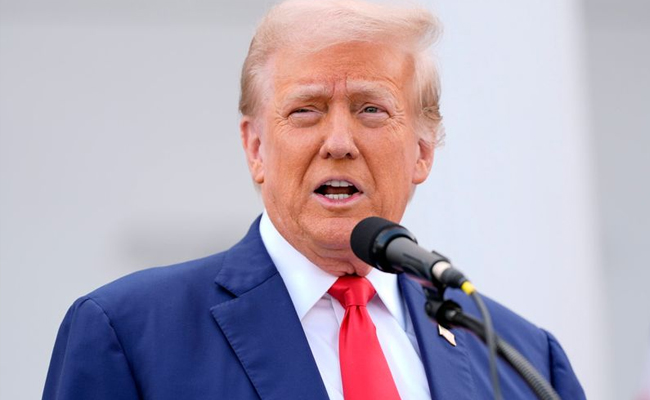
Washington (AP): President Donald Trump has said in a social media post that goods from the European Union would face higher tariff rates if the 27-member bloc fails to approve last year's trade framework by July 4.
The announcement on Thursday appeared to be a deadline extension after the president said last Friday that EU autos would face a higher 25 per cent tariff starting this week. Trump made the updated announcement after what he described as a "great call" with European Commission President Ursula von der Leyen.
Still, the US president was displeased that the European Parliament had yet to finalize the trade arrangement reached last year, which was further complicated in February by the US Supreme Court ruling that Trump lacked the legal authority to declare an economic emergency to impose the initial tariffs used to pressure the EU into talks.
"A promise was made that the EU would deliver their side of the Deal and, as per Agreement, cut their Tariffs to ZERO!" Trump posted. "I agreed to give her until our Country's 250th Birthday or, unfortunately, their Tariffs would immediately jump to much higher levels."
It was unclear from the post whether Trump was implying that the tariff rates would jump on all EU goods or the increase would only apply to autos.
His latest statement indicates he might be backing away from his earlier threat on EU autos by giving the European Parliament several more weeks to approve the agreement.
Under the original terms of the framework, the US would charge a 15 per cent tax on most goods imported from the EU.
But since the Supreme Court ruling, the administration has levied a 10 per cent tariff while investigating trade imbalances and national security issues, aiming to put in new tariffs to make up for lost revenues.