Agumbe ghat is open for movement of mini lorries
Order from Shivamogga district administration
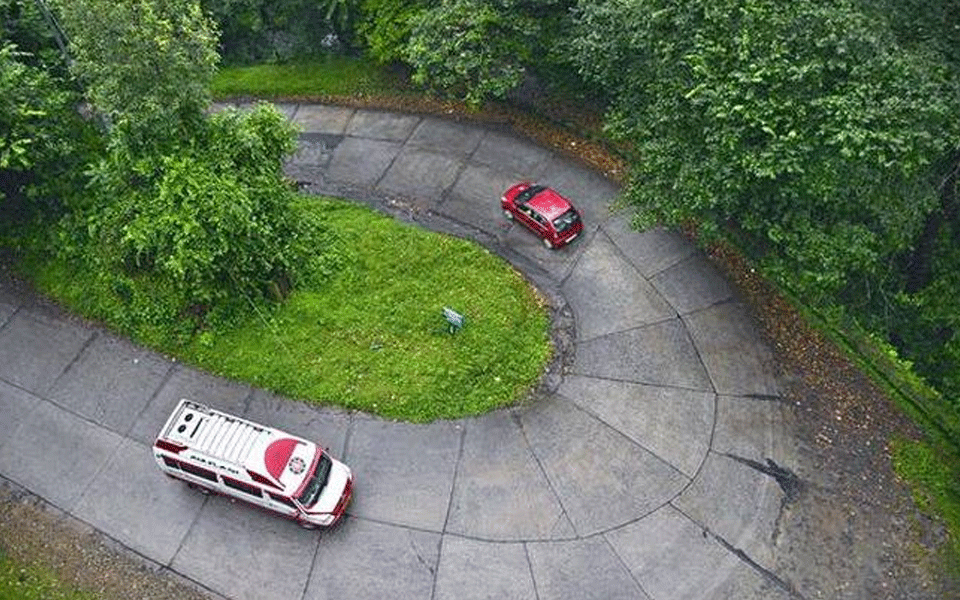
Shivamogga, November 18: The district administration has relaxed the restriction imposed on the movement of heavy goods vehicles on Agumbe ghat road in Thirthahalli taluk and allowed the mini lorries to ply on the road.
Deputy Commissioner K.A. Dayanand issued an order to this effect. As a result, the mini lorries were plying on the ghat section from Sunday morning. Mini Lorry Owners Association welcomed the decision of the district administration.
Memorandum submitted
After allowing the lorries in Charmadi Ghats, there was a demand for the movement of lorries on Agumbe Ghat section. Recently, the Lorry Owners Association has submitted a memorandum to the district administration and it was also decided to stage a protest on the Agumbe ghat road on Monday. As the district administration allowed the mini lorries on the road, the association has called off the proposed protest.
Movement suspended
Agumbe region has received heavy rains in this season due to which, landslides occurred on either side of the road. in the last week July, the district administration banned the movement of heavy vehicles and trucks except the buses and passenger vehicles. Since the rain receded in the region, the Mini Lorry Owners and Drivers Association demanded the district administration to allow the movement of mini lorries on the road. Based on this, the deputy commissioner has asked the opinion of National Highway Authority, Shivamogga RTO regional commissioner and Sringeri assistant commissioner of RTO.
As the retention walls were constructed on the places where the landslides occurred and the rains receded, the authorities have given the report to the district administration to allow the vehicles of 4 tonne capacity. Based on the report, the Deputy Commissioner allowed the movement of the mini lorries.
Let the Truth be known. If you read VB and like VB, please be a VB Supporter and Help us deliver the Truth to one and all.
Maharashtra sets up state vaccination task force to strengthen immunisation programme

Mumbai (PTI): The Maharashtra government has set up a State Vaccination Task Force to strengthen the regular immunisation programme and review the progress of related campaigns, a health department official said on Monday.
The State Vaccination Task Force will comprise at least 29 members and will be headed by the administrative head of the health department, he informed.
The government has also constituted separate district-level and municipal vaccination task forces to improve implementation and address challenges at the grassroots level, he said.
Municipal task forces, chaired by respective civic commissioners, have been constituted in view of the vast urban population in Maharashtra and the role of civic bodies in implementing different health programmes.
The district-level task forces will function under the chairmanship of collectors.
"Complete immunisation of children at the appropriate age is an extremely simple, cost-effective and highly effective measure to reduce child mortality and the prevalence of diseases among kids. Immunisation is a powerful tool for reducing illness in children," maintained the official.
To ensure full vaccination of all children, the state government implements various campaigns from time to time as per the central government guidelines, he pointed out.
"Active participation and cooperation of other relevant government departments are essential (in making these campaigns successful)," according to the official.
The state-level body will review the regular immunisation programme, associated campaigns and vaccine-preventable diseases in detail. It will also conduct focused assessments of high-risk districts and municipal corporations, including vacancies at district, municipal and sub-district levels, availability of cold chain equipment, resource gaps and training requirements, he noted.
The state task force will review allocation and utilisation of funds for immunisation and ensure timely action by officers concerned based on reports from district and municipal task forces and state-level monitoring mechanisms, the official said.
It will also ensure active coordination and participation of other government departments in immunisation drives, while district and municipal task forces will carry out similar functions at their respective levels, the official added.