Ambulance gets preference over VIP convoy in Karnataka
Bengaluru, July 9 : Ambulances across Karnataka need not wait for a VIP convoy to pass for rushing patients to hospitals for emergency treatment, a top city police official said on Monday.
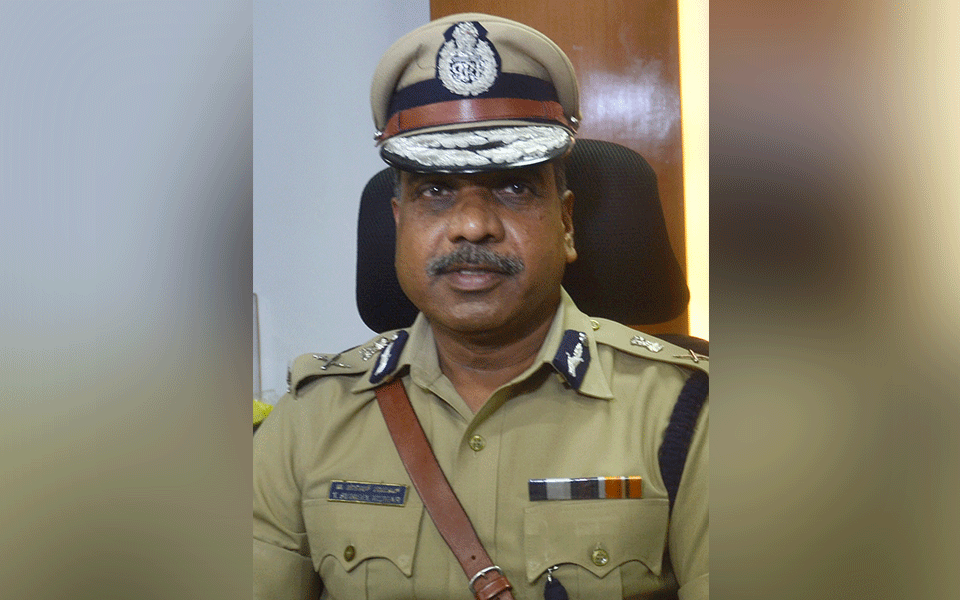
"As per the orders passed from the state police chief Neelamani N. Raju, the traffic police in the city and across the state will make way for the ambulances to pass through to get the patients to hospitals in time, even if there is VIP movement on the route," Bengaluru Police Commissioner T. Suneel Kumar told IANS here.
The move comes after the state's Deputy Chief Minister and Home Minister G. Parameshwara wrote to Raju asking the state's traffic police to give preference to ambulances irrespective of VIP convoy movement.
"I have observed that ambulances are sometimes stopped to make way for my convoy. Nothing is more important than rescuing a person in need of immediate medical help. Going forward, no ambulances will be stopped during movement of VIP convoys," Parameshwara said in a tweet.
According a report in local media, an ambulance was held up for 15 minutes in the city last month for allowing Parameshwara's convoy to pass first.
In June last year, a police officer Nijlingappa was rewarded by the city police department for making way for an ambulance before then President Pranab Mukherjee's convoy passed on the same route.
Instances of vehicular traffic, including ambulance service, being held up for VIP convoys has been receiving flak as precious time would be last during the 'golden hour' (first hour after a traumatic injury) as any delay in rushing a patient to a hospital may endanger a human life
Let the Truth be known. If you read VB and like VB, please be a VB Supporter and Help us deliver the Truth to one and all.
Three company directors held in Rs 100-crore investment fraud in Kochi

Kochi (Kerala) (PTI): Police on Sunday arrested three directors of a firm accused of cheating hundreds of investors of over Rs 100 crore through a fake investment scheme linked to agricultural tourism here, officials said.
The accused were identified as Muraleedharan, Ashik Murali and Akhil Murali, all natives of Thrissur.
The arrests were made by the Kalamassery police in connection with a fraud involving ATCOS (Agri Tourism Cooperative Society), a firm headquartered at Pathadipalam here.
Police said the company had promised high returns by collecting investments from the public in the agricultural tourism sector, but allegedly cheated hundreds of people and fled with the money.
ATCOS was registered under the Multi-State Cooperative Societies Act and operated 13 branches across various districts in Kerala, besides a branch in Coimbatore in Tamil Nadu, officials said.
When investors failed to receive their promised returns or the invested amount, complaints were filed with the police.
Officials said around 54 cases have been registered against the firm in 32 police stations across the state, including 29 cases at the Kalamassery police station alone.
Following instructions from Kochi City Police Commissioner K S Mahesh Kumar, a special investigation team was formed under the supervision of Deputy Commissioner of Police (Law and Order) Shehensha and Thrikkakara ACP Manoj Kumar.
The team traced the accused to an apartment in Amala Nagar in Thrissur, where they had been hiding after secretly renting the flat, officials said.
The bank accounts of the accused have been frozen, and steps have been initiated to trace their assets, officials said.
Police also conducted a raid at the company’s office at Pathadipalam and seized several documents related to the case.
The accused were produced before the Judicial First Class Magistrate Court in Kalamassery, which remanded them to judicial custody and sent them to Kakkanad jail.
Police said they would seek the custody of the accused for further interrogation as the investigation continues.