Amid water crisis in B'luru, BWSSB bans usage of potable water for non-essential purposes
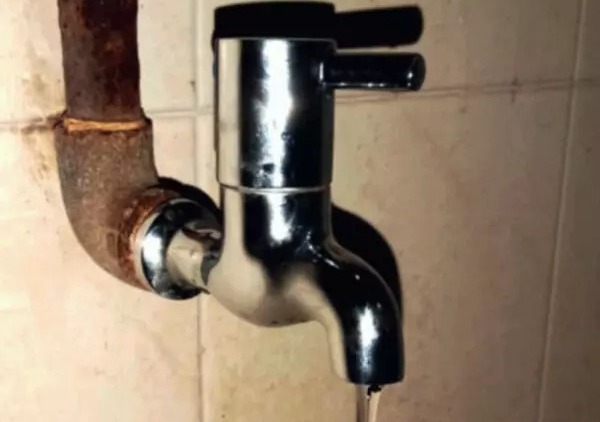
Bengaluru (PTI): Amid water crisis in the city, Bengaluru Water Supply and Sewerage Board (BWSSB) has banned usage of potable water for non-essential purposes and those found violating the prohibitory order would be fined Rs 5,000.
Noting that the supply of drinking water to all is essential, the BWSSB said at present, temperature is rising in the city everyday and the ground water level has decreased due to lack of rains in recent days. So, it is necessary to prevent wastage of water in the city of Bengaluru.
It has been made necessary for the public to use drinking water sparingly, it said.
In the public interest, under Sections 33 and 34 of the Bangalore Water Supply and Sewerage Act 1964, the BWSSB issued an order on March 7 prohibiting usage of potable water in the city of Bengaluru for cleaning vehicles, construction of buildings and roads, for entertainment purposes or decorations like fountains.
Malls and cinema halls are permitted to use water only for drinking.
''In case of violation of prohibitory order, a fine of Rs 5,000 will be applicable for the first time offence and recurrence of this violation will result in a fine of Rs 5,000 with an additional penalty of Rs 500 per day,'' it stated.
The public have been urged to use water judiciously and immediately inform the Bengaluru Water Supply and Sewerage Board's call centre 1916 if anyone is found violating the prohibitory order.
Let the Truth be known. If you read VB and like VB, please be a VB Supporter and Help us deliver the Truth to one and all.
Health Minister Dinesh Gundu Rao criticizes Centre for steep hike in commercial LPG price
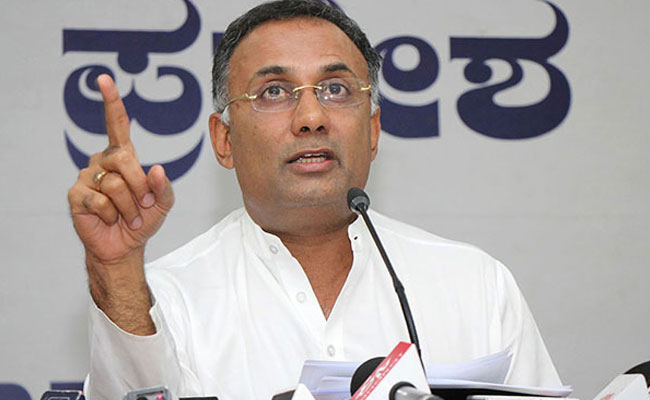
Bengaluru: Karnataka Health Minister Dinesh Gundu Rao has slammed the BJP government in the Centre for the hike in the price of commercial LPG, saying the sudden rise of the fuel rate by Rs 993 a cylinder has hit the common man hard.
Critically commenting that this was expected of the Centre after elections to five states, Rao posted in Kannada on his ‘X’ account on Saturday that the people have been shown only the trailer and, the real struggle is yet to begin.
“Since there is no election in any state, there will certainly be major hikes in the rates of petrol, diesel and domestic LPG in barely a few days,” he has predicted.
The minister has further tweeted, “The rate of commercial LPG has gone up to Rs 3,152 per cylinder, which will hit the hotel industry greatly. Ironically, the direct impact of the hike will be on customers of hotel.”
He pointed out that, earlier, the price used to be hiked by approximately Rs 50 and Rs 100 a cylinder. “This time, the rate has been shot up by Rs 993. What do we call this except daylight robbery? Can this be the ‘Acche Din’ that the BJP has been promising?” Rao asked mockingly.
He also questioned the cause for BJP members’ silence for the rate hike, reminding that the party always ‘threw a tantrum’ when a non-BJP government does so even at a minor level. “Does this reflect their fear of ‘Vishwaguru’ Modi? Is it the party’s sheer disregard for the welfare of the people?” he has questioned.
ಊಹಿಸಿದಂತೆಯೇ ಪಂಚರಾಜ್ಯ ಚುನಾವಣೆ ಬಳಿಕ ಕೇಂದ್ರ ಸರ್ಕಾರ ಬೆಲೆಯೇರಿಕೆಯ ಛಾಟಿ ಬೀಸಲು ಪ್ರಾರಂಭಿಸಿದೆ. ಕಮರ್ಷಿಯಲ್ ಸಿಲಿಂಡರ್ ಬೆಲೆಯನ್ನು ಏಕಾಏಕಿ ₹993 ಏರಿಸುವ ಮೂಲಕ ಮರ್ಮಘಾತ ನೀಡಿದೆ. ಚುನಾವಣೆ ಮುಗಿದ ಕೂಡಲೇ ಬೆಲೆಯೇರಿಕೆ ನಿರೀಕ್ಷಿತವಾಗಿತ್ತು. ಆದರೆ ಒಂದೇ ಭಾರಿ ₹993 ಹೆಚ್ಚಳ ಮಾಡಿರುವುದು ಅನಿರೀಕ್ಷಿತದ ಜೊತೆಗೆ ಆಘಾತ ತಂದಿದೆ.…
— Dinesh Gundu Rao/ದಿನೇಶ್ ಗುಂಡೂರಾವ್ (@dineshgrao) May 2, 2026