Ashoka slams Siddaramaiah govt as ‘corrupt’, claims Karnataka administration in ‘coma stage’
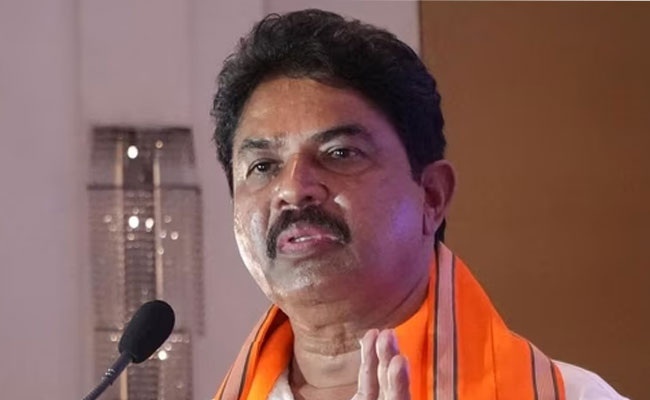
Bengaluru (PTI): Leader of the Opposition in the Karnataka Assembly, R Ashoka, on Monday alleged that the Siddaramaiah-led Congress government is "immersed in corruption", adding that the administration in the state has reached a "coma stage".
He also accused the dispensation of "spreading lies" through the governor’s address.
He further alleged that the "power tussle" between Siddaramaiah and D K Shivakumar over the chief minister’s post has "gravely impacted" the administration in the state.
The BJP leader made these remarks while participating in the motion of thanks to the governor’s address in the Assembly.
"The Congress government led by Siddaramaiah has sacrificed the interests and prestige of the state in many matters for the sake of political prestige, the quarrel between the CM and the deputy CM, and the appeasement of the high command," Ashoka said.
He claimed that one scandal after another has come to light, development has come to a standstill, and therefore, to "divert public attention, the government is indulging in petty politics" by confronting the governor and the Centre.
"The government has tried to make the governor speak lies in his address by hiding the facts. I thank the governor for the address, but I oppose the address prepared by the government. This government is immersed in corruption. It lacks respect, and if it had any respect left, it would have taken action," Ashoka claimed.
"There is bribery everywhere. The governor’s address is full of lies. This government has no morality," he alleged.
Claiming that Siddaramaiah has lost the assertiveness and grip over the administration that he once had, the opposition leader said, "From a tiger-like attitude in the past, it has now become rat-like."
Ashoka further alleged that officials have stopped working properly amid confusion over the leadership issue. "As a result, the administration has been in a coma for the past year. It is not right to toy with leadership in this manner. It is advisable to conclude; otherwise, the deteriorating administration will not get back on track," he claimed.
He said the relationship between Siddaramaiah and Shivakumar has "soured". He also took a dig at Shivakumar’s temple visits, suggesting they were aimed at securing the CM’s post at the earliest.
"This is an internal matter of your party. But since it is adversely affecting the administration, please clarify who will be the CM in the interest of the people," he added.
"Jointly announce that there will be no more such disputes and make the administration more efficient. You have made the governor deliver a false speech about this dysfunctional administration," he alleged.
In a high drama in the Karnataka Assembly, Governor Thaawarchand Gehlot on January 22 refused to read the state-prepared address to a joint session of the state legislature and concluded his customary speech in just three lines, evoking a sharp reaction from the Congress government. However, the speech was deemed to have been read and was placed before the House.
The governor had refused to deliver the customary address to the Karnataka legislature, objecting to certain critical references to the Centre and its decision to "repeal" the UPA-era Mahatma Gandhi National Rural Employment Guarantee Act (MGNREGA).
Let the Truth be known. If you read VB and like VB, please be a VB Supporter and Help us deliver the Truth to one and all.
Case registered over social media posts 'threatening' Kerala CM’s security officer
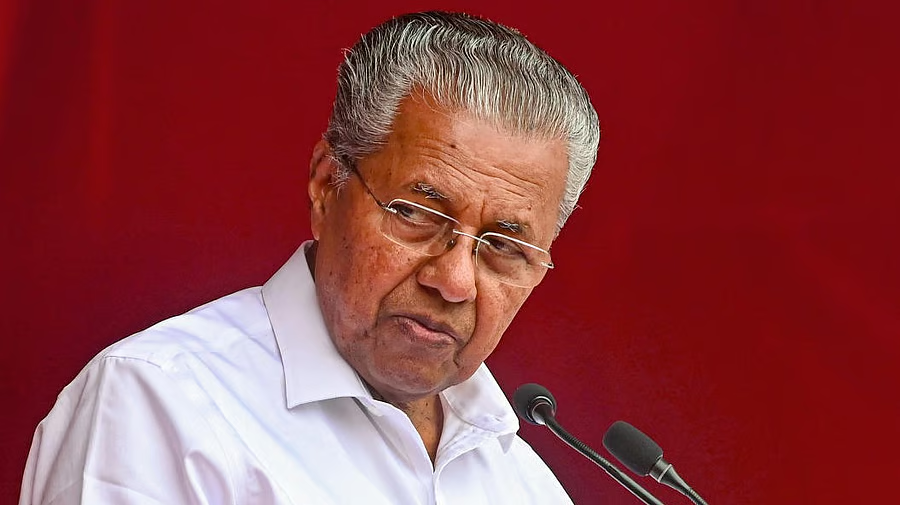
Thiruvananthapuram (PTI): A case has been registered and a probe launched into social media posts allegedly threatening a member of Chief Minister Pinarayi Vijayan’s security team with consequences once the UDF comes to power, officials said on Sunday.
The Thiruvananthapuram City Cyber Police registered the case based on a complaint filed by Chief Minister’s security staff member Sandeep Sasidharan.
The Congress had earlier alleged that Sandeep and another officer, Anil Kumar, brutally assaulted two Youth Congress-KSU activists including using flower pot when they protested against the Chief Minister during the Navakerala Sadas programme in Alappuzha in 2023.
A subsequent probe was conducted against both officers, and the Crime Branch later gave them a clean chit.
Recently, following the conclusion of the state assembly election on April 9, several social media posts allegedly made by Congress, Youth Congress and KSU activists claimed that revenge would be taken once the LDF government is removed and the UDF comes to power.
Police said cases have been registered against Facebook accounts named Arun Rajendran, Tom Kuriakose, Yaser KP, Sony Panamthanam, Sarath Pillai, KSU Kanjiramkulam, Rahul John C and Youth Congress Battle.
According to the FIR, the complainant’s photograph and name were used in several social media posts threatening him with consequences and containing abusive language.
Police said the social media account holders have been identified and will soon be summoned as part of the investigation.
The case has been registered under Sections 296(b) (uttering obscene words causing public annoyance), 351(2) (criminal intimidation), and 3(5) (acts done by several persons) of the Bharatiya Nyaya Sanhita.