Karnataka: Major explosion kills at least 6, jolts Shivamogga, neighbouring districts
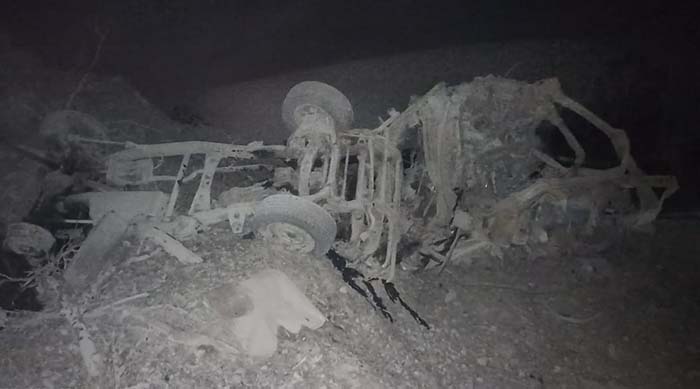
Bengaluru: An explosion of a truckload of explosives, suspected to be meant for mining, killed at least six people in Karnataka's Shivamogga district on Thursday night and sent shockwaves in neighbouring areas, police said.
The massive explosion took place near a gravel and boulder crushing facility around 10.30 pm, sending shockwaves not only in Shivamogga, but also in neighbouring Chikkamagaluru and Davangere districts.
So strong was the blast that window panes shattered while many houses and even roads developed cracks, said an eye-witnesses.
As the jolt was mistaken to have been caused by an earthquake, geologists were contacted, who ruled out recording tremors in any of their observatories.
"There was no earthquake. But an explosion did take place at Hunsur on the outskirts of Shivamogga under the Rural Police station limits," a police officer told PTI.
Another police officer said, "There has been a blast in a truck carrying gelatin. Six labourers in the truck were found dead. The vibrations were felt locally."
He added that the death toll might increase.
The victims were reportedly transporting the explosives meant for mining when the explosion occurred. The vehicle was badly mangled and the bodies of the victims were dismembered beyond recognition.
Senior district and police officials including the superintendent of police of Shivamogga have rushed to the spot.
Let the Truth be known. If you read VB and like VB, please be a VB Supporter and Help us deliver the Truth to one and all.
Two-wheeler rider killed after ramming tanker near Arkula Bridge in Mangaluru
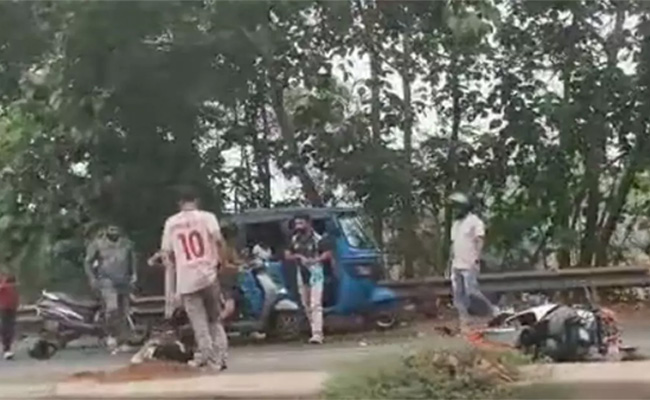
Mangaluru: A two-wheeler rider was killed on Sunday morning after his vehicle collided with a tanker from behind near Arkula Bridge, police said.
The deceased has been identified as Muhammad Ashfaq (22), a resident of Farangipete.
According to reports, the tanker was heading towards BC Road when the two-wheeler rammed into it from behind near a furniture shop close to Arkula Bridge. Ashfaq sustained severe injuries.
He was immediately shifted to a private hospital in Padil where he recived initial treatment. However, he succumbed to his injuries while being taken to another private hospital in the city for further treatment, police added.
Traffic police have registered a case in connection with the incident.