Aug 13: Karnataka records 1,329 new COVID-19 cases, five deaths
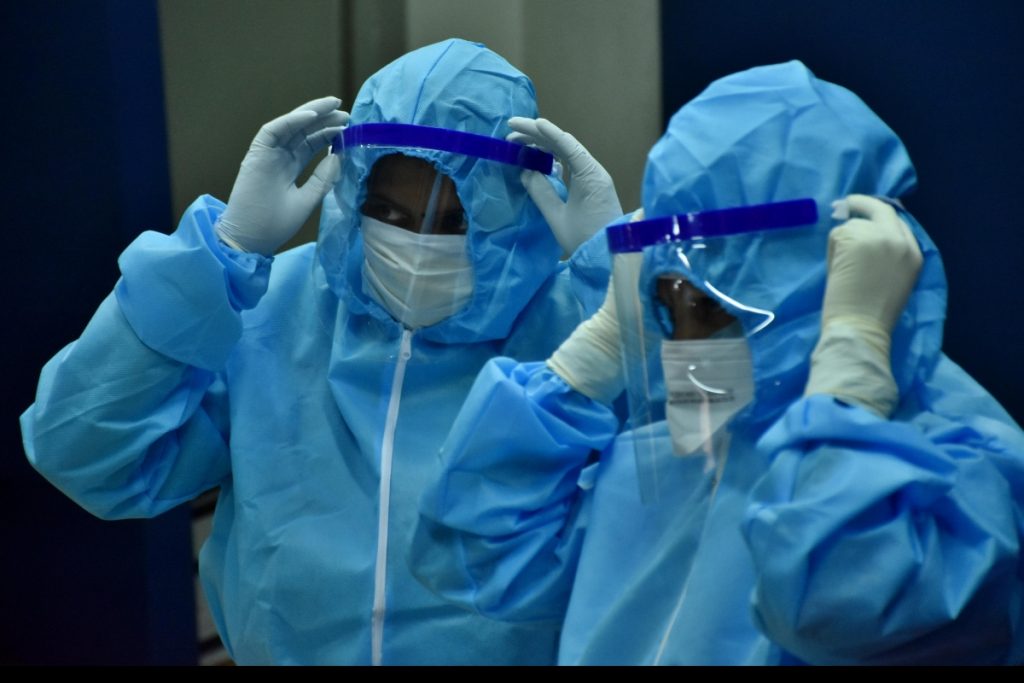
Bengaluru, Aug 13: Karnataka on Saturday reported 1,329 fresh COVID-19 cases and five deaths, taking the total infections and fatalities in the state to 40,29,446 and 40,144 respectively, the health department said.
The department said in its daily COVID bulletin that 1,614 people were discharged, taking the total number of recoveries to 39,79,155 till date. Active cases stood at 10,105.
Bengaluru urban district alone contributed 791 fresh.
There were 55 fresh cases in Hassan, 50 in Ballari, 46 in Raichur, 38 each in Dharwad and Mysuru, and 30 in Davangere.
Dharwad reported two deaths while Ballari, Kalaburagi and Shivamogga had one death each while 27 districts had zero fatalities. Bidar had zero infections and no fatality on Sunday.
The positivity rate for the day was 4.26 per cent, the department said.
As many as 31,154 tests were conducted, those included 22,967 RT-PCR tests. The total tests done is 6.82 crore till date.
There were 47,299 inoculations, taking the total vaccination tally to 11.73 crore so far, the department said.
To view today's health bulletin: CLICK HERE
Let the Truth be known. If you read VB and like VB, please be a VB Supporter and Help us deliver the Truth to one and all.
China confirms its support to Pakistan during four-day conflict with India

Beijing (PTI): China, for the first time, has confirmed that it provided on-site technical support to Pakistan during the four-day conflict with India last year, official media reports here said.
China's state broadcaster CCTV on Thursday aired an interview with Zhang Heng, an engineer from the Aviation Industry Corporation of China's (AVIC) Chengdu Aircraft Design and Research Institute, a key developer of China’s advanced fighter aircraft and unmanned aerial vehicle design.
Zhang had provided technical support to Pakistan during the four-day war last May, Hong Kong-based South China Morning Post reported, quoting CCTV.
Pakistan's air force operates a fleet of Chinese-made J-10CE jets, produced by an AVIC subsidiary.
"At the support base, we frequently heard the roar of fighter jets taking off and the constant wail of air-raid sirens. By late morning, in May, the temperature was already approaching 50 degrees Celsius (122 degrees Fahrenheit). It was a real ordeal for us, both mentally and physically,” Zhang said.
What drove his team was the "desire to do an even better job with on site support” and to ensure their equipment could “truly perform at its full combat potential”, Zhang told CCTV.
“That wasn’t just a recognition of the J10CE; it was also a testament to the deep bond we formed through working side by side, day in and day out,” he said.