'Aurangzebi govt': BJP slams Cong-led Karnataka dispensation over saffron shawl ban in schools
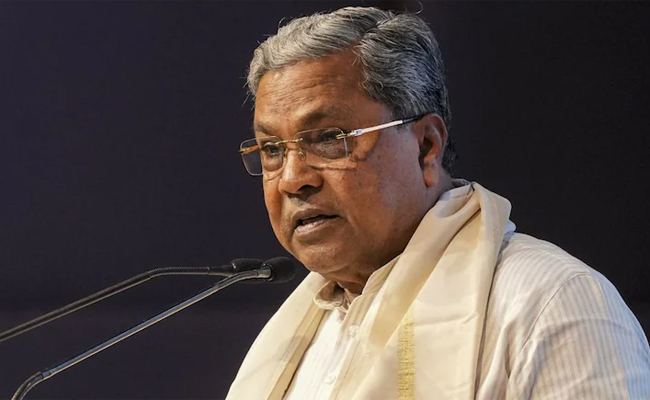
New Delhi (PTI): A political row erupted on Friday over the Congress-led Karnataka government's clarification that saffron shawls would not be allowed in educational institutions, with the BJP alleging that it is pursuing "appeasement and vote-bank politics".
The controversy flared up after Karnataka Chief Minister Siddaramaiah said on Thursday that saffron shawls would not be allowed in educational institutions under the state government's order on religious symbols, while practices already in existence such as hijab, turbans, rudraksha beads and sacred threads (janeu) would continue to be permitted.
BJP national spokesperson Shehzad Poonawalla alleged that the Congress government is pursuing appeasement politics and termed it an "Aurangzebi government".
"This government allows the wearing of hijab inside institutions, which the Supreme Court and high court had not allowed. But you cannot wear a 'bhagwa' (saffron) shawl or 'bhagwa' angavastram. This is the mindset of the Siddaramaiah government," Poonawalla said in a video post on X.
He alleged that the Congress government can go to any extent for appeasement politics and accused the party of "abusing Sanatan" in the past as well.
"They have shown Hindu hatred, from terms like 'bhagwa terror' and 'Hindu terror' to abusing Sanatan.
"We have seen how Congress leaders in Tamil Nadu have abused Sanatan. In Telangana, they said Congress means Muslims. They seek Muslim reservation in the name of vote-bank politics and appeasement," he alleged.
Poonawalla further alleged that the Siddaramaiah government has adopted a discriminatory policy and claimed that it had earlier announced a "Muslim-only budget" and "Muslim colonies".
Speaking to reporters in Mysuru, the chief minister clarified that those religious attire which are in practice will be allowed.
The Karnataka government on Wednesday passed an order allowing students to wear the hijab, sacred thread, Shivadhara and rudraksha in schools.
The order scrapped the BJP government's 2022 order, banning Hijab in government schools following the hijab versus saffron shawl controversy.
"Saffron shawls are not allowed. Those shawls cannot be worn. Turbans, sacred thread, Shivadhara, rudraksha and hijab can also be worn," Siddaramaiah told reporters.
"See, it is not just the hijab. People can also wear sacred threads; Shivadhara rudraksha beads everyone can wear, things according to their beliefs.
"This is allowed up to Class 12, whether it is high school, college or primary school. It applies to all," he added.
Asked whether saffron turbans representing saffron identity would be permitted, the chief minister said only practices already in existence would be allowed and no new practices could be introduced.
Let the Truth be known. If you read VB and like VB, please be a VB Supporter and Help us deliver the Truth to one and all.
TN CM Vijay calls fuel price hike ‘unacceptable’, seeks rollback
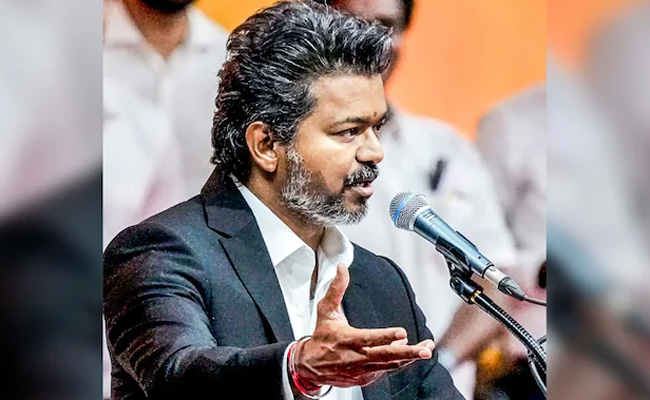
Chennai (PTI): Tamil Nadu Chief Minister C Joseph Vijay on Friday slammed the increase of Rs 3 per litre in petrol and diesel prices, calling it "unacceptable", and demanded its immediate rollback, claiming the revision would affect various sections of society.
He said oil marketing companies do not reduce prices in line with global crude price trends and "take the profits".
"Union government oil marketing companies have increased the price of petrol and diesel by Rs 3 per litre. This is not acceptable," Vijay said in a statement.
The hike has been effected after the "five-state polls" (four states and one union territory), he added.
This price rise will largely affect the income of the poor and middle class using two-wheelers and small vehicles, as well as others dependent on vehicles for their livelihood, the CM said.
It will ultimately result in an increase in the prices of daily commodities and also "affect the purchasing power of the poor," he added.
Citing the chain effect of the price revision, such as increased input costs for small units, he said it could lead to a "slowdown" in the market and exports.
"Therefore, I urge the union government to immediately roll back the price hike that will affect the poor and middle-class people and SMEs," Vijay added.
Global crude oil prices have surged more than 50 per cent since US-Israeli strikes on Iran on February 28 and Tehran’s subsequent retaliation, which disrupted energy flows through the Strait of Hormuz, a key artery for global oil shipments.
Petrol and diesel prices are now at their highest level since May 2022.