Authorities swing into action to clear waterlogging, downed trees after heavy rains in Bengaluru
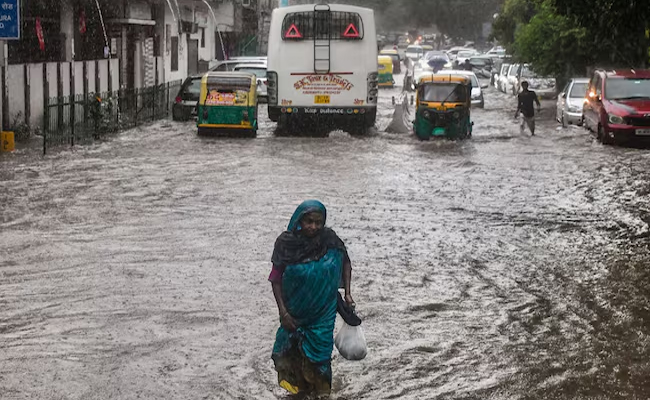
Bengaluru: Waterlogging and incidents of tree falling have been reported from some parts of the city, following heavy showers on October 5 night. Teams from the city civic body Bruhat Bengaluru Mahanagara Palike (BBMP) are actively working to restore normalcy by baling out water from spots that are inundated, and by clearing trees that were uprooted, official sources said on Sunday. According to the Indian Meteorological Department (IMD) sources, the city recorded 10.4 mm of rainfall on Saturday.
The south and east regions of the state capital were the most affected, with some roads too submerged in water.
Some roads in Kalyan Nagar, near Electronic City, Bengaluru-Mysuru roads, among others witnessed inundation, leading to traffic issues, which are being addressed, official sources said.
Let the Truth be known. If you read VB and like VB, please be a VB Supporter and Help us deliver the Truth to one and all.
Vice president releases latest edition of Constitution in Sindhi
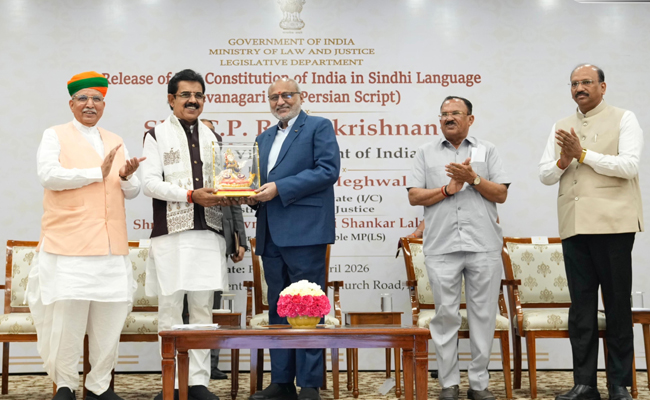
New Delhi (PTI): Vice President C P Radhakrishnan on Friday released the latest edition of the Constitution in Sindhi language, in both Devanagari and Persian scripts here.
Addressing a gathering, the vice president extended greetings to the Sindhi-speaking community on the occasion of Sindhi Bhasha Diwas.
He described Sindhi as one of the oldest and most melodious languages, noting that its literary tradition reflects a unique confluence of Vedantic philosophy and Sufi thought, promoting universal values of oneness, love, and brotherhood.
Highlighting the significance of the occasion, he said that the release of the Constitution in Sindhi, particularly in the Devanagari script for the first time since Independence, marks an important milestone in promoting linguistic inclusivity.
He emphasised that the Constitution is not merely a legal document but the living spirit of the nation, embodying its aspirations, safeguarding rights, and guiding democratic governance.
He observed that India stands unique in making its Constitution available in a wide range of languages and recalled similar initiatives undertaken in recent years, including translations in Bodo, Dogri, Santhali, Tamil, Gujarati, and Nepali. These efforts, he said, celebrate India’s linguistic diversity and reinforce democratic values.