Autopsy on man’s exhumed body reveals truth behind his death; wife, her lover arrested for murder

Bengaluru: A 46-year-old woman, identified as P Asha, and her lover have been arrested after an autopsy on the exhumed body of her husband revealed that, unlike her claim, he did not die of a heart attack but was strangulated.
Police have arrested Asha, who worked as a house-keeper, and her lover Chandrappa (48), a cook, under charges of murdering Asha’s husband K Paramesh (50), at the latter’s house in Hebbur in Tumakuru district.
Paramesh is said to have discovered the extramarital affair Asha had with Chandrappa, which led the lovers to decide to eliminate him, police sources have said. Paramesh, who was an alcoholic, was known to consume a few pegs every night. On January 29 night, when he went to bed, Asha and Chandrappa strangulated him to death.
The next morning, Asha called her relatives and informed them that her husband had died of heart attack, after which, Paramesh’s body was buried.
On March 4, however, Paramesh’s elder sister K Nagamma filed a police complaint, expressing suspicion over the cause of her brother’s death.
An investigating officer has said that Nagamma grew suspicious since Asha remained unaffected by her husband’s death and was close to Chandrappa. When Nagamma asked Asha for details about Paramesh’s death, she found Asha giving contradictory statements, which led her to file the complaint.
Let the Truth be known. If you read VB and like VB, please be a VB Supporter and Help us deliver the Truth to one and all.
Court can reject anticipatory bail but cannot direct accused to surrender: SC
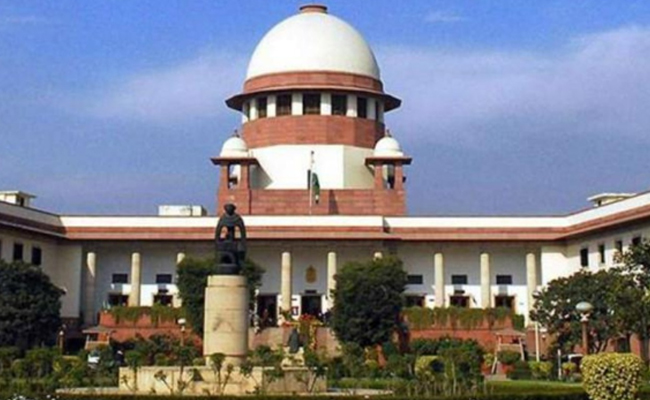
New Delhi (PTI): A court can reject anticipatory bail of an accused but it has no jurisdiction to direct him to surrender before the trial court, the Supreme Court has said.
A bench of Justices J B Pardiwala and Ujjal Bhuyan made the observation while hearing a plea filed by a man accused of cheating and forgery.
"If the court wants to reject the anticipatory bail, it may do so, but the court has no jurisdiction to say that the petitioner should now surrender," the bench said.
The Jharkhand High Court had rejected anticipatory bail plea of the accused and asked him to surrender and seek regular bail.
In this case, a complaint had been filed before a magistrate alleging offences under Sections 323 (voluntarily causing hurt), 420 (cheating), 467 (forgery of valuable security), 468 (forgery for purpose of cheating), 471 (using forged document) and 120B read with 34 of the IPC, in connection with a land dispute.
The high court had dismissed the second anticipatory bail application of the accused on the ground that no new circumstances were shown.
It had relied on its earlier order rejecting his first anticipatory bail plea, in which the court directed the petitioner to surrender before the trial court and seek regular bail in terms of the decision in Satender Kumar Antil v. CBI.
The top court said such a direction was wholly without jurisdiction and said that if a court chooses to reject anticipatory bail, it may do so, but it cannot compel the accused to surrender.