Ayesha Khanum appointed Chairperson of Karnataka Media Academy
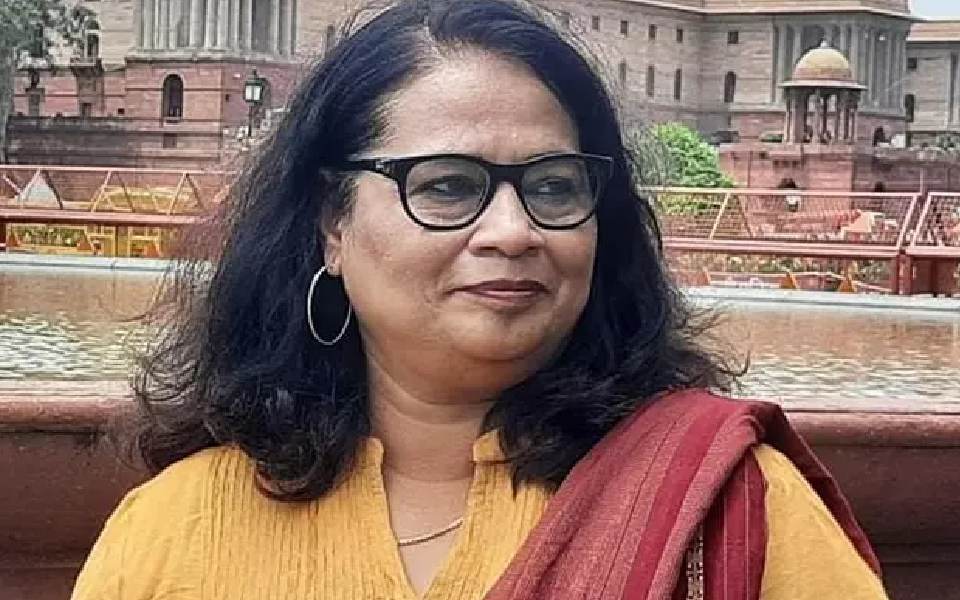
Bengaluru: The State Government has appointed Ayesha Khanum as the chairperson of Karnataka Media Academy.
Khanum’s name was recommended by CM’s media advisor K V Prabhakar. He also brought it to the attention of the CM. This is the first time that a person from minority community and a woman is being elected to the post. “As Ayesha is from Kalaburagi which falls in the Kalyana Karnataka region, her appointment upholds social justice, regional justice and gender equality”, Prabhakar said. Accordingly, CM Siddaramaiah has ordered for her appointment as the Chairperson of the academy.
ALSO READ: Bengaluru: Rajasthan man arrested for selling smuggled food products with fake FSSAI stickers
Ahobalapathi, another appointed member, entered journalism as an advocate of people’s struggle and has always upheld social concerns in his profession. Bengaluru photojournalist K Venkatesh and Senior journalist K Ningajja from Koppal have also been appointed as members of the academy.
Let the Truth be known. If you read VB and like VB, please be a VB Supporter and Help us deliver the Truth to one and all.
Shivakumar opposes ‘One Nation One Election’, calls it ‘unworkable’
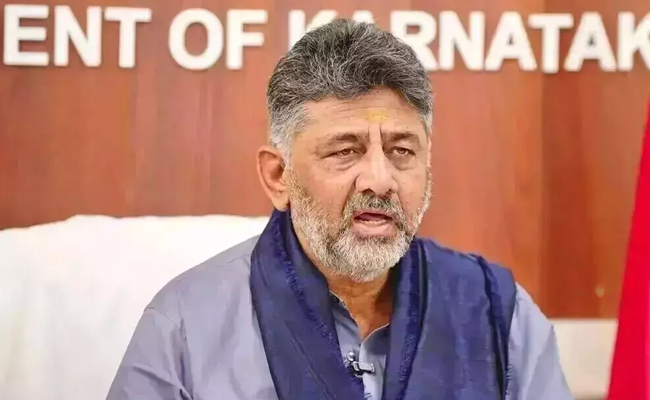
Bengaluru (PTI): Karnataka Deputy Chief Minister D K Shivakumar on Saturday strongly opposed the central government’s proposed ‘One Nation One Election’ initiative.
Shivakumar expressed his views at a dialogue on ‘One Nation One Election’ organised by the Joint Parliamentary Study Committee.
He said the plan is a politically motivated, power-centralising scheme that would seriously damage India’s federal structure by weakening states and poses a threat to the democratic system, according to a statement from his office.
As KPCC president and deputy CM of Karnataka, he categorically rejected the proposal, stating that it is being crafted to suit the convenience of those in power at the Centre.
Shivakumar said that the Karnataka Legislative Assembly had already passed a resolution opposing ‘One Nation One Election’ and read out the resolution at the meeting.
He firmly stated that it is “not a workable plan” and added that it is “practically impossible.”
“If a government falls midterm due to political instability, a no-confidence motion, or loss of majority, what is the solution?” he asked.
“Elections are held at different times in different states for different terms. Karnataka had its election in 2023, while Tamil Nadu and Kerala had theirs in 2021, and Punjab and Telangana in 2022 and 2023, respectively. How can these elections with varying schedules be synchronised?” he asked.
He added that the proposal is a ploy to suppress the voices of regional and Opposition parties.
He also said the Karnataka government does not agree with the proposal and remains committed to the position of the Congress party’s national leadership.