Backward taluks rise to 177 despite ₹32,000 crore spend, report flags North Karnataka lag
Bengaluru: Fifteen years after Karnataka began a major push to reduce regional imbalance, a new high-powered committee has found that the number of backward taluks in the state has increased, with underdevelopment remaining heavily concentrated in the northern regions.
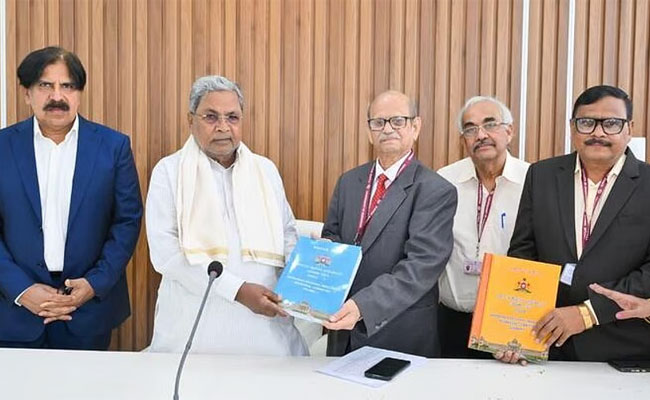
Deccan Herald reported that the Karnataka Regional Imbalances Redressal Committee, chaired by economist M Govinda Rao, has reported that 177 of the state’s 236 taluks now fall under varying categories of backwardness. The findings were recently submitted to Chief Minister Siddaramaiah and highlight that regional disparity continues to be a structural problem despite significant public expenditure.
According to the committee’s assessment, 59 taluks have been classified as “most backward”, an equal number as “more backward” and “backward”, while only 59 taluks qualify as “developed”. The panel noted that backwardness is overwhelmingly a North Karnataka phenomenon, with the Kalyana Karnataka region emerging as the most affected. Not a single taluk in this region has been categorised as developed.
The report observed that Karnataka has witnessed strong income growth and an expanding share in the national economy. However, this growth has remained uneven. Economic gains are concentrated in a handful of districts, while large parts of the state continue to lag in social and developmental indicators, as reported by DH. Only six districts—Bengaluru Urban, Bengaluru Rural, Chikmagalur, Dakshina Kannada, Tumakuru and Uttara Kannada—record a Net District Development Product above the state average.
The committee’s findings come after a review of earlier efforts based on recommendations of the DM Nanjundappa Committee. Between 2007-08 and 2022-23, the state spent over ₹32,600 crore to address regional imbalance. Despite this, the new panel cautioned that if spending does not create conditions for sustained growth even higher allocations alone do not guarantee development.
Kalaburagi division was found to have the highest concentration of the most backward taluks, followed by Belagavi. No taluks in the Bengaluru or Mysuru divisions fall into the most backward category, underscoring the sharp regional divide within the state.
The Rao committee has sought an allocation of ₹43,914 crore for the period from 2026 to 2031 to tackle imbalances, while also calling for a shift in approach. It pointed out conceptual and methodological limitations in earlier frameworks, specifically the assumption that development could be achieved mainly through government spending on infrastructure and services.
Stating that their functioning has had limited impact, the panel has also suggested abolishing the Malnad Area Development Board and the Bayaluseeme Development Board. It has also proposed restructuring the Kalyana Karnataka Region Development Board to better align it with its broader objectives.
Let the Truth be known. If you read VB and like VB, please be a VB Supporter and Help us deliver the Truth to one and all.
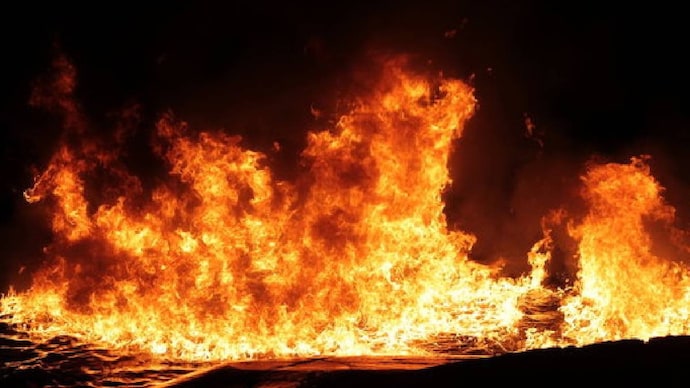
Fire erupts at plastic factory in Ahmedabad; no casualties
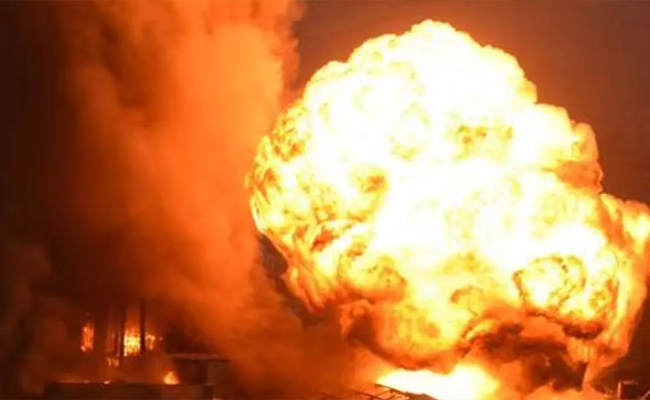
Ahmedabad (PTI): A fire broke out at a plastic granules and mould manufacturing factory in Gujarat's Ahmedabad on Sunday morning, an official said.
No casualties were reported in the incident, he said.
The blaze erupted around 8 am at Processo Plast Enterprise in the Bapunagar area, Ahmedabad Municipal Corporation's Additional Chief Officer (fire) Mihir Rana told PTI.
Thick plumes of smoke were seen billowing into the sky, visible from a considerable distance in the area.
"The unit closed after the night shift and the fire broke out in the morning in the ground floor's storage facility section due to unidentified reasons," Rana said.
Nine fire tenders and several other firefighting vehicles were rushed to the spot, and the blaze was brought under control by 11 am, he said.
Firefighters prevented the blaze from spreading to the first floor. However, machinery and plastic materials were damaged on the ground floor, he said, adding that the exact cause of the blaze was under investigation.